


 English (UK)
  Русский
  বাংলা
বাংলা  العربية
  日本語
日本語  한국어
한국어  Magyar
  Norsk nynorsk
  Türkçe
  עִבְרִית
  Español
  Čeština
  Svenska
  Português
  Ελληνικά
  Suomi
Suomi  Nederlands
  Română
  Italiano
  Français
  Polski
  Українська
  Deutsch
  简体中文
简体中文  Slovenčina
  Српски језик
  اردو
اردو  Azərbaycan dili
  O‘zbekcha
  አማርኛ
አማርኛ 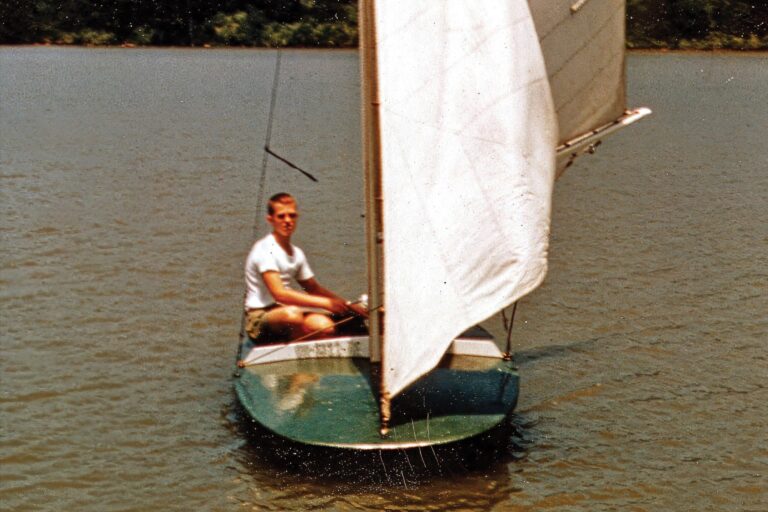

Towing a small wooden dinghy on a homemade trailer without lights or a license exposes common transport and regulatory pitfalls: bolt-on trailer hitches must match vehicle tongue weight, trailers require working lights and bearings, and long-distance moves demand verified registration and proper towing capacity.
The No Name Scow: discovery and first transport
In spring 1960 a derelict 14-foot, sloop-rigged scow—fiberglass over plywood—was found buried under lumber and debris in an abandoned chicken coop near Hamilton, Ohio. The craft sat on a rusty trailer fashioned from an old car frame. With a bolt-on hitch attached to a Buick and no trailer lights or license plate, the vessel was trailed home, where summer work included cleaning, priming with green housepaint and finishing trim in white enamel. The scow’s rigging combined cotton sails, twisted hemp lines, galvanized stays and spars fashioned from 2×4 construction-grade fir; a few Wilcox-Crittenden bronze fittings contrasted with hardware-store pulleys.
Early logistics and maintenance lessons
- Always verify trailer lights, hub bearings and tongue ratings before towing.
- Plan repairs around ambient temperature—fiberglass resin cure rate is temperature-sensitive.
- Allow extra material margin when shaping wooden parts (cut “proud”) to avoid under-sizing.
Learning boatwright skills in a high-school shop
Hands-on shop work taught woodworking basics and tool maintenance: grinding and sharpening plane irons, shaping mahogany rudders and sanding to hydrofoil templates. The rudder project illustrated the importance of checking thickness often and finishing with multiple coats of varnish. For fiberglassed centerboards, thickness allowances were made for eventual sheathing.
Tools, technique and timing
| Task | Typical Time | Typical Cost |
|---|---|---|
| Rudder carving and varnish | 20–30 hours | Under $50 (materials) |
| Fiberglass centerboard sheathing | 8–16 hours plus cure | $30–$80 (resin/cloth) |
| Full hull paint and varnish | 2–4 weekends | $50–$200 |
The restoration venture: buying, repairing, reselling
Teaming up, two young restorers bought a Penguin dinghy for $75, performed a frame-off restoration in a garage bay, and sold it for $350—capital that funded further projects. The process included paint and varnish stripping, new stainless stays, light blue topsides and spar varnish. Hands-on commerce provided practical lessons in valuation, repair economics, and customer expectations.
Case study: Rhodes Bantam hull No. 410
On a scouting trip to Toledo the pair rejected a near-ruined home-built hull but purchased Rhodes Bantam No. 410—formerly campaigned to championship success—despite a crude plywood patch forward of the mast thwart. Repairs involved cutting to sound wood, beveling edges, and laminating a fiberglass patch from the inside using woven roving and cloth, followed by fairing, sanding and a wet-sanded bottom. Hardware upgrades and a 50-pound centerboard painted white to aid weed spotting completed the refit.
Racing outcome and resale
Trailed to a local regatta, No. 410 proved faster and won a race as-is, confirming hull pedigree and prompting one partner to buy the boat and split profits. The sequence demonstrated how targeted structural repairs and weight reduction can restore performance, and how regatta exposure can rapidly validate restoration value—elements that feed local maritime tourism and weekend sailing economies.
Skills that translate to travel and tourism
Restoration skills—fiberglass lamination, marine woodworking, rig tuning—have direct relevance to experiential travel offerings: hands-on workshops at sailing schools, museum tours with live guides explaining craft construction, and small-boat regatta weekends that draw spectators and visitors. Platforms that facilitate booking for these activities can help convert a hobbyist’s work into regional tourism experiences.
For travelers planning to join regattas or book restoration workshops, GetExperience allows making full and secure payments with voucher confirmation and offers the option to submit tailored requests so providers can propose the best-matching tours or experiences.
The story highlights how a single neglected hull can ignite a lifelong craft and sporting passion, yet even the best reviews and the most honest feedback can’t truly replace first-hand participation. On GetExperience, you book your experience from verified providers at reasonable prices. This empowers you to make the most informed decision without unnecessary expenses or disappointments. Enjoy transparency, convenience, and a wide range of options—from museum tours with live guides to yacht charters and adventure rafting trips for beginners. Book now GetExperience.com
In summary: a tucked-away scow, towed on a homemade trailer and revived with basic tools and persistence, became the catalyst for decades of small-boat restoration and racing. Key takeaways include the importance of proper towing logistics, temperature-aware fiberglass work, conservative material allowances during shaping, and the commercial logic of restoring and reselling small craft. For travel enthusiasts this story intersects with broader travel experiences—from museum tours and yacht parties to eco-friendly wildlife safaris and cruise packages—as well as opportunities like interactive online cultural workshops and professional esports training parallels in structured learning. Random discoveries can steer life courses; hands-on adventure activities and luxury adventure travel experiences both begin with a willingness to roll up the sleeves and set sail.