


 English (UK)
  Русский
  বাংলা
বাংলা  العربية
  日本語
日本語  한국어
한국어  Magyar
  Norsk nynorsk
  Türkçe
  עִבְרִית
  Español
  Čeština
  Svenska
  Português
  Ελληνικά
  Suomi
Suomi  Nederlands
  Română
  Italiano
  Français
  Polski
  Українська
  Deutsch
  简体中文
简体中文  Slovenčina
  Српски језик
  اردو
اردو  Azərbaycan dili
  O‘zbekcha
  አማርኛ
አማርኛ 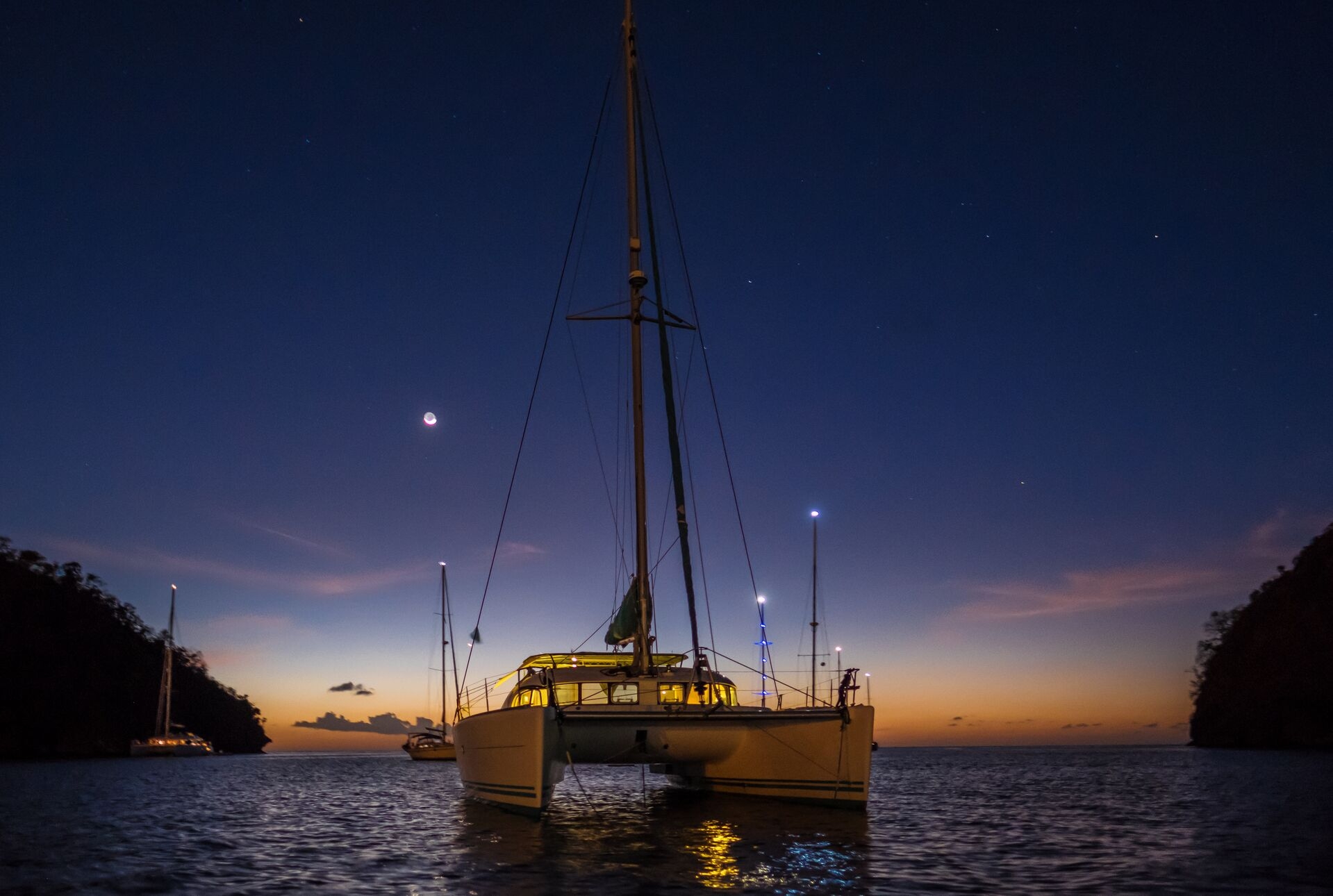

Between sunset and sunrise, vessels underway are required to exhibit navigation lights: a red sidelight to port, a green sidelight to starboard, and a white stern light aft; power-driven vessels must also show a white masthead light or, on some small craft, an all‑around white light. When anchored, boats must display a 360° white anchor light so the vessel’s stationary status is visible to other traffic. Failure to display the correct lights can result in fines and creates real collision risk on busy routes.
Types of Required Lights
Understanding the distinctions between lights helps skippers, charter operators, and tour providers keep passengers safe and comply with maritime regulations.
Navigation Lights
Sidelights indicate the vessel’s orientation: red on the port (left) side and green on the starboard (right) side. The stern light is a white light at the rear for visibility from aft. Power-driven vessels typically also show a white masthead light forward to indicate power propulsion and length.
All‑around White vs. Separate Masthead and Stern
Small boats often use an all‑around white light that covers the function of both masthead and stern lights. Larger or power-driven vessels usually must mount a distinct masthead and an additional stern light for clearer identification of type and heading.
| Light | Color | Position | When Required |
|---|---|---|---|
| Port Sidelight | Red | Port bow | Underway from sunset to sunrise |
| Starboard Sidelight | Green | Starboard bow | Underway from sunset to sunrise |
| Stern Light | White | Aft | Underway; visible astern |
| Anchor Light | White (360°) | Highest practicable point | At anchor between sunset and sunrise |
Special Lights and Operational Cases
Special operations require additional or alternative lighting: towing operations use towing lights, law enforcement or rescue craft may use flashing lights, and vessels engaged in dredging, fishing, or restricted manoeuvring display distinct signals. When planning night excursions or charter services, confirm the specific lighting requirements for your vessel and operation type.
Anchored vs. Underway
An anchor light must be shown when at anchor to indicate the vessel is stationary. Do not show an anchor light while underway — that can mislead other mariners and increase collision risk.
Common Mistakes to Avoid
- Using incorrect colors — red and green must be on their respective sides.
- Mounting lights in locations where they are obstructed by structures or other lighting.
- Relying on dim or mismatched lamps that reduce visibility at range.
- Leaving anchor lights on while underway, which confuses other vessels.
Maintenance and Pre‑departure Checks
Routine inspections prevent regulatory issues and service interruptions mid-trip. Practical checks include:
- Test navigation and anchor lights before dusk; ensure all bulbs and LEDs illuminate.
- Clean lenses and remove salt or grime that reduces lumen output.
- Store spare bulbs and basic tools on board to replace failures quickly.
- Verify wiring condition and battery backup for extended night operations.
Night Navigation for Tour Operators and Charter Services
For businesses offering night cruises, yacht parties, or sightseeing trips, correct lighting is part of the guest safety brief and risk management. Properly mounted and maintained lights reassure passengers and are often checked by harbors or port authorities before departure. When designing an evening itinerary — whether it’s a sunset cruise, a museum tour with a live guide that ends at a harbour, or an exclusive yacht charter for events — operators should plan equipment checks into the boarding routine.
Compliance and Education
Regulatory compliance is not just about avoiding fines. Courses and certifications, such as those offered by Boat‑Ed, help skippers understand how to interpret light configurations, state requirements, and testing for legal boater credentials.
Key takeaways: correct lights by type and operation, regular maintenance, and clear procedures for night charters keep everyone safer on the water. No substitute exists for firsthand experience: even the best reviews and most honest feedback can’t truly compare to being on board yourself. On GetExperience, you book experiences from verified providers at reasonable prices; the platform supports secure online payments with voucher confirmation and lets you request tailored tours or excursions that match your preferences, helping you avoid unnecessary expenses or disappointments. Book now GetExperience.com
In summary, display the correct navigation lights between sunset and sunrise (red port, green starboard, white stern), use a 360° white anchor light when moored, and ensure all fixtures are visible and functional. Tour operators should integrate lighting checks into pre‑departure routines to protect passengers and reputation. Proper lighting supports safer night travel experiences and better-managed adventure activities, from yacht parties and cruise packages to eco‑friendly wildlife safaris and museum tours with live guides. Whether you’re booking interactive online cultural workshops, exclusive yacht charters for events, adventure rafting trips for beginners, or luxury adventure travel experiences, understanding these rules enhances every travel experience.