


 English (UK)
  Русский
  বাংলা
বাংলা  العربية
  日本語
日本語  한국어
한국어  Magyar
  Norsk nynorsk
  Türkçe
  עִבְרִית
  Español
  Čeština
  Svenska
  Português
  Ελληνικά
  Suomi
Suomi  Nederlands
  Română
  Italiano
  Français
  Polski
  Українська
  Deutsch
  简体中文
简体中文  Slovenčina
  Српски језик
  اردو
اردو  Azərbaycan dili
  O‘zbekcha
  አማርኛ
አማርኛ 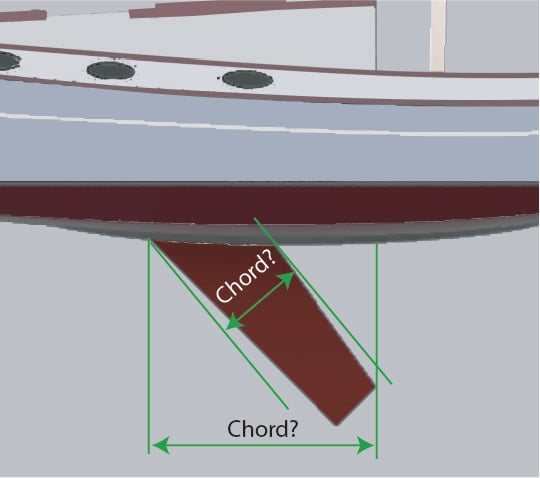

A correctly faired NACA-profile centreboard materially reduces hydrodynamic drag and increases lift, improving windward angle and transit efficiency for small coastal charters and day-sail operations. The conversion touches on structural changes to the centreboard case, load distribution at the pivot, and added ballast in the board tip—each item with direct operational and maintenance implications for tour operators and private skippers alike.
Historical context and design principles
Early yacht research in the late 1920s—exemplified by Manfred Curry’s work—laid the foundations for applying aerodynamic theory to sails and foils. Following Curry, the US National Advisory Committee for Aeronautics (NACA) catalogued dozens of foil shapes and made the mathematical tools available to designers. The practical result: designers can select foil sections to balance drag and lift, but implementation requires careful case alterations and weight management.
Why a NACA foil helps
A foil optimized for a centreboard does two things:
- Reduces drag: a rounded foil profile encourages attached flow and cleaner separation, so the board slips through water more easily than a flat plate.
- Increases lift: at an appropriate angle of attack the foil generates lateral lift, improving windward drive and reducing leeway—valuable for racing and for keeping schedule on sailing tours.
Common misconceptions
There is a persistent but incorrect belief that a centreboard should function as ballast. In fact, a centreboard is not a keel: embedding significant weight in a lifting board dramatically increases stresses on the centreboard case, pivot and lifting mechanism, accelerating wear or forcing heavy reinforcement that adds unwanted displacement.
Practical steps to redesign a centreboard
The practical workflow used by many small-boat owners when retrofitting a NACA-style board:
- Measure the internal case clearances and determine the usable fore-aft chord.
- Choose a NACA section suitable for the operating speed and rake angle of the board.
- Generate CNC files and cut a ply core; allow for final glass/epoxy thickness in the CAD file.
- Trim trailing edge to a controlled thickness and finish with thickened epoxy to form a crisp exit edge.
- Add a cast lead tip if required to ensure the board reliably sinks and stays down at speed.
- Glass with biaxial cloth, install a robust epoxy pivot bush and a lifting eye, then antifoul the finished surface.
Tools, partners and pitfalls
Many owners use CNC cutting services such as Crosshair CnC for accurate shaping of the core. Common pitfalls include double-counting glass allowance in CAD, misjudging tip weight required to maintain immersion, and underestimating the need to beef up the board shoulders where loads transfer into the keelson.
| Item | Typical action | Operational effect |
|---|---|---|
| Chord selection | Use narrower fore-aft measure | Controls thickness and avoids excess drag |
| Tip ballast | Cast and epoxy-on lead | Ensures the board sinks and remains locked under load |
| Shoulders & pivot | Fill/lower shoulders into keelson | Distributes load; prevents premature case wear |
Fit and finish: clearance and reliability
Achieving roughly 1.5mm clearance each side is a practical target: too loose and the board rattles, too tight and it can jam. Embedding a stainless steel D-ring lifting eye and a broad epoxy pivot bush provides long-term durability. Final coats of antifouling must be thin enough to retain the fit while protecting the laminate.
Maintenance implications for tourism operators
For tour operators and charter skippers, a properly faired centreboard can reduce fuel and sail trimming time, improve schedule reliability, and enhance guest experience by delivering better upwind passages. However, the retrofit increases the need for precision maintenance, periodic checks of the pivot and case, and careful handling during launch and retrieval.
Highlights: the conversion improves windward performance, requires careful attention to case clearances and shoulder loading, and often needs extra lead in the tip to ensure reliable immersion. While CAD and expert advice help, some trial-and-adjust remain part art and part science. On GetExperience you book your experience from verified providers at reasonable prices, with secure payments, voucher confirmation, and tailored requests available for customized sailing lessons or charter tours. GetExperience offers a wide variety of sailing tours worldwide to suit different preferences and budgets — Book your Trip GetExperience.com
In summary: converting a centreboard to a NACA-style foil delivers measurable gains in hydrodynamic efficiency and windward performance but requires precise measurement, careful weight distribution, and structural attention around the pivot and shoulders. The process spans CNC core cutting, glassing, ballast casting, and final fairing and antifouling. For operators and sailors seeking improved Travel experiences—whether it’s adventure rafting trips for beginners, luxury adventure travel experiences, eco-friendly wildlife safaris, exclusive yacht charters for events, cruise packages, museum tours with live guides, yacht parties, online virtual tours, or interactive online cultural workshops—understanding these technical upgrades helps inform choices about charters, training and professional esports training analogues in precision. Personal experience still beats the best reviews; hands-on sailing and guided tour bookings remain the most reliable way to judge performance, comfort and value.