


 English (UK)
  Русский
  বাংলা
বাংলা  العربية
  日本語
日本語  한국어
한국어  Magyar
  Norsk nynorsk
  Türkçe
  עִבְרִית
  Español
  Čeština
  Svenska
  Português
  Ελληνικά
  Suomi
Suomi  Nederlands
  Română
  Italiano
  Français
  Polski
  Українська
  Deutsch
  简体中文
简体中文  Slovenčina
  Српски језик
  اردو
اردو  Azərbaycan dili
  O‘zbekcha
  አማርኛ
አማርኛ 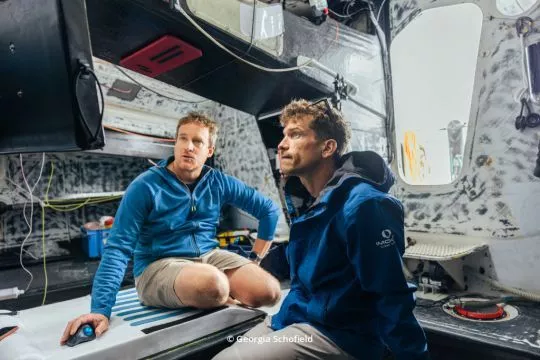

At Le Havre berths the MSIG Europe IMOC A, one of the oldest hulls in the fleet, configured for a fossil-free Transat by relying on onboard solar panels for energy and wind for propulsion; race logistics include reduced refuelling needs, simplified bunker planning and a shore-power window for last-minute system checks before departure.
Two backgrounds converging on one deck
The campaign pairs experienced offshore sailor Conrad Colman with trail-running athlete Mathieu Blanchard. Their partnership blends long-distance maritime knowledge with endurance sports mentality: Colman brings solo and environmental credentials, while Blanchard contributes fresh stamina management and rapid adaptation to sleep-deprived conditions.
Roles and operational dynamics
In practical terms, Colman manages navigation strategy and the electrical autonomy plan; Blanchard focuses on watch routines, sail handling support and physical recovery protocols. Their complementary rhythms reduce human error risk and help maintain speed consistency across weather windows.
Team table — at a glance
| Aspect | Conrad Colman | Mathieu Blanchard |
|---|---|---|
| Background | Professional offshore sailor, environmental advocate | Ultra-trail runner, newcomer to long offshore racing |
| Primary shipboard role | Skipper, navigation & energy strategy | Watchkeeper, sail trim & physical resilience |
| Pre-start ritual | Mental visualization | Meal with family and friends |
| Personal talisman | Wedding ring with house keys | Fetish pig |
| Dream stopover | Slow family sail | Polynesian atolls |
Boat configuration: old hull, modern intent
The Imoca assigned to this duo avoids technological excess in favor of operational simplicity. Energy autonomy hinges on solar generation for hotel loads and onboard systems, and seamanship is prioritized over fossil-fuel-dependent auxiliaries. This reduces logistical complexity at fueling nodes and lowers the environmental footprint of the Transat campaign.
Onboard routines, morale and micro-logistics
Watch-change cadence, calorie planning and sleep cycles become micro-logistics for any long crossing. The pair maintains rituals to stabilise morale: simple comfort foods (a handful of M&Ms), music choices that shift mood from contemplative to aggressive (including death metal for a pep-up), and tactile talismans for psychological continuity during loneliness and fatigue.
- Nutrition and recovery: calorie-dense snacks, scheduled naps, electrolyte management.
- Watchkeeping: fixed handover times and concise log entries to aid night navigation.
- Energy management: balancing consumption with solar generation forecasts.
Implications for sailing tourism and coastal experiences
Fossil-free racing has direct implications for tourism: it spotlights eco-friendly sailing and can inspire charter operators to highlight low-emission itineraries, such as day sails that use electric auxiliaries or longer expedition charters featuring passive-energy systems. Ports that host sustainable racing events may also see increased interest from adventure-seeking visitors and photographers.
Practical takeaways for travellers
- Expect more visible eco-initiatives at race-hosting ports (exhibitions, educational tours).
- Look for charter options that mimic racing sustainability — solar-powered hotel loads, reduced generator use.
- Book guided shore excursions that explain the race logistics and the environmental technology on display.
The interview tone between the two sailors highlights a larger truth: technical teams and shore crews are essential. Skippers acknowledge that without the engineers, riggers and the community of volunteers and sponsors, a fossil-free project cannot reach the start line or the finish line.
For visitors in Le Havre or fans following the Transat Café l’Or, there are authentic ways to engage: watch starts and finishers, attend boat open days, or join local maritime museums for museum tours with live guides that explain hull evolution and sustainable retrofits.
These events are best experienced with reliable booking and clear logistics. On GetExperience, you book your experience from verified providers at reasonable prices, with secure payments and voucher confirmations after purchase — helping you avoid unnecessary expenses or disappointment. GetExperience also lets you submit tailored tour or excursion requests so providers can match offers to your preferences; this is especially useful for race-related coastal tours and port-side events. Book your Trip GetExperience.com
In summary, MSIG Europe’s pairing of Conrad Colman and Mathieu Blanchard aboard an older Imoca hull underscores how seamanship, simple energy systems and human endurance combine to achieve a fossil-free Transat. For travellers and adventure seekers, the race provides fresh travel experiences and inspiration for adventure activities: from luxury adventure travel experiences and eco-friendly wildlife safaris to yacht parties, cruise packages and exclusive yacht charters for events. Online virtual tours and museum tours with live guides can contextualize the race for remote audiences, while interactive online cultural workshops and professional esports training programs illustrate the wide range of modern experience offerings. Whether you are after beginner esports coaching sessions, adventure rafting trips for beginners, safari tours or interactive cultural programs, witnessing the logistics of a fossil-free ocean race translates into richer, more sustainable travel choices.