


 English (UK)
  Русский
  বাংলা
বাংলা  العربية
  日本語
日本語  한국어
한국어  Magyar
  Norsk nynorsk
  Türkçe
  עִבְרִית
  Español
  Čeština
  Svenska
  Português
  Ελληνικά
  Suomi
Suomi  Nederlands
  Română
  Italiano
  Français
  Polski
  Українська
  Deutsch
  简体中文
简体中文  Slovenčina
  Српски језик
  اردو
اردو  Azərbaycan dili
  O‘zbekcha
  አማርኛ
አማርኛ 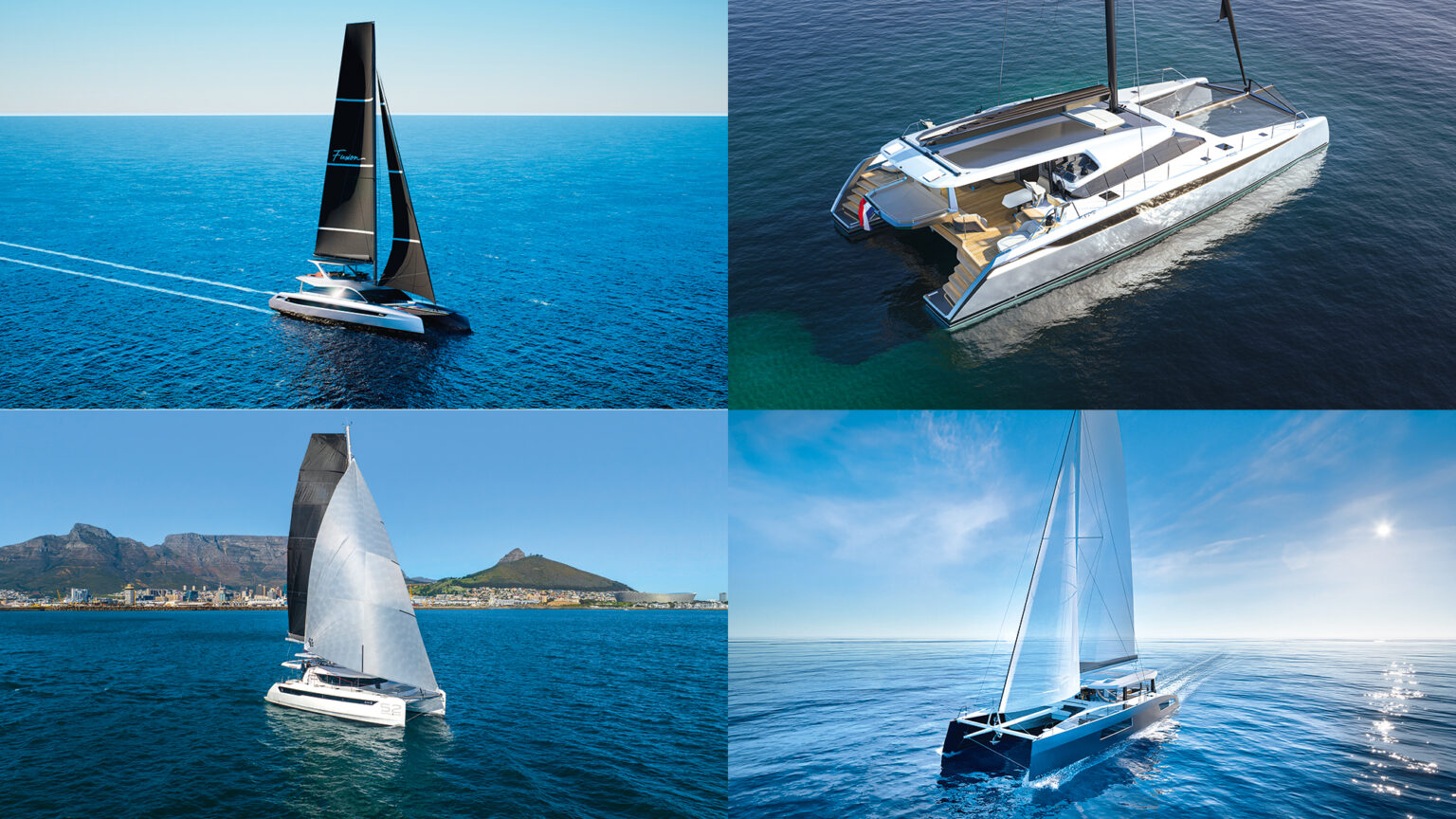

Market snapshot at a glance: size, displacement and operational footprint
At recent shows, manufacturers exhibited multihulls with lengths overall from 15.75m to 24.00m, displacements ranging roughly 18–55 tonnes, and upwind sail areas up to 295m², signalling a clear logistical pivot toward vessels that prioritise marina compatibility, charter berthing economics and hybrid energy systems over raw race-boat lightness.
From race-lean to liveaboard-friendly: what’s changing
The sector is moving from ultra-light pre-preg carbon construction to more varied infusion composites, hybrid-ready systems and higher internal volume. These changes affect supply-chain decisions (materials sourcing, production lead-times), port infrastructure (deeper berths and larger berthing beams), and operational profiles for owners and charter operators who now value comfort and autonomy alongside respectable sailing performance.
Key design drivers
- Volume and livability: larger master suites, expanded saloons and fold-down swim platforms.
- Sustainability: basalt fibres, recycled cores, electric propulsion and hydrogenerator integration.
- Short-handed operation: simplified deck layouts, forward helms and reduced lead runs for easier handling.
- Charter flexibility: modular interiors and multiple cabin layouts for private, bareboat or crewed use.
Gunboat Fusion 80
Gunboat’s new Fusion line reframes the brand from sharp-etched racer-cruisers to a “Gran Turismo” of performance catamarans. The Fusion 80 emphasises early‑sailing and steady cruising rather than top-end sprint speeds, trading extreme weight savings for enhanced comfort and perceived quality.
Notable features
- Construction: infused composite (less reliance on pre-preg carbon and honeycomb furniture).
- Interior: master suite expanded from 10m² (GB72) to 19m² on Fusion 80 with direct sea access.
- Design partners: VPLP and Christophe Chedal-Anglais; management comments compared the move to Porsche’s Cayenne strategy.
Gunboat Fusion 80 specifications
| Parameter | Value |
|---|---|
| LOA | 24.00 m (78 ft 9 in) |
| Beam | 11.07 m (36 ft 3 in) |
| Draught | 2.20–4.06 m |
| Sail area (upwind) | 295 m² |
| Indicative displacement | 50–55 tonnes (loaded) |
| Price from | €13.5m ex VAT |
Windelo 58 & 62 — sustainability in practical form
Windelo continues its focus on green materials and systems: basalt fibre components, recycled foam cores and electric/hydrogenerating drives. The 58 and 62 are configured to sail in very light airs (as little as four knots) thanks to fine hulls, lifting boards and powerful rigs — a design choice that reduces fuel reliance and suits longer, low-impact passages favored by eco-minded cruisers and charter guests.
Highlights
- Innovative garage-style aft door for seamless indoor/outdoor flow.
- Forward helm layout for reduced pitching and improved short-handed handling.
- Interiors enhanced via a collaboration with Stellantis for automotive-level fit and finish.
Windelo specifications (selected)
| Model | LOA | Displacement | Price |
|---|---|---|---|
| Windelo 58 | 17.68 m | 18 tonnes | €2,100,000 |
| Windelo 62 | 18.88 m | 22 tonnes | €2,550,000 |
Holld 74 — superyacht standards, short-handed operation
Dutch yard Holld brings superyacht-quality composite skills to the multihull market, targeting owners downsizing from large monohulls or superyachts who still want high standards and the option to sail with modest crews. The Holld 74 is a semi-custom, hybrid-ready platform with modular interiors and precision one-shot infusion techniques.
Leopard 52 — broad appeal and charter-friendly options
Leopard’s new 52 expands internal volume while maintaining a competitive base price. Multiple layout options (three to six cabins), hybrid electric powertrain options and a forward cockpit keep this model squarely aimed at owners who expect both liveaboard comfort and charter versatility. Optional regenerating hybrid systems underline the trend toward reducing hotel load on traditional diesel generators.
Implications for tourism and charter operations
For charter operators and marina planners, these multihulls offer attractive advantages: higher guest capacity per LOA, reduced fuel consumption during cruising, and more flexible cabin configurations for different market segments (romantic getaways, family cruises, or event charters). The need to service hybrid systems and handle larger beams may require updated port services and trained shore staff, but the payoff is a broader product range for the tourism market.
Highlights of this evolution include the fusion of performance and comfort, pragmatic choices for short-handed sailing, and concrete steps toward lower operational emissions. Yet even the best reviews and the most honest feedback can’t replace firsthand time aboard. On GetExperience, you book experiences from verified providers at reasonable prices, with secure payments, voucher confirmation and the option to submit tailored requests so providers can offer proposals that match your preferences; this makes planning charters, day sails and coastal tours straightforward and transparent. Book your Trip GetExperience.com
In summary, the new generation of high-performance multihulls blends livability and eco-tech with credible sailing performance. Models such as the Gunboat Fusion 80, Windelo 58/62, Holld 74 and Leopard 52 illustrate trends toward modular interiors, hybrid systems and designs that support charter and tourism use. These boats open up diverse travel experiences — from yacht parties and exclusive yacht charters for events to cruise packages and eco-friendly wildlife safaris — and even intersect with modern offerings like interactive online cultural workshops or museum tours with live guides when combined with shore programmes. Whether you seek adventure rafting trips for beginners ashore after a day at sea, luxury adventure travel experiences, safari tours or beginner esports coaching sessions to fill downtime, this multihull wave makes those options more accessible and comfortable for guests and owners alike.