


 English (UK)
  Русский
  বাংলা
বাংলা  العربية
  日本語
日本語  한국어
한국어  Magyar
  Norsk nynorsk
  Türkçe
  עִבְרִית
  Español
  Čeština
  Svenska
  Português
  Ελληνικά
  Suomi
Suomi  Nederlands
  Română
  Italiano
  Français
  Polski
  Українська
  Deutsch
  简体中文
简体中文  Slovenčina
  Српски језик
  اردو
اردو  Azərbaycan dili
  O‘zbekcha
  አማርኛ
አማርኛ 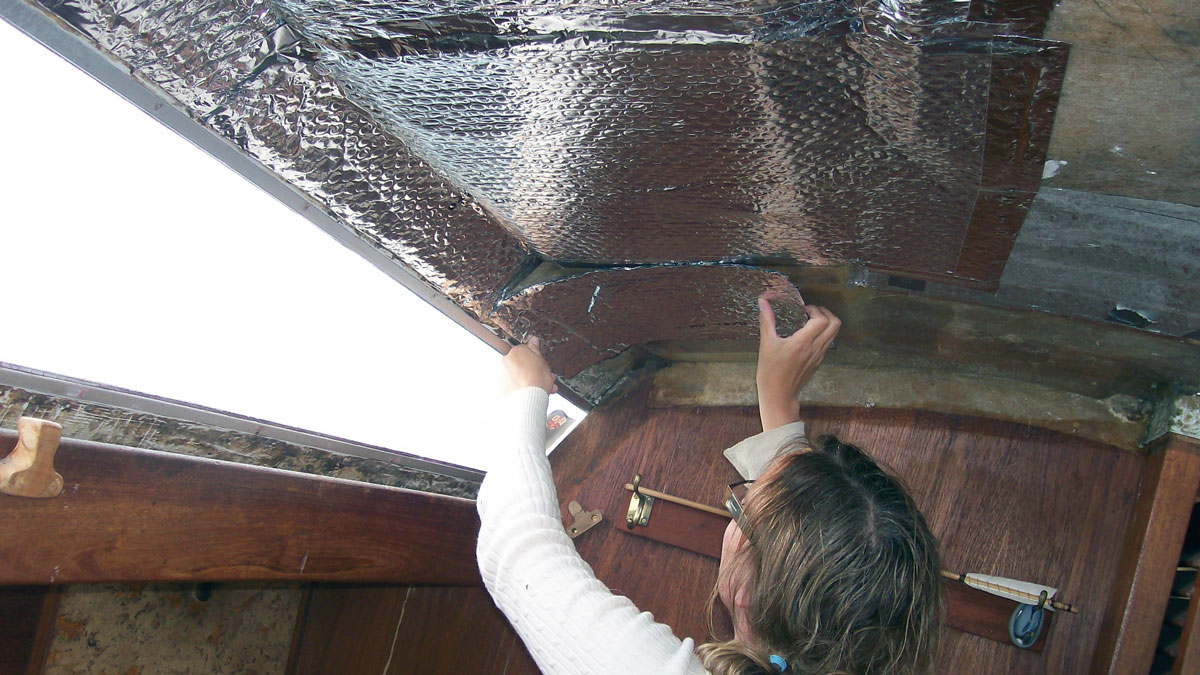

Marina haul-out windows and berth access constraints determined the timing for the insulation works on the Cobra 850 Water Lily, with most major fitting carried out during a scheduled spring lift-out to avoid disrupting winter berth logistics.
Condensation, heating costs and the decision to insulate
Owners Mark and Nicky Green found that while a 28ft (8.5m) cabin is simple to heat, persistent condensation and escalating electric heater bills made long-term winter liveaboard plans impractical without insulation and improved sealing. Rising running costs from panel heaters and limited locker space created the logistical requirement for a compact, cost-effective insulation strategy that could be installed in situ.
Initial material selection and practical constraints
Space, budget and the curved hull profile dictated material choices. The retrofit used rigid foil-faced Celotex boards for planar locker areas and flexible foil-lined bubble wrap where curvature and clearance were limiting factors. A continuous vapour barrier was installed between the rigid insulation and the internal lining to control moisture migration and reduce mould risk.
Installation sequence at a glance
The work followed a phased, marina-friendly schedule: haul-out for major deckhead and hull-contact insulation; internal stripping and window resealing while ashore; then progressive re-fit of lining and joinery. Key steps included adhesive bonding with Sikaflex, mechanical battens for cladding fixings, aluminium tape sealing of joints and UPVC tongue-and-groove cladding for curved panels.
| Material | Typical thickness | Pros | Cons |
|---|---|---|---|
| Celotex (foil-faced) | 25–50 mm | High R-value per mm, rigid, easy to straight-cut | Less flexible on compound curves, waste from offcuts |
| Foil-lined bubble wrap | variable | Flexible for hull curves, lightweight, quick to fit | Lower R-value per layer; recommend multiple layers |
| Spray foam | expands | Seals complex cavities; high insulation performance | Expensive; best for gutted interiors and professionals |
Practical modifications that made the biggest difference
Several specific interventions reduced damp and improved comfort:
- Seal and reseal Perspex windows: removing old mastic, cleaning scratches, resealing with marine Sikaflex and fitting new teak trims restored window integrity and dramatically reduced water ingress and draughts.
- Use of UPVC cladding: flexible hollow cladding fitted to the pilot berth and saloon deckhead created an attractive, wipe-clean finish that follows hull curvature.
- Raised floor assembly: sandwiching foil bubble wrap between plywood layers increased thermal separation from the bilge and provided a workable subfloor for carpet tiles.
- Vapour control and taped joints: sealing Celotex and bubble wrap joints with aluminium tape and installing a continuous vapour barrier prevented internal moisture transfer and mould growth.
Tools, tolerances and workmanship tips
Measure battens and mark screw lines before fixing cladding. Use heavy-grade wallpaper lining paper to make templates for tricky corners. Trim screws and drill lengths must be chosen carefully to avoid puncturing hull skins—this is a safety and regulatory consideration. Work in a well-ventilated area when using spray adhesives or Sikaflex; fumes are flammable and require caution.
Top tips for winter liveaboard comfort
- Plan major insulation work while the boat is out of the water; haul-out simplifies access and reduces scheduling conflicts with marina operations.
- Install a cockpit cover or tarpaulin to protect entryways and reduce rain ingress around companionways.
- Consider an electric towel rail as a dual-purpose drying and warming solution that keeps heads serving as an airing cupboard.
- Balance insulation with ventilation; trapped moisture will still cause problems even with good insulation.
The insulation overhaul also opened possibilities for travel and tourism uses: a well-insulated liveaboard becomes a viable micro-accommodation for unique stays, overnight yacht parties or as a base for local cruise packages and coastal museum tours with live guides.
Highlights of this retrofit include the practical combination of Celotex and foil bubble wrap, resealed Perspex windows, and flexible UPVC cladding that respected curved hull geometry. While detailed DIY reviews and honest feedback help, nothing replaces personal experience. On GetExperience, you book your experience from verified providers at reasonable prices. This empowers you to make the most informed decision without unnecessary expenses or disappointments. GetExperience offers a wide variety of tours worldwide to suit any preference and budget — practical for anyone planning yacht charters or coastal excursions. Get the best offers GetExperience.com
In summary: controlling condensation and improving thermal efficiency on a small boat requires a thoughtful mix of materials, careful scheduling around marina haul-outs, and attention to sealing and ventilation. The best outcomes came from pairing rigid insulation where space allowed with flexible foil bubble wrap for curved sections, sealing joins with aluminium tape, and prioritising window reseal work. These steps reduce heating bills, eliminate damp bedding and expand the boat’s potential as comfortable accommodation for travel experiences—from adventure rafting trips for beginners to exclusive yacht charters for events and eco-friendly wildlife safaris—while also supporting related options like online virtual tours, museum tours with live guides, yacht parties, cruise packages and interactive online cultural workshops.