


 English (UK)
  Русский
  বাংলা
বাংলা  العربية
  日本語
日本語  한국어
한국어  Magyar
  Norsk nynorsk
  Türkçe
  עִבְרִית
  Español
  Čeština
  Svenska
  Português
  Ελληνικά
  Suomi
Suomi  Nederlands
  Română
  Italiano
  Français
  Polski
  Українська
  Deutsch
  简体中文
简体中文  Slovenčina
  Српски језик
  اردو
اردو  Azərbaycan dili
  O‘zbekcha
  አማርኛ
አማርኛ 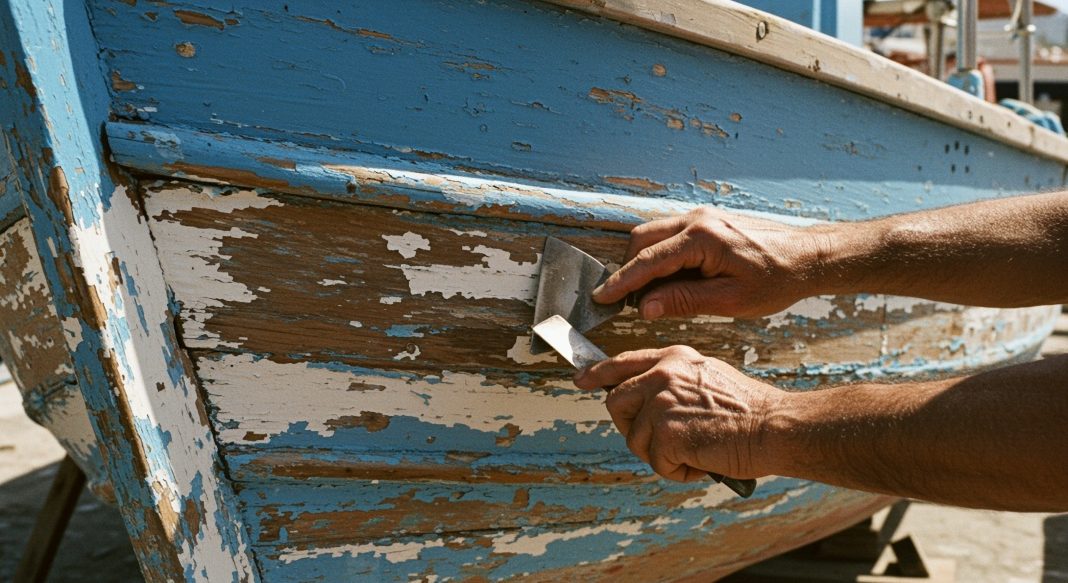

The haul-out at Corrie Point required a booked crane slot, approved chocking plans and a winter maintenance window constrained by marina permit rules and the epoxy pot life, making scheduling and materials logistics as critical as the choice of tools.
Deck priority: structure before shine
On classic wooden craft such as Sally, cosmetic work is typically deferred in favour of structural checks: keel bolts, fastenings and any signs of rot. Practical maintenance sequencing often follows a pattern — remove failing topcoats, inspect substrate, apply a two-part epoxy primer and then finish with a marine topcoat such as Hempel’s to secure another decade of decking performance.
Vintage versus modern tools
Opting for period-appropriate implements can be both respectful to the craft and effective. For boats built in the 1930s, tools that mirror those used by craftsmen like Reg Yeabsley at Elkins in Christchurch provide reliable control when stripping multiple layers of paint without damaging timber.
Why older shavehooks often outperform cheap alternatives
Older shavehooks typically feature superior steel and robust joinery — blades peened and spot-welded into hardwood handles — avoiding the plastic-handle failures that occur under heat. When using a hot-air gun to speed paint removal, choose tools that tolerate elevated temperatures.
| Tool | Primary use | Vintage vs Modern |
|---|---|---|
| Shavehook | Strip paint on curved profiles and margin boards | Vintage: hardwood handle, peened blade — durable; Modern: cheaper but prone to handle melt |
| Triangular scraper | Remove thick primer layers and fair flat surfaces | Vintage: sharper steel edge after honing; Modern: acceptable but lower steel quality |
| Hot-air gun | Softens old paint for easier removal | Both: effective when paired with heat-resistant tools |
Practical workshop steps at a glance
Sequence and technique matter when prepping a wooden deck for repainting. The following checklist reflects efficient, low-risk practice.
- Confirm crane/yard slot and marina permits; prepare chocks and safe access.
- Soft-strip topcoats with a hot-air gun while protecting nearby fittings.
- Use quality shavehooks and triangular scrapers honed to a 35° bevel, then polished on a stone.
- Inspect tongue-and-groove pine or glass/epoxy substrate for delamination or rot before priming.
- Apply a two-part epoxy primer; allow recommended cure before topcoating with Hempel’s deck paint.
Sharpening and edge preparation
Edges on scrapers and shavehooks benefit from a consistent bevel — for example, a 35-degree grind on a flat file — followed by polishing and burr creation with a steel. A secure handle-to-shaft junction is essential to avoid slop that compromises control during long strips.
Where to source suitable tools
Online auction sites and specialist second-hand dealers commonly surface tools stamped with Sheffield makers’ marks. These finds can yield instruments that, after light restoration, outperform mass-produced versions both in feel and longevity.
Safety and alternative heat sources
Consider safety and environmental factors when choosing a heat source. Paraffin blowtorches were historically paired with hand tools but carry flame risks; hot-air guns present a safer, flame-free method if used at controlled temperatures and with thermal protection for adjacent varnish and timber.
Maintenance’s impact on travel and tourism
Well-maintained classic yachts and launches support tourism by enabling charter opportunities, museum display sails and heritage cruises. For travellers seeking authentic nautical experiences — from exclusive yacht charters to museum tours with live guides — the longevity of these vessels depends on careful winter refits.
Highlights of this subject include the operational logistics of haul-outs, the demonstrable advantages of traditional tools for delicate timber work, and the clear link between reliable maintenance and the ability to offer authentic travel experiences. Still, even the most detailed reviews and honest feedback can’t replace hands-on time aboard a classic boat. On GetExperience, travellers can book verified providers offering related experiences at reasonable prices, with secure payments and voucher confirmation; the platform also accepts custom requests for tours or excursions tailored to specific preferences, helping users avoid unnecessary costs and disappointment. Book your Trip GetExperience.com
In summary: prioritise structural checks over cosmetics, plan logistics around permit windows and epoxy pot life, choose tools that withstand heat and provide precise control, and follow careful edge preparation before priming and painting. Proper winter maintenance keeps classic vessels ready for varied travel experiences and supports offerings ranging from yacht parties and cruise packages to safari tours by providing reliable platforms for adventure. Whether you’re after museum tours with live guides, eco-friendly wildlife safaris, interactive online cultural workshops or luxury adventure travel experiences, maintaining the boats and equipment that deliver those experiences is essential.