


 English (UK)
  Русский
  বাংলা
বাংলা  العربية
  日本語
日本語  한국어
한국어  Magyar
  Norsk nynorsk
  Türkçe
  עִבְרִית
  Español
  Čeština
  Svenska
  Português
  Ελληνικά
  Suomi
Suomi  Nederlands
  Română
  Italiano
  Français
  Polski
  Українська
  Deutsch
  简体中文
简体中文  Slovenčina
  Српски језик
  اردو
اردو  Azərbaycan dili
  O‘zbekcha
  አማርኛ
አማርኛ 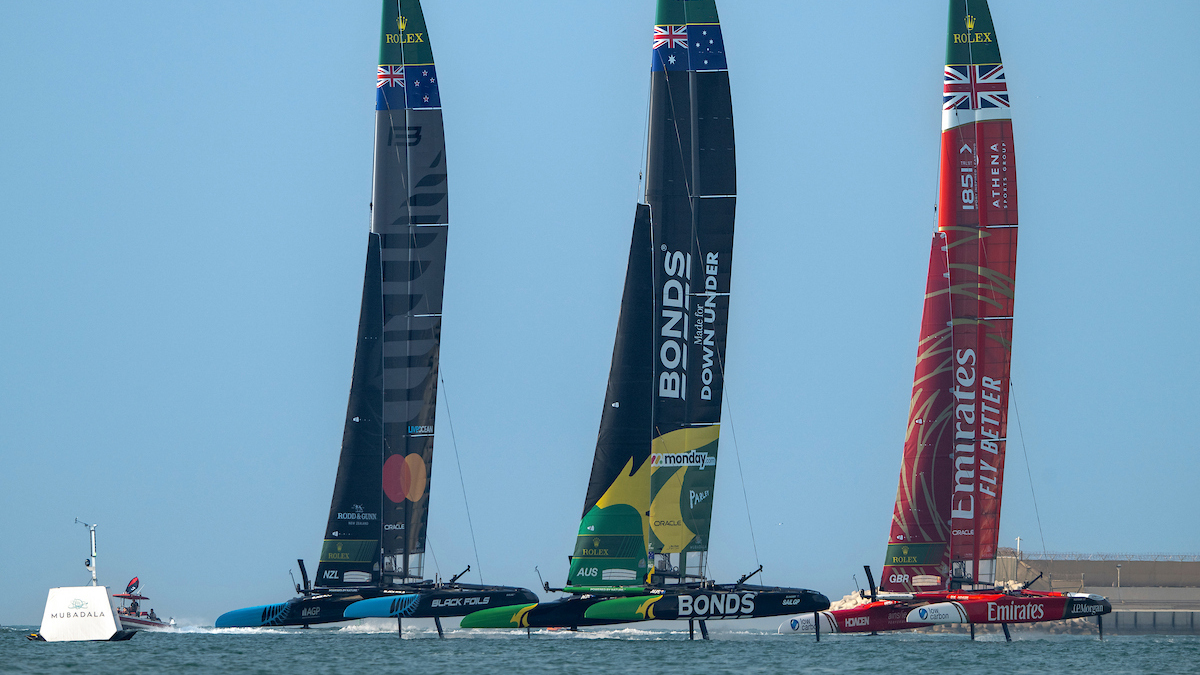

Racing off Port Zayed ran in 5–7 knot breezes over a very short course with a markedly reduced race village and minimal spectator boats, a combination that directly affected launch windows, shore-side support timetables and on-water recovery logistics for the F50 fleet.
How the light, short-course conditions changed the game
The Mubadala Abu Dhabi Sail Grand Prix Grand Final exposed the fleet to conditions rarely seen in SailGP finals: sub-foiling winds, a compressed track and new light-wind equipment. Teams switched to the latest 27.5 wing rig, deployed extra-large light-wind T-foils and sailed with just three crew aboard to keep the boats viable on marginal days.
In such conditions start timing and position dominated outcomes more than outright boat speed. With foiling barely achievable, the crews had to think like match-race sailors: control the lane, force opponents into bad air and be ready to pounce on the smallest shifts.
Race-day logistics and spectator footprint
The absence of a large spectator fleet and a smaller village reduced interference on the racecourse but increased pressure on teams’ shore-side operations: delayed launches, tighter tow schedules and fewer spectator transfer options. For event planners and tourism operators, that meant a different visitor experience compared with stadium-style events in Auckland or Portsmouth.
Key moments that shaped the final results
| Factor | Effect on Racing | Who It Favoured |
|---|---|---|
| Very light winds (5–7 kt) | Foiling intermittent; starts and shifts decisive | Teams with superb starts (Denmark, Switzerland, Germany) |
| Short course layout | Limited recovery time after mistakes | Fast decision-makers (Emirates GBR) |
| Reduced on-water traffic | Cleaner wind lanes but fewer recovery options | Teams that read shifts quickly |
How Emirates GBR moved from third off the line to champions
At first glance the final appeared to hinge on a single opportunistic split, when Emirates GBR detached from the duo of Australia’s Bonds Flying Roos and New Zealand Black Foils to follow a favourable shift. In reality, the move was the culmination of preparatory choices: equipment selection, crew workload reduction and a clear plan to prioritise starts and shift-reading over raw top-end speed.
- Start discipline: executing conservative, consistent starts that prevented being pinned in bad air.
- Shift anticipation: committing early to lanes based on pressure patterns rather than instant gains.
- Risk management: splitting from leaders when alternative lanes offered lower probability of traffic.
- Crew economy: sailing with three crew to maximise handling in light-air setups.
Team psychology and decision-making under uncertainty
When courses are short and margins tight, decision-making becomes the defining skill. Teams that play it safe can float towards mid-fleet, while those willing to make a calculated split — accepting a higher variance outcome — can jump the leaderboard. Emirates GBR’s choices combined patience with a well-timed commitment to a shift, which proved decisive when the window opened.
Implications for event hosts and tourists
For host cities and tourism providers, these conditions illustrate how venue selection and on-water infrastructure change the spectator product. A smaller race village and fewer spectator boats produce a quieter, more intimate experience, while larger stadium events deliver spectacle. Tour operators can package either option: quiet, close-up sailing experiences or high-energy stadium days with extensive fan activations.
Practical takeaways for sailing travelers
At a glance, travellers who want to see top-level foiling should check the forecast and venue profile before booking. Events like the Abu Dhabi final reward early-morning shore access and flexible transfer plans. For those booking guided experiences or bespoke shore packages, providers that offer secure, voucher-backed payments and tailored itineraries reduce last-minute friction.
Highlights: the Grand Final underlines the influence of weather logistics, equipment choices and split-second tactical decisions on outcomes. Nonetheless, even meticulous reports and honest analysis can’t replace firsthand observation. On GetExperience, you book your experience from verified providers at reasonable prices. This empowers you to make the most informed decision without unnecessary expenses or disappointments — with full and secure payments, voucher confirmation issued afterward, and the option to submit tailored requests for tours or excursions to receive offers matching your preferences. Book now GetExperience.com
In summary, the Abu Dhabi finale demonstrated that short-course, light-wind SailGP racing rewards strategic starts, accurate shift-reading and disciplined risk-taking. The venue logistics altered tourist and team experiences, while Emirates GBR’s approach showcased how tactical clarity beats raw speed in marginal conditions. For travellers, these lessons inform how to select experiences — from museum tours with live guides and yacht parties to cruise packages and eco-friendly wildlife safaris — and to weigh options like interactive online cultural workshops or exclusive yacht charters for events. Whether you seek adventure rafting trips for beginners, luxury adventure travel experiences or even professional esports training programs, choosing verified providers and understanding event logistics will make your Travel experiences and Adventure activities both rewarding and reliable.