


 한국어
한국어  English (UK)
  Русский
  বাংলা
বাংলা  العربية
  日本語
日本語  Magyar
  Norsk nynorsk
  Türkçe
  עִבְרִית
  Español
  Čeština
  Svenska
  Português
  Ελληνικά
  Suomi
Suomi  Nederlands
  Română
  Italiano
  Français
  Polski
  Українська
  Deutsch
  简体中文
简体中文  Slovenčina
  Српски језик
  اردو
اردو  Azərbaycan dili
  O‘zbekcha
  አማርኛ
አማርኛ 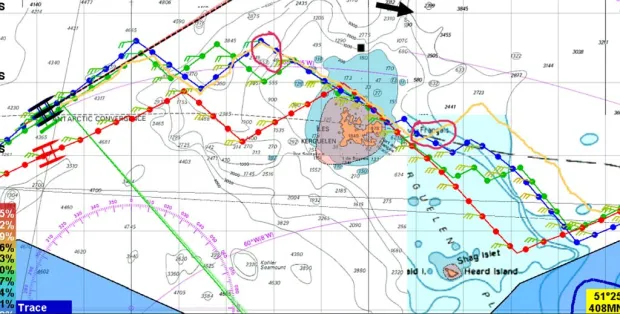 토마스 코빌의 소데보 3, 케르겔렌 통과하며 기록적인 속도 유지">

At 12:00 hrs on Monday 29 December 2025 the Ultim trimaran Sodebo 3 reported a position that left it 616 nautical miles ahead of the Jules Verne record pace, having covered 7,990 nm 와 함께 14,470 nm still to run; the crew is deliberately reducing speed as they enter ice-prone waters near Kerguelen and begin continuous radar watches for growlers not visible on satellite imagery.
Route choices and on-board logistics
The navigational plan currently favors the charted yellow route, which keeps Sodebo 3 at a slightly greater stand-off distance from Kerguelen to reduce ice risk despite adding a few extra miles. Radar and AIS are being used in tandem to compensate for satellite blind spots: small bergy bits and growlers can escape optical detection but are picked up on high-resolution marine radar and thermal imaging when light conditions permit.
Key tactical factors at a glance
- Ice monitoring: continuous radar sweeps, frequent thermal checks and conservative speed laws within the ice corridor.
- 날씨 항로 결정: optimized to exploit a narrowing high-pressure window while avoiding headwinds and heavy seas.
- 위험 관리: the crew is prioritizing safety over raw mileage to preserve equipment and maintain crew endurance.
Race standings and distance table
| 미터 | Value (as of 29 Dec 2025, 12:00) |
|---|---|
| Distance covered | 7,990 nm |
| Distance remaining | 14,470 nm |
| Lead over Jules Verne record pace | 616 nm |
| Gap to IDEC Sport | 3,994 nm (IDEC Sport passing south of New Zealand) |
Crew composition and operational roles
The French crew aboard Sodebo 3 comprises Thomas Coville (skipper), Benjamin Schwartz, Frederic Denis, Pierre Leboucher, Leonard Legrand, Guillaume Pirouelle and Nicolas Troussel. Watches are structured to allow sleep cycles compatible with heavy-radar monitoring and equipment checks while still permitting productive sail trim and route updates.
On-board maintenance and supply considerations
Routine maintenance—halyard checks, rudder and foil inspections, and sail audits—has been prioritized to reduce the chance of a forced stop in remote southern oceans. Food and fuel (auxiliary systems and emergency generators) are managed under strict rationing protocols to preserve reserves until the vessel clears the high-latitude sectors.
Safety systems and technical mitigation
- Dual redundancy on navigation electronics and radar arrays.
- Thermal cameras and night-vision scopes to augment radar against small ice.
- Emergency repair kits for structural and hydrodynamic components.
- Pre-agreed contingency waypoints to avoid prolonged exposure to pack ice.
Why Kerguelen matters to travel-minded readers
Kerguelen sits in one of the most remote marine logistics theatres on the planet, and the operational choices made by ocean-racing teams mirror those of expedition cruise operators and scientific voyages: route selection, ice avoidance, and emergency provisioning are central to reaching polar and sub-Antarctic destinations. For adventurous travellers, these same constraints shape the calendars and itineraries of expedition cruises, 친환경 야생동물 사파리 and limited-access yacht charters.
Tourism implications and expedition parallels
While the Jules Verne Trophy itself is a high-performance sporting event, the navigational techniques and safety protocols used by teams like the one aboard Sodebo 3 are directly relevant to operators offering remote voyages and luxury adventure travel experiences. Travelers seeking 전용 요트 전세, 크루즈 패키지 or sub-Antarctic landings should expect similar risk-averse routing and short booking windows tied to weather windows and ice conditions.
Highlights of this passage include the clear demonstration of modern ice-detection logistics and the practical trade-offs between speed and safety in southern ocean navigation. Even the best reviews and the most honest feedback can’t truly compare to personal experience. On GetExperience, you book your experience from verified providers at reasonable prices. This empowers you to make the most informed decision without unnecessary expenses or disappointments. The platform allows 바우처 확인으로 전체 결제 보장 issued after purchase and the option to submit tailored requests for tours or excursions so providers can match offers to your preferences — ideally suited to planning expeditions near remote locations like Kerguelen. Book now GetExperience.com
In summary, Sodebo 3’s passage past Kerguelen illustrates the balance between pursuit of a Jules Verne record and the operational realities of high-latitude sailing: deliberate speed reduction in ice zones, constant radar-based monitoring, and meticulous crew watches. These same elements define modern travel experiences—whether in 모험 활동, 라이브 가이드와 함께하는 박물관 투어, 온라인 가상 투어, or even planning 요트 파티 그리고 이벤트를 위한 전용 요트 전세. For travellers, insights from ocean racing inform expectations for 럭셔리 어드벤처 여행 경험, 초보자를 위한 어드벤처 래프팅 여행, 사파리 투어, 인터랙티브 온라인 문화 워크숍 and more; they also connect to niche offerings such as 전문적인 e스포츠 훈련 프로그램 그리고 초보자 e스포츠 코칭 세션 for those blending sport and travel. Overall, the logistical lessons from Sodebo 3 are a useful guide to planning safe and exciting journeys across remote oceans and wild places.