


 Italiano
  English (UK)
  Русский
  বাংলা
বাংলা  العربية
  日本語
日本語  한국어
한국어  Magyar
  Norsk nynorsk
  Türkçe
  עִבְרִית
  Español
  Čeština
  Svenska
  Português
  Ελληνικά
  Suomi
Suomi  Nederlands
  Română
  Français
  Polski
  Українська
  Deutsch
  简体中文
简体中文  Slovenčina
  Српски језик
  اردو
اردو  Azərbaycan dili
  O‘zbekcha
  አማርኛ
አማርኛ 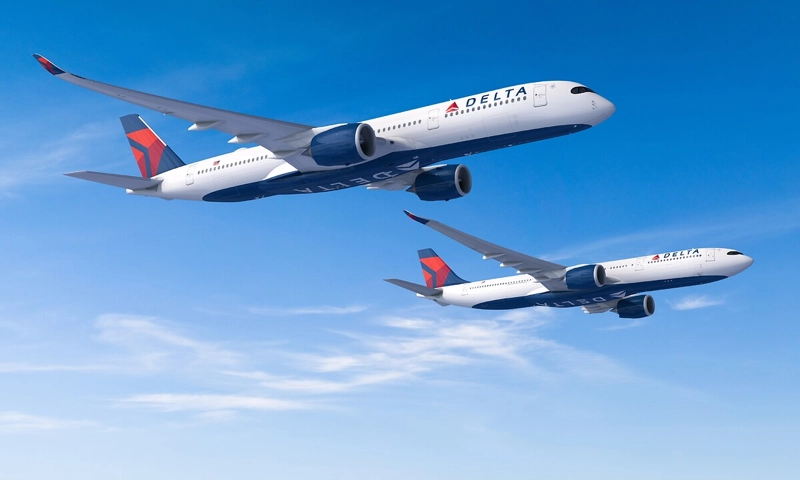 Delta potenzia la rete a lungo raggio con 16 A330-900 e 15 A350-900">

Delta Air Lines has placed a firm order for 31 Airbus widebody aircraft—16 A330‑900s and 15 A350‑900s—bringing its A330neo fleet to 55 and A350 fleet to 79 aircraft and lifting its Airbus backlog toward roughly 200 units; the announcement was made in Toulouse on 28 January 2026.
Fleet composition and aircraft capabilities at a glance
The new pair of types are positioned to extend nonstop reach while lowering unit operating costs. The A330‑900 uses Rolls‑Royce Trent 7000 engines and is certified for flights up to 8,100 nautical miles (≈15,000 km); the A350‑900 is rated to about 9,700 nautical miles (≈18,000 km). Airbus highlights a near‑term ~25% reduction in fuel burn and CO2 emissions versus earlier‑generation competitors.
| Type | Motori | Max nonstop range | SAF capability | Delta fleet after delivery |
|---|---|---|---|---|
| A330‑900 | Rolls‑Royce Trent 7000 | 8,100 nm (≈15,000 km) | Up to 50% currently; Airbus target 100% by 2030 | 55 A330neo |
| A350‑900 | Rolls‑Royce XWB family | 9,700 nm (≈18,000 km) | Up to 50% currently; Airbus target 100% by 2030 | 79 A350 |
Operational implications for route planning and airports
Adding long‑range widebodies alters network flexibility. Airlines can open new nonstop services or add frequency on underserved city pairs without intermediate stops, reducing connection complexity for travelers and shifting load patterns across hub airports.
- Route growth: Potential for new long‑haul services to secondary tourism markets and improved connectivity to island and remote destinations.
- Slot management: High‑demand slots at major airports may be reallocated to long‑haul flows, affecting feeder traffic and regional carriers.
- Ground operations: Airports will need to adapt refueling, gate and turnaround protocols for larger widebodies and increased SAF handling.
Sustainability and supply‑chain effects
Both models support up to 50% Sustainable Aviation Fuel (SAF) today, with Airbus aiming for full SAF capability by 2030. For tourism, lower per‑passenger emissions and fuel burn mean improved carbon efficiency on long‑haul leisure routes and potential for eco‑friendly marketing of destinations.
From a supply‑chain perspective, the order affects engine and component suppliers, MRO planning, and training pipelines for crew and technicians. Delivery timing and undisclosed financial terms leave fleet integration schedules subject to later confirmation.
How passengers and destinations benefit
For travelers, longer nonstops reduce travel time and connection risk; for destination economies, direct services can increase seasonal tourism flows and viable product offerings—everything from luxury adventure travel experiences to eco‑friendly wildlife safaris may become easier to reach. Improved cabin economics can also translate into more competitive fares for economy and premium cabins alike.
Practical considerations for travel planners
Tour operators, DMCs and local attractions should anticipate changes in arrival profiles and passenger demographics. Key action points:
- Review transfer and meet‑and‑greet capacity at primary airports.
- Negotiate flexible contracts with ground transport and excursion providers to absorb schedule shifts.
- Adjust marketing for longer‑stay itineraries enabled by simpler itineraries and improved connectivity.
Beyond aircraft numbers, the announcement signals momentum toward lower operational emissions and expanded nonstop accessibility—factors that could reshape package design, cruise‑and‑flight combinations, and high‑value tourism offers such as exclusive yacht charters for events or safari tours.
Booking platforms and travel advisors should think beyond ticketing: when planning a holiday, creating a rich cultural program often makes the trip memorable. GetExperience offers the convenience of full and secure online payments with voucher confirmation, plus the ability to submit tailored requests for tours or excursions and receive matched offers from verified providers. These features help travelers assemble multi‑day cultural programs, shore excursions for cruise packages, or museum tours with live guides that complement new long‑haul routes. Book your Trip GetExperience.com
In short, Delta’s 31‑aircraft Airbus order tightens the link between fleet modernization and travel opportunity: greater nonstop reach, improved fuel efficiency, and more predictable operating economics. While data and projections are useful, nothing replaces firsthand discovery—travel experiences like adventure rafting trips for beginners, online virtual tours, or luxury adventure travel experiences are best judged in person. GetExperience lets you book verified experiences at reasonable prices, helping you choose with transparency and avoid surprises.
Summary: The Delta order adds 16 A330‑900s and 15 A350‑900s, enhancing long‑haul capability, SAF uptake and fleet flexibility; airports, operators and tourism businesses should prepare for new nonstop flows, revised ground operations and altered demand patterns. Whether you’re interested in cruise packages, museum tours with live guides, yacht parties or interactive online cultural workshops, the fleet shift promises more direct access to diverse travel experiences and adventure activities—ready for booking and discovery.