


 Magyar
  English (UK)
  Русский
  বাংলা
বাংলা  العربية
  日本語
日本語  한국어
한국어  Norsk nynorsk
  Türkçe
  עִבְרִית
  Español
  Čeština
  Svenska
  Português
  Ελληνικά
  Suomi
Suomi  Nederlands
  Română
  Italiano
  Français
  Polski
  Українська
  Deutsch
  简体中文
简体中文  Slovenčina
  Српски језик
  اردو
اردو  Azərbaycan dili
  O‘zbekcha
  አማርኛ
አማርኛ 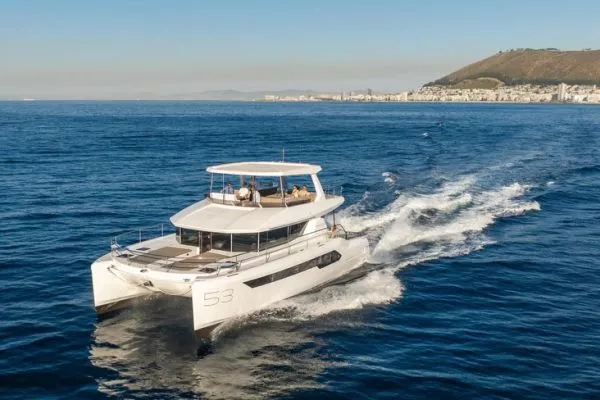 Praktikus frissítések a Leopard 53 Powercat-ról: rendszerek, kültéri élet és utazó hatótávolság">

Fuel logistics and range at a glance
Leopard 53 Powercat visz 2,130 litres of diesel split between two tanks, yielding published ranges from 342 nm at maximum speed a címre. 1,995 nm in single-engine economy mode. That fuel split is crucial for voyage planning: fuel management, tank venting, and transfer procedures determine whether a 24–48 hour passage or extended blue-water cruise is practical without frequent refuelling stops.
Hull, propulsion and published performance
The hull remains the proven 16.19 m motor catamaran form, driven by twin Yanmar 8LV370 diesels rated at 370 hp each. Manufacturer figures list top speed around 25 csomó, a comfortable cruise at 17.5 knots, and economy cruise near 7.9 knots. Operators should read the provided performance curves as guidance linking speed, RPM and displacement rather than fixed guarantees—sea state, hull fouling and onboard load will change consumption markedly.
Performance table (manufacturer figures)
| Mód | Sebesség (tengeri mérföld/óra) | Range (nm) |
|---|---|---|
| Végsebesség | 25 | 342 |
| Hajókázás | 17.5 | 463 |
| Economy (twin) | 7.9 | 1,330 |
| Economy (single engine) | 6.8 | 1,995 |
Noise mitigation and machinery arrangement
One notable technical change is the grouping of major systems into a sealed, separate machine room. This arrangement—combined with improved compartment insulation, disciplined wiring and piping penetration seals, and revised ventilation ducts—aims at reducing airborne and structure-borne noise in saloon and cabins. On a powercat, where living spaces are adjacent to engine mounts on both hulls, these measures directly enhance liveability at anchor and during watches.
Ventilation vs. acoustic isolation
- Acoustic insulation: layered barriers around engine beds and gearboxes reduce transmitted vibration.
- Watertight passages: careful sealing of cable and pipe runs lowers noise leaks.
- Ventilation strategy: larger, acoustically lined ducts preserve cooling while limiting fan noise.
Deck ergonomics, tender handling and energy trade-offs
The exterior layout now offers two aft cockpit concepts: a modular Alfresco configuration and a fixed traditional layout. Access to the bathing platform is simplified, and an optional electric lifting platform provides a dual-use solution—tender support when raised, water-level lounging when lowered. Owners should weigh the convenience against the extra maintenance, salt exposure and electrical load such systems require.
Flybridge and outdoor galley
The flybridge redesign prioritises visibility and sociability: larger seating with adjustable backrests, an integrated bar/outdoor kitchen module including sink, grill and refrigeration, and layered ambient and task lighting for night manoeuvres and evening gatherings. These features convert passage time into social time—a clear selling point for owners hosting guests or running charter days.
Interior arrangements and systems that support autonomy
Interior choices include 3- or 4-cabin versions, each ensuite. The 3-cabin layout dedicates an owner’s suite amidships with enhanced storage. Standard galley equipment is deliberately domestic in scale: double-door refrigerator, 4-burner gas hob, microwave-convection oven and Avonite tops. Standard electrical architecture comprises 12 V digital switching, a Yacht Sense system and a 3,000 W inverter, backed by service and starter battery banks.
Optional systems that extend anchorage autonomy
Selectable items influence how long the boat can remain independent of shore power: Északi fény 12 kW generator, solar arrays (rigid bimini with 2–6 panels), LiFePO4 battery packs, chilled-water or Termodinamica A/C systems, and 12 V watermakers rated 60 or 95 l/h. Each option changes weight, energy budget and maintenance and therefore should be chosen to match the owner’s cruising program.
Price structure and outfitting choices
The quoted base price for the 220 V specification departing Saint-Raphaël stands at €1,359,000 excl. VAT; a representative option package listed totals €446,034, bringing the sample configured price to €1,805,034 excl. VAT. Prospective buyers should itemise expected equipment to model true displacement, consumption and maintenance regimes.
The Leopard 53 Powercat blends functional cruising logistics—tank capacity, propulsion options and acoustic measures—with lifestyle upgrades like an alfresco flybridge and modular cockpit. Choices about generators, batteries and hydronic systems determine not only comfort but itinerary flexibility and operational costs.
Even the best reviews and the most honest feedback can’t truly compare to personal experience. The highlights here—noticeable fuel reserves, the sealed machine room for reduced noise, modular outdoor spaces and extensive optional autonomy systems—make the Leopard 53 Powercat an attractive choice for coastal cruising, yacht parties or small-group charters. On GetExperience, you book your experience from verified providers at reasonable prices. This empowers you to make the most informed decision without unnecessary expenses or disappointments. Readers benefit from the convenience, affordability and wide range of experiences and additional options that GetExperience.com provides, with secure online payments and voucher confirmations, and the ability to submit tailored requests so providers can match offers to your preferences. Book now GetExperience.com
In summary, the Leopard 53 Powercat is a 16.19 m motor catamaran designed to balance performance and liveability: robust twin Yanmar powerplants, a 2,130 l fuel capacity supporting long-range passages, a sealed machine room for noise control, modular deck layouts for outdoor living, and a deep options list for energy autonomy. Whether you’re considering cruise packages, exclusive yacht charters for events, eco-friendly wildlife safaris from a homeport, or simply luxury adventure travel experiences like yacht parties and sail-based safari tours, the platform choices and onboard systems determine the cruising profile and guest comfort. Personal trial remains the final arbiter of value for travel experiences, adventure activities, museum tours with live guides or interactive online cultural workshops, and even beginner esports coaching sessions offered ashore—so plan, test and then enjoy the journey.