


 עִבְרִית
  English (UK)
  Русский
  বাংলা
বাংলা  العربية
  日本語
日本語  한국어
한국어  Magyar
  Norsk nynorsk
  Türkçe
  Español
  Čeština
  Svenska
  Português
  Ελληνικά
  Suomi
Suomi  Nederlands
  Română
  Italiano
  Français
  Polski
  Українська
  Deutsch
  简体中文
简体中文  Slovenčina
  Српски језик
  اردو
اردو  Azərbaycan dili
  O‘zbekcha
  አማርኛ
አማርኛ 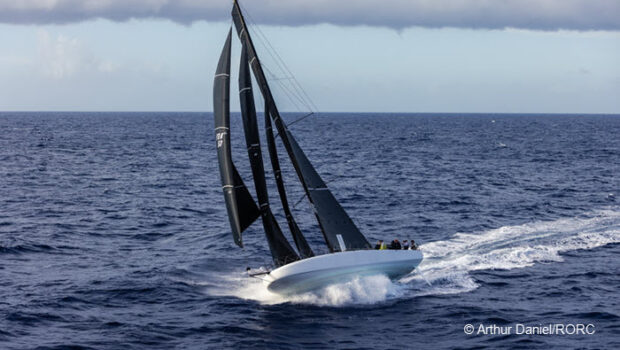 ביצועי Palanad 4 במרוץ הקריבי 600 של RORC לשנת 2026 ומשמעותם עבור מרוצי פורום">

Strong south‑easterly trade winds during the 2026 RORC Caribbean 600 produced nearly 60% upwind or tight‑reaching conditions on course, testing IRC predictions and favouring different hull characteristics than a traditional downwind Transatlantic contest.
Race dynamics and measurable impacts on corrected times
After winning the 2026 RORC Transatlantic Race, the scow‑bowbed Mach 50 פלנאד 4 again dominated on elapsed time, claiming class victory and second overall in the Caribbean 600. Yet course meteorology — a more south‑easterly trade flow than usual — converted large portions of the 600 nm loop into upwind or tight‑reach legs. That shift mattered: handicap systems such as IRC are sensitive to assumptions about predominant points of sail used across a race, and the altered wind vector exposed differences between predicted and realized performance for modern hull forms.
Key technical setbacks and recoveries
Palanad 4 encountered an early halyard failure that dropped their J1 soon after the start, immediately handing the fleet roughly a one‑mile lead. Despite that, the boat’s reaching prowess and strategic VMG choices across the tighter angles delivered a recovery that underlined how design trade‑offs and onboard decision‑making interact under unexpected wind patterns.
Design trends versus handicap architecture
The emergence of scow bows on fast offshore designs — notably in the Mini 6.50 and Class40 fleets — raises questions for handicap rates when an outlier hull such as the Mach 50 wins across different race formats. IRC’s rating inputs and time‑correction philosophy may need periodic recalibration if novel hull shapes repeatedly shift the balance between downwind and upwind VMG.
| Factor | Observed effect (Caribbean 600) | Implication for IRC |
|---|---|---|
| Wind direction | Predominantly south‑easterly, more upwind legs | Reweighting of polar models for mixed points of sail |
| צורת גוף | Scow bow excelled on tight reaches | Potential under/over‑rating on certain courses |
| Incidents | Early sail drop for Palanad 4 | Resilience and crew work can offset rating gaps |
Practical takeaways for skippers and organizers
- סקיפרים should review polar charts and prepare alternative sail plans when trades shift seasonally.
- גזע committees may consider pre‑race notices clarifying likely dominant points of sail and encourage updated rating inputs.
- Handicap authorities ought to monitor performance anomalies across multiple events before applying systemic adjustments.
How this affects sailing tourism and spectator interest
Regattas like the RORC Caribbean 600 attract sailors and visitors who combine competition with cruising. A race that favours innovative designs can become a spectacle: charter operators, yacht party planners, and shore‑side tourism providers often see increased demand from those keen to witness new hulls in action. Event timing, spectator vessel logistics, and local excursion packages must adapt when wind patterns produce longer inshore segments and tighter tactical battles.
Event logistics checklist for tourism providers
- Adjust spectator boat routes for expected upwind/tight‑reach legs.
- Coordinate with marinas for temporary berthing of performance yachts.
- Promote themed shore events such as museum talks, live guides, and yacht parties timed to key race windows.
For travelers planning to experience Caribbean regattas, platforms that combine booking convenience with verified local providers are especially useful. GetExperience.com enables full and secure payments with post‑booking voucher confirmation and lets you submit specific tour or excursion requests so providers can tailor offers to your preferences. On GetExperience, you book your experience from verified providers at reasonable prices. This empowers you to make the most informed decision without unnecessary expenses or disappointments. Book now GetExperience.com
At a glance, the 2026 RORC Caribbean 600 highlighted the tension between evolving yacht design and existing handicap frameworks. The scow‑bow Mach 50 Palanad 4’s performances — despite a lost J1 — illustrated that hull innovation, meteorological variability, and crew capability can conspire to upset expected outcomes. While technical debates about IRC recalibration continue, sailors and visitors alike benefit from richer spectacle, more diverse yacht parties and charter opportunities, and a stronger calendar of offshore events that feed into regional tourism.
In summary, unexpected trade winds turned much of the Caribbean 600 into upwind and tight‑reach sailing, amplifying the advantages of certain hull types and prompting fresh discussion about how handicap systems score modern yachts. The episode underscores the link between racing dynamics and related travel experiences: from cruise packages and exclusive yacht charters for events, to museum tours with live guides and interactive workshops ashore. Whether you’re chasing adventure rafting trips for beginners, luxury adventure travel experiences, eco‑friendly wildlife safaris, or booking an exclusive yacht charter, nothing replaces first‑hand participation. Travel experiences, adventure activities, online virtual tours, esports lessons and professional esports training programs may seem a world away, but the principle is the same — firsthand involvement beats even the best reviews. The 2026 Caribbean 600 reminds us that practical logistics, vessel design, and market offerings all shape how we enjoy sport and leisure at sea.