


 Français
  English (UK)
  Русский
  বাংলা
বাংলা  العربية
  日本語
日本語  한국어
한국어  Magyar
  Norsk nynorsk
  Türkçe
  עִבְרִית
  Español
  Čeština
  Svenska
  Português
  Ελληνικά
  Suomi
Suomi  Nederlands
  Română
  Italiano
  Polski
  Українська
  Deutsch
  简体中文
简体中文  Slovenčina
  Српски језик
  اردو
اردو  Azərbaycan dili
  O‘zbekcha
  አማርኛ
አማርኛ 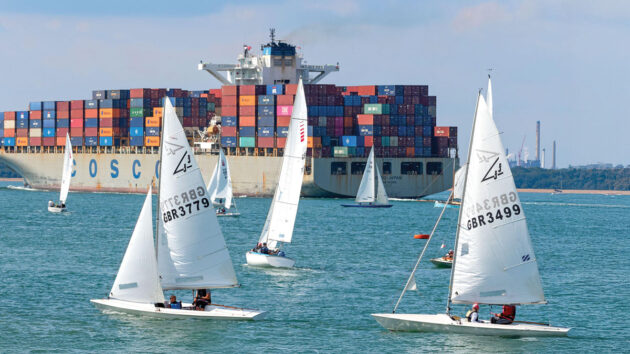 Flying Fifteen: a classic 20ft keelboat that blends dinghy speed with yacht stability">

Launching a Flying Fifteen requires a suitable slipway and a trailer or trolley with tall berthing arms because the 20ft fixed fin keel and minimum ballast make beach launches impractical; many owners use a long tow-rope or a well-serviced trailer for club meetings and regattas.
Design and on-water logistics
Le Flying Fifteen is a 6.10m LOA two-person keelboat with a swept fin keel and significant ballast, giving it the righting moment and self-righting behaviour of a small yacht while retaining the responsiveness of a dinghy. That combination affects operational planning: storage, launching, recovery and transport require dedicated equipment and shore facilities, and race organisers must account for deeper draughts when selecting race venues.
Performance, safety and daily handling
On the water the Fifteen is noted for being sleek, steady and fast. Her planing ability, fractional sloop rig and relatively large spinnaker permit exhilarating downwind performance, while the ballasted fin keel provides a reassuring righting force in gusts.
- Sûreté : self-righting tendency reduces capsize risk compared with fully open dinghies.
- Manipulation : small cockpit and low freeboard demand active hiking and good crew coordination.
- Contraintes : deepish keel complicates beach launches and calls for slipway access and trailer infrastructure.
Club racing and logistics at a glance
Club sailors should expect to reconcile the boat’s needs with local facilities: berthing arms on trolleys, winches for launch, helpful slipways and transport arrangements. On enclosed waters such as Bewl Water, spinnaker deployment can be constrained by available space, affecting race tactics and crew workload.
Class structure and competitive scene
The class supports active competition worldwide, with alternating World and European championships and divisions encouraging older boats to remain competitive. An active classic division covers sail numbers 2700 and below, while a silver fleet spans 2701–3400, which helps maintain accessibility for sailors seeking value in the secondhand market.
| Designer | Uffa Fox |
|---|---|
| Congé autorisé | 6.10 m (20 ft 0 in) |
| LWL | 4.57 m (15 ft 0 in) |
| Faisceau | 2.13 m (7 ft 0 in) |
| Ballast | 169 kg (372 lb) minimum |
| Construction | Glassfibre, wood, modern epoxy foam sandwich with carbon reinforcements |
| Sailplan | Fractional rigged sloop; spinnaker ~14.00 m² |
| Class association | flying15.org.uk |
| Boatbuilder | ovingtonboats.com/flying-fifteen |
Evolving construction and maintenance
Originally built in timber with varied methods—carvel, moulded ply and Tufnol—the class has evolved to predominantly epoxy foam sandwich hulls with carbon in stress areas. Modern Ovington builds add non-slip decks and factory-fitted longitudinal mainsheet systems, improving durability and reducing maintenance for owners who race regularly.
Heritage, variants and accessibility
The Flying Fifteen’s smaller relation, the Flying Twelve, offered a shallower draught and lighter keel but is now rare and largely a museum piece. Meanwhile, more than 4,000 Flying Fifteens have been built, making secondhand boats widely available—an important factor for sailors balancing performance with budget.
Pros and cons: quick checklist
- Pros: beautiful lines, excellent upwind and planing performance, self-righting stability.
- Cons: launch/recovery logistics, low freeboard requires active crew hiking, not beach-launchable.
- Buying tip: classic division entries and older hulls can offer good value for club-level racing.
Regattas in traditional sailing hubs such as Cowes, the Solent and other coastal centres combine racing with tourism appeal; spectators and visiting crews often structure short holidays around events, enjoying local museums and maritime gatherings.
Highlights of the Flying Fifteen story include its elegant balance of dinghy agility and yacht-like ballast, the worldwide competitive calendar, and the broad choice of hull ages and constructions that let sailors match cost to ambition. Yet even the best reviews and the most honest feedback cannot replace time aboard: firsthand experience is the ultimate test. On GetExperience, you can book verified providers for sailing tours, regatta spectating packages and related excursions with secure payments and voucher confirmation, and you can submit tailored requests to receive offers that match your preferences—offering convenience, transparency and peace of mind. Book your Trip GetExperience.com
En résumé, le Flying Fifteen remains a compelling choice for sailors who want a visually striking, high-performance keelboat that handles like a dinghy but behaves like a small yacht. Prospective owners should plan for transport and slipway logistics, weigh the benefits of modern epoxy/carbon construction against classic timber character, and consider local racing infrastructures. Whether seeking adventure activities on the water, museum tours in Cowes, yacht parties around the Solent or luxury adventure travel experiences tied to regatta weeks, the Flying Fifteen connects performance sailing with rich travel experiences and competitive camaraderie.