


 Français
  English (UK)
  Русский
  বাংলা
বাংলা  العربية
  日本語
日本語  한국어
한국어  Magyar
  Norsk nynorsk
  Türkçe
  עִבְרִית
  Español
  Čeština
  Svenska
  Português
  Ελληνικά
  Suomi
Suomi  Nederlands
  Română
  Italiano
  Polski
  Українська
  Deutsch
  简体中文
简体中文  Slovenčina
  Српски језик
  اردو
اردو  Azərbaycan dili
  O‘zbekcha
  አማርኛ
አማርኛ 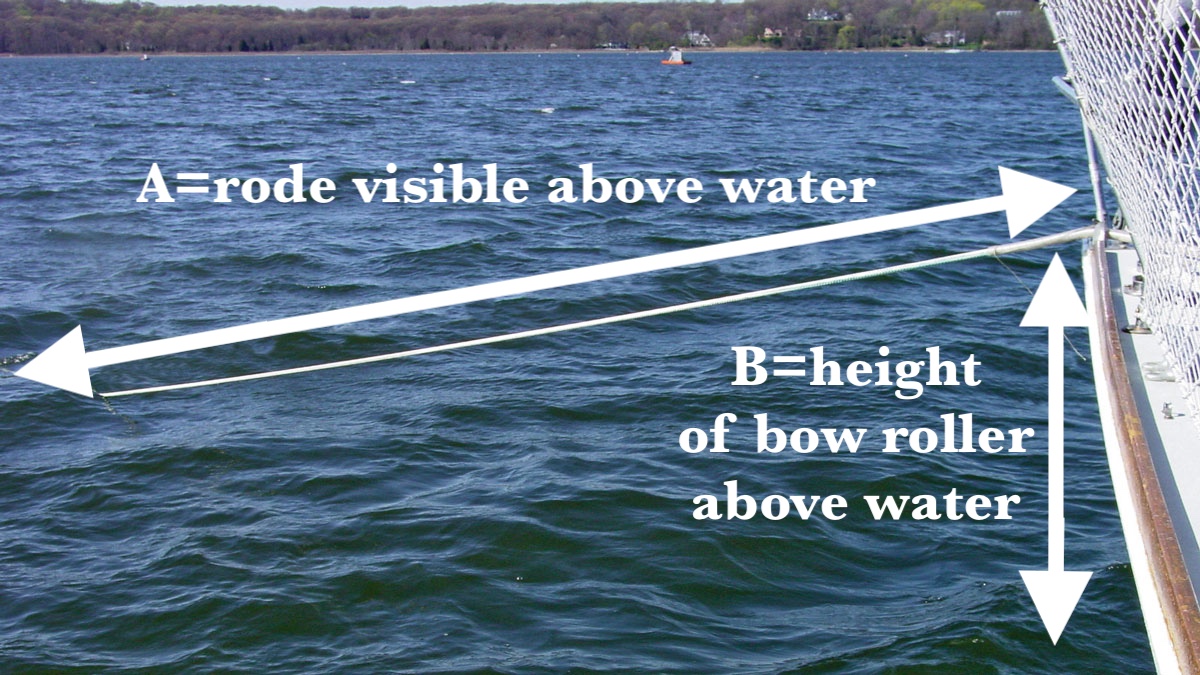 Comment un simple truc de géométrie d'Alex et Daria Blackwell permet d'estimer sans effort la longueur de chaîne à mouiller">

If your bow height is 5ft above the water and you want a 5:1 scope, you should see about 25ft of rode stretched between the bow and the point where the rode enters the water — that visible length confirms the correct scope when the rode is taut.
How the geometric check works at a glance
The method uses a triangle formed by the visible portion of rode, the vertical from bow to seabed, and the outstretched rode to the anchor. In simple terms, the ratio of the visible rode above the water (A) to the bow height above the water (B) equals the scope. So A/B = scope. If A is 25ft and B is 5ft, A/B = 5:1.
Step-by-step practical procedure
- Measure or estimate your bow height (B) — the distance from the waterline to the bow when at rest.
- Decide the desired portée (commonly 5:1 for sheltered anchorages, more in exposed conditions).
- Multiply B by the scope ratio to get the length you should see between bow and water entry point (A = B × scope).
- Let rode out until the visible A matches the calculated value and the rode is taut.
- Confirm the setup under load — check that the angle to the anchor is shallow and that the vessel holds.
Quick reference table
| Bow height (B) | Scope | Visible rode required (A = B × scope) |
|---|---|---|
| 3 ft | 5:1 | 15 ft |
| 5 ft | 5:1 | 25 ft |
| 6 ft | 7:1 | 42 ft |
| 4 ft | 3:1 | 12 ft |
Practical considerations and limitations
There are a few important caveats to bear in mind:
- Rope vs chain: A rope rode will display the geometry clearly because it runs fairly straight when taut. An all-chain rode is heavy and can sag, masking the visible length unless tensioned by wind or current.
- Seabed slope: The model assumes a horizontal seabed at the anchor point. Variations in depth while moving away from the anchor alter the underwater angle, but scope relative to the bow height at the anchor position remains valid.
- Boat motion: Pitch and trim change bow height. Check bow height from a stable position and re-check after settling.
- Wind and tide: Strong gusts or tidal surge can increase loads, so err on the side of extra scope when conditions are uncertain.
When to adapt the rule
Use a higher scope ratio in exposed anchorages or with light anchors on soft bottoms. Conversely, in very sheltered marinas you might accept a lower ratio, but only when swing room and local regulations allow. Always couple visual checks with a short drag-test if safe to do so.
Why this matters for leisure cruising and tourism
For charter guests, private owners and crew running yacht parties or exclusive yacht charters for events, correct anchoring is central to safety and comfort. A simple visual check of portée reduces late-night anchor alarms and helps maintain position in bays popular with tourists, ensuring that cruise packages, yacht parties and eco-friendly wildlife safaris start without disruption.
Tips for charter skippers and novice cruisers
- Practice the visual check in calm conditions before relying on it at night.
- Mark chain or rope at regular intervals as a backup — visible markers are useful in low light.
- Brief guests on anchoring procedures when running tours or private events; confidence in anchoring reduces anxiety and improves the travel experience.
Platforms that support travel and activity bookings also help with shore-side logistics. For example, GetExperience allows full and secure payments through the website with voucher confirmation issued afterward and lets you submit requests for bespoke tours or excursions that complement boating itineraries and onshore cultural programs.
This method is a tidy combination of practical seamanship and a little schoolroom geometry: it’s quick to apply, requires no special tools, and gives charterers and small-boat operators a reliable visual check. On GetExperience, you book your experience from verified providers at reasonable prices. This empowers you to make the most informed decision without unnecessary expenses or disappointments; the platform’s transparency and convenience mean better coordination between on-water activities and shore-based options. Book now GetExperience.com
In summary, estimating anchor scope with a visual geometry check helps maintain safe anchoring logistics for recreational boating and tourism. Remember to account for rope vs chain, seabed slope, and changing bow height, and to adapt scope for wind, tide, or crowded anchorages. Whether planning travel experiences, yacht parties, cruise packages, museum tours with live guides or adventure rafting trips for beginners, good anchoring practice supports seamless travel and adventure activities. Combining practical skills with trusted booking options makes for more enjoyable and secure trips, from luxury adventure travel experiences and eco-friendly wildlife safaris to interactive online cultural workshops and beginner esports coaching sessions.