


 Suomi
Suomi  English (UK)
  Русский
  বাংলা
বাংলা  العربية
  日本語
日本語  한국어
한국어  Magyar
  Norsk nynorsk
  Türkçe
  עִבְרִית
  Español
  Čeština
  Svenska
  Português
  Ελληνικά
  Nederlands
  Română
  Italiano
  Français
  Polski
  Українська
  Deutsch
  简体中文
简体中文  Slovenčina
  Српски језик
  اردو
اردو  Azərbaycan dili
  O‘zbekcha
  አማርኛ
አማርኛ 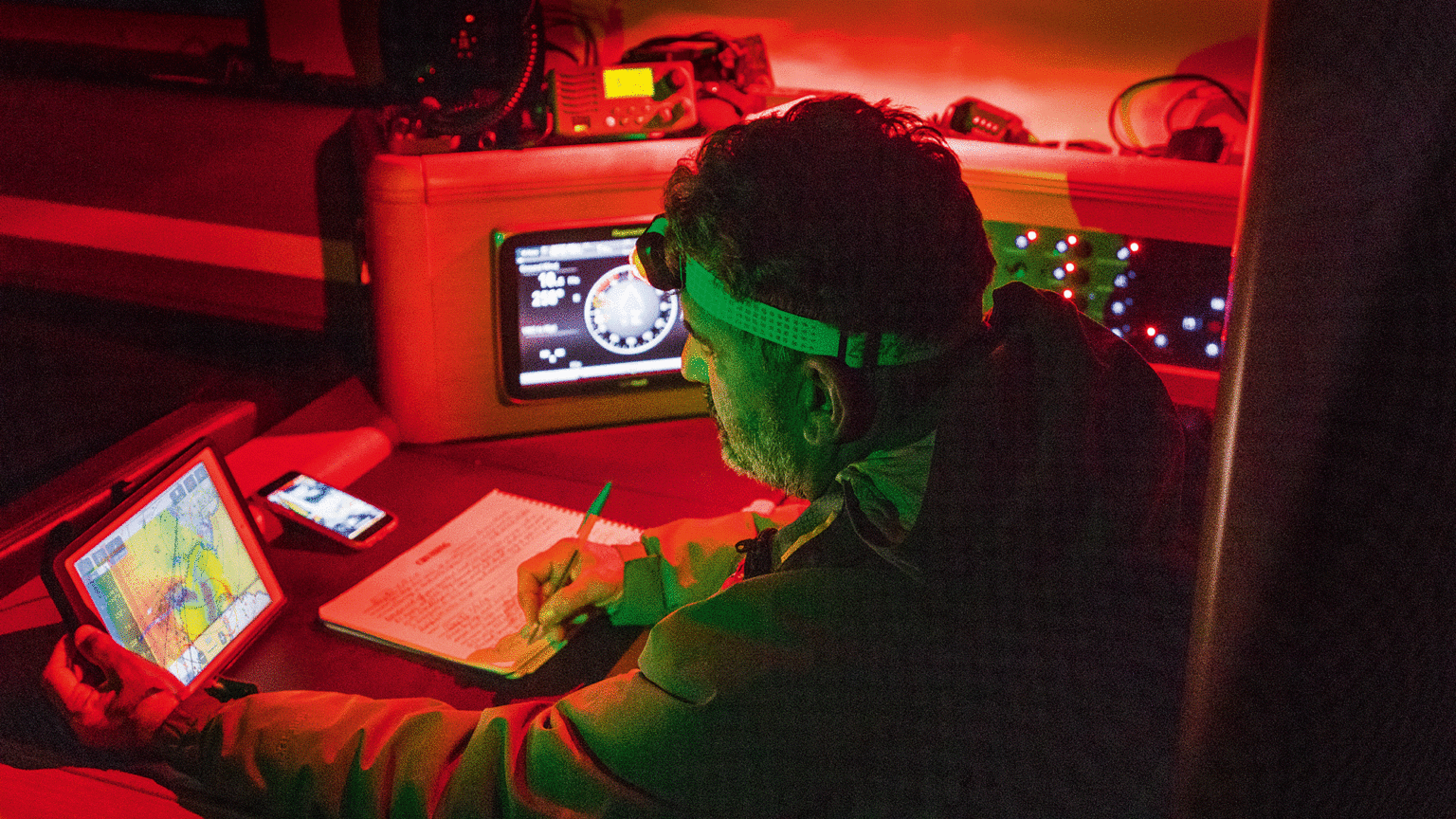 Käytännön navigointitaidot matkaveneilijöille: kartat, sovellukset ja ihmisten äly">

A misplaced chart zoom level in 2014 sent VO65 Team Vestas Wind onto the Cargados Carajos Shoals even though the reef was correctly shown on the chart, demonstrating a clear operational risk when modern navigation displays are trusted without verification.
The benefits of doubt at sea
Modern cockpits now juggle vector charts, satellite imagery, AIS overlays and crowd-sourced apps, but the most useful immediate skill is the ability to apply healthy scepticism. Vector charts can omit critical detail at certain zooms; outdated survey data or a forgotten correction can be as misleading as a torn paper chart. The operational rule remains: assume uncertainty until you have cross-checked it.
Foundations: pilot books and almanacs
Pilot books — such as those produced by the Royal Cruising Club Pilotage Foundation (RCCPF) — and almanacs provide a fixed, professionally researched baseline. They act as a verifiable snapshot in time and supply context for tidal ranges, lights, radio channels and port procedures. Even if somewhat out of date, they are the reliable reference against which more transient sources can be measured.
Paper, electronic and hybrid navigation
Molemmat paperikartat ja electronic charts have strengths. Paper charts don’t fail due to battery or software issues; electronic charts offer detail and integration. The safest approach is hybrid: use paper for big-picture planning and electronics for precision, switching sources to reveal inconsistencies.
| Source | Strengths | Heikkoudet | Best use |
|---|---|---|---|
| Pilot book | Professional research, verifiable notes | Can be slightly out of date | Baseline passage planning |
| Paper charts | Reliable backup, wide overview | Survey data ages | Emergency & big-picture navigation |
| Electronic charts/apps | Detail, overlays, tide/AIS integration | Zoom-dependent display; update gaps | Precision on approach; tactical routing |
| Crowd-sourced platforms | Recent photos, first-hand reports | Subjective, inconsistent | Reaaliaikainen tilannetietoisuus |
How to treat online tools
Apps such as Navily, Captain’s Mate, Harbourguideja Google Maps can supply up-to-the-minute photos and reports — useful for an at-a-glance check of anchorage conditions or shore-power availability. Yet user reviews reflect individual vessels and expectations: a catamaran’s calm can be a monohull’s uncomfortable swing. Look for patterns across platforms rather than single anecdotes.
Quick verification checklist
- Check the chart date and datum on both paper and electronic charts.
- Cross-reference with a pilot book or almanac for local notes.
- Compare at least two electronic chart providers; switch zoom levels.
- Seek soft intelligence — pontoon chats, marinas, local fishermen.
- Confirm recent crowd-sourced reports by pattern, not single posts.
- Use depth sounder and visual checks as the final arbiter.
Soft intelligence: marina chats and local knowledge
Informal exchanges remain among the most reliable navigation aids. A quick conversation with a harbourmaster, a fisherman, or a neighbouring skipper can reveal shifting shoals, local tidal quirks, or berthing etiquette that no chart or app lists. Maintaining a personal log of such observations turns them into a bespoke pilot book for future visits.
When charts turn off: a real-world interruption
In July 2025, many users found that Garmin removed access to charts for parts of south-east Asia after a change in local licensing terms. Solo sailor James Frederick discovered that downloaded charts were greyed out on devices, creating immediate navigational risk in coral-rich Indonesian waters.
Workaround and resilience
Frederick relied on a simple but effective workaround: keeping devices offline preserved downloaded charts. He also used OpenCPN on a laptop to prepare satellite overlays and maintained paper charts for ocean passages. The lesson is operational resilience — have redundant formats and simple emergency procedures (airplane mode, physical backups, local contacts).
Käytännönläheisiä vinkkejä
Trust but verify should be operational doctrine. Cross-check multiple sources, keep a personal log, and use traditional seamanship — eyes, soundings, and judgement — as the final decision layer. Whether approaching a narrow channel or selecting an anchorage, layering information and treating anomalies as red flags will reduce risk.
Verified reviews and thorough pre-trip planning are useful, but nothing substitutes first-hand experience. On GetExperience, you book your experience from verified providers at reasonable prices. This empowers you to make informed choices, avoid unnecessary costs, and select excursions tailored to your preferences. The platform’s secure payments, voucher confirmation and the ability to request custom tours make planning straightforward and transparent — Book now GetExperience.com
In summary: start with vetted foundations such as pilot books and almanacs, pair paper and electronic charts, use crowd-sourced tools critically, collect soft intelligence, and always maintain redundancy. Applying these steps will protect passages and improve travel experiences, from adventure rafting trips for beginners to eco-friendly wildlife safaris, luxury adventure travel experiences, yacht parties and exclusive yacht charters, museum tours with live guides, interactive online cultural workshops, cruise packages, safari tours and even beginner esports coaching sessions and professional esports training programs. Travel experiences and adventure activities are richer when navigation and local knowledge are handled with care—plan, verify, and then enjoy the journey.