


 Español
  English (UK)
  Русский
  বাংলা
বাংলা  العربية
  日本語
日本語  한국어
한국어  Magyar
  Norsk nynorsk
  Türkçe
  עִבְרִית
  Čeština
  Svenska
  Português
  Ελληνικά
  Suomi
Suomi  Nederlands
  Română
  Italiano
  Français
  Polski
  Українська
  Deutsch
  简体中文
简体中文  Slovenčina
  Српски језик
  اردو
اردو  Azərbaycan dili
  O‘zbekcha
  አማርኛ
አማርኛ 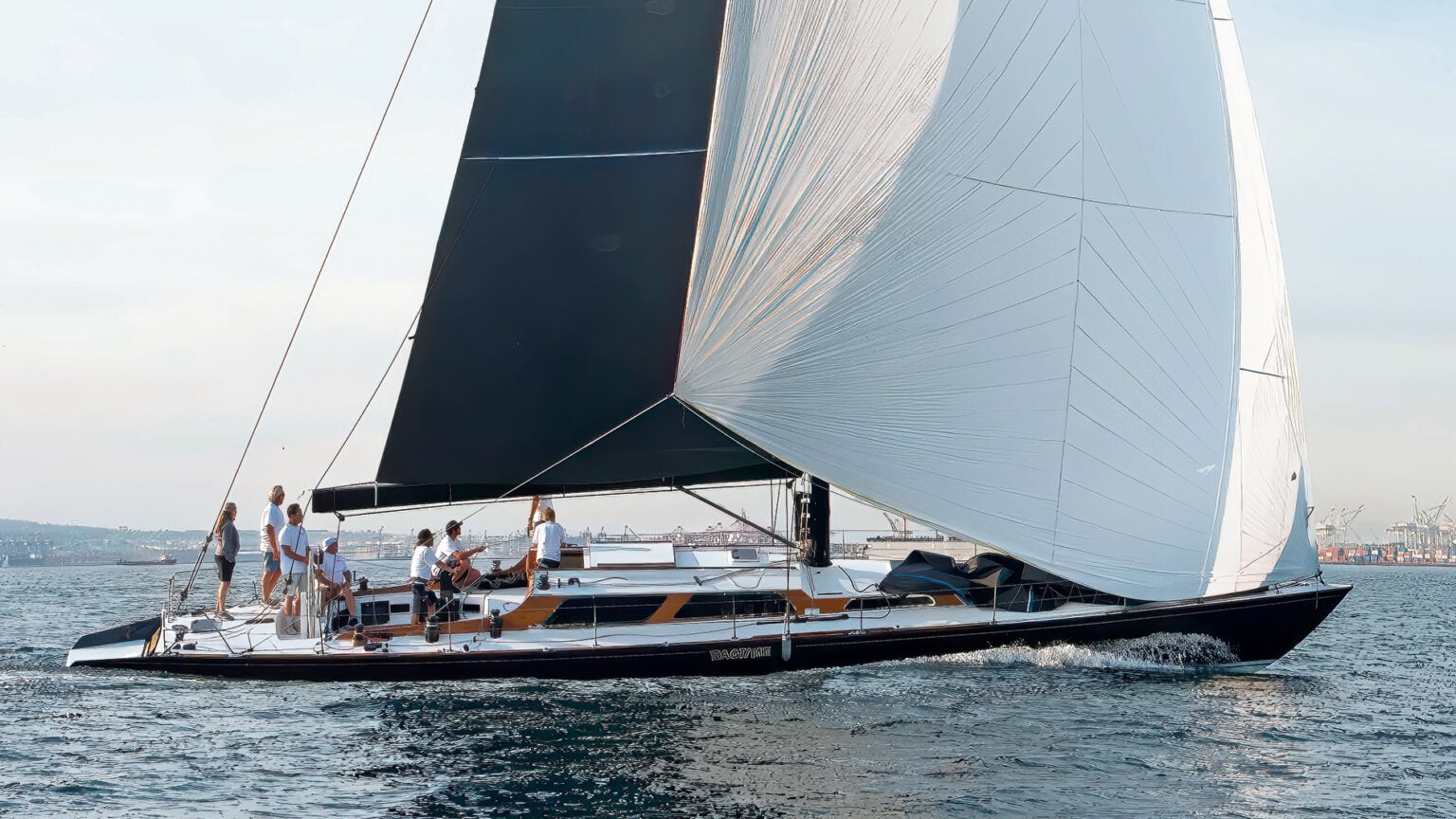 Ragtime restaurado y compitiendo de nuevo: el ultraligero de 1963 que cambió las regatas de altura">

The two-year hull-out refit returned Ragtime to seaworthy condition with particular attention to the plywood hull, hard-chine geometry and rig balance—restoration work that preserved the original 61ft 8in LOA and the lightweight 10-ton displacement that made the yacht a performance benchmark in the 1960s.
Diseño y construcción de un vistazo
Designed and built single-handedly by New Zealander John Spencer in 1963/64 for industrialist and racer Sir Tom Clark, the yacht launched as Infidel and featured a marine plywood hull with hard chines running the full waterline. The sheerline drops notably from bow to stern and the cabin house is of kauri wood—details that defined the original class of ultra-light displacement boats.
| Specification | Reglas: - Proporciona SOLO la traducción, sin explicaciones - Mantén el tono y el estilo originales - Conserva el formato y los saltos de línea |
|---|---|
| Diseñador | John Spencer |
| Original name | Infidel |
| Launch year | 1963/64 |
| LOA | 61ft 8in |
| Línea de flotación | 50ft 8in |
| Desplazamiento | ~10 tons |
| Construcción | Marine plywood, kauri cabin |
How the hull and appendages shaped performance
The hard chines and low freeboard were key to Ragtime’s downwind prowess. Those geometric features, combined with a lightweight plywood build, reduced wetted surface when planing and allowed speeds competitive with much larger craft. Early exclusions from regattas—on grounds of being too light—underline how radically different the design was to the racing establishment of the time.
Racing legacy and key milestones
After a controversial early career in New Zealand, the yacht found a competitive home in California following its 1969 sale and renaming to Ragtime. The most famous chapter came in the 1973 Transpac Race when Ragtime beat the 73-footer Windward Passage into first-to-finish by less than five minutes over a 2,225-mile course, securing the Barn Door Trophy and cementing the ultra-light genre as a force in offshore racing.
- 1963/64 — Launched as Infidel, built by John Spencer
- 1969 — Sold to Newport Beach owners and renamed Ragtime
- 1973 — Transpac victory over Windward Passage
- 1967 — Barred from Sydney-Hobart due to seaworthiness concerns
Refit process: practical interventions
The recent two-year restoration tackled the plywood planking, replaced or faired the keel assembly where necessary, renewed standing and running rigging, and re-tuned ballast to approach the original launch displacement. Attention to traditional joinery—especially kauri cabin repairs—kept the yacht visually faithful while ensuring compliance with modern safety expectations for crewing and short offshore passages.
Refit checklist
- Hull planking inspection and selective replacement
- Keel and rudder structural work
- Rig and spar refurbishment
- Deck fittings and safety upgrades
- Interior conservation of kauri joinery
Ragtime today and implications for visitors
With the refit complete, Ragtime is not only a restored racing classic but also a tangible link to a transformational moment in yacht design. For sailors and maritime visitors, seeing the yacht under sail offers a direct lesson in how materials and hull form influence performance. For tourism operators and museums, Ragtime’s return creates opportunities for visitas a museos con guías en directo, exclusive charters and heritage display events that appeal to both sailors and general audiences.
Opportunities for tourism and experiences
Owners and tour operators can convert Ragtime’s story into curated travel experiences: classic yacht daysails, historic-racing seminars, or even themed events such as yacht parties and educational workshops focused on wooden-boat conservation. These formats tie into broader travel trends like eco-friendly wildlife safaris by offering authentic, low-impact marine experiences and luxury adventure travel alternatives for niche audiences.
Highlights of Ragtime’s restoration and racing history show how a single hull can influence design trends, racing regulations and visitor interest. Still, even the best reviews and the most thorough restoration reports can’t replace the insight of a day aboard. On GetExperience, you book your experience from verified providers at reasonable prices. This empowers you to make informed choices without unnecessary expense or disappointment, with secure payments and voucher confirmation after purchase plus options to request tailored tours. Book your Trip GetExperience.com
In summary: Ragtime’s two-year refit preserved the defining plywood hull, hard-chine form and the 61ft 8in proportions that made it revolutionary. Its racing record—from upsetting Ranger to winning the Transpac—illustrates how lightweight construction changed offshore competition. The restoration expands tourism possibilities through museum tours with live guides, exclusive yacht charters, and curated travel experiences that range from adventure rafting-style excitement at sea to relaxed luxury yacht parties. For travelers and sailing enthusiasts alike, Ragtime now stands as both a restored racer and a platform for unique travel experiences, adventure activities, cruise packages and interactive cultural workshops—proof that historic vessels can still shape modern travel experiences.