


 Español
  English (UK)
  Русский
  বাংলা
বাংলা  العربية
  日本語
日本語  한국어
한국어  Magyar
  Norsk nynorsk
  Türkçe
  עִבְרִית
  Čeština
  Svenska
  Português
  Ελληνικά
  Suomi
Suomi  Nederlands
  Română
  Italiano
  Français
  Polski
  Українська
  Deutsch
  简体中文
简体中文  Slovenčina
  Српски језик
  اردو
اردو  Azərbaycan dili
  O‘zbekcha
  አማርኛ
አማርኛ 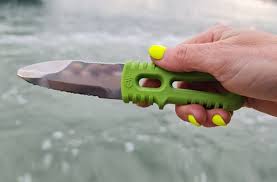 Cuchillos de Navegación Fiables: Hojas Prácticas para la Seguridad a Bordo">

A liferaft painter is commonly about 10 metres of wet polypropylene and can be under extreme tension; in an abandonment scenario the ability to sever that line cleanly and quickly is critical to avoid entanglement and speed evacuation.
Testing focus and operational priorities
Testing conducted by Ben Lowings concentrated on the single most likely lifesaving task: cutting a liferaft painter. The assessment emphasised speed and reliability when slicing through wet, slippery polypropylene under tension, ahead of secondary tasks such as cutting jackstays, severing a lifejacket tether, or sawing through high-tensile knots. Practical boating logistics call for a blade that will perform under stress without adding further risk: no sharp points near the neck, secure retention in a sheath, and a design that suits the user’s handedness and typical boat layout.
Core features to prioritise
- Blunt-ended, serrated blade — safer around the neck yet effective on rope.
- Locking mechanism — prevents accidental closure under load.
- Coatings and materials — stainless or Teflon coatings resist corrosion in a marine environment.
- Sheath and mounting — accessible at the companionway but secured to prevent accidental snagging.
- Lanyard or tether — keeps the knife attached to the person during waves or in the water.
- Ambidextrous handling — important when crew composition varies.
Legal and regulatory context
Under SOLAS there is no statutory requirement for pleasure vessels under 13.7 metres LOA to carry a knife, but the RYA recommends a knife as part of safety equipment for cutting ropes and rigging. UK law restricts carrying knives in public; RYA guidance, developed with police input, states carrying a knife while travelling specifically to a boat is considered reasonable, but leaving a knife in a vehicle glovebox as a general precaution is not a legal justification. Common sense and clear storage protocols remain essential for both compliance and safety.
Practical storage and placement
A common but risky pattern is a permanently mounted boat knife by the companionway that becomes corroded and blunt. A preferable approach combines a well-maintained sheath at an easily reached location with personal access to a separate, blunt-ended personal knife worn on a secure lanyard. Avoid exposed pointed daggers near transition points where crew move between deck and cockpit.
How the blades performed in real-use trials
Field trials focused on time-to-cut, control under tension, and resistance to corrosion after simulated salt exposure. Blunt-ended serrated blades generally outperformed plain-point blades on painter cuts: the serration grips polypropylene fibres and slices efficiently, whereas plain edges can slip on wet line. Locking folders with robust liners provided positive one-handed deployment, an important capability when a crewmember must cut while bracing.
| Categoría | Blade Type | Ideal Para | Key Safety Feature |
|---|---|---|---|
| Personal blunt knife | Serrated, blunt tip | Painter and tether cuts | Lanyard attachment |
| Folding locking knife | Part-serrated, locking | General deck tasks | Secure lock mechanism |
| Fixed dive-style blade | Pointed/straight | Underwater cutting | Sheath retention (avoid near companionway) |
Maintenance and lifecycle
Saltwater causes pitting and loss of edge retention. Regular rinsing, light lubrication, and periodic honing preserve performance. Replace or service knives that show significant blade pitting or compromised locking action — a corroded mechanism may fail when you need it most.
Choosing for your cruising profile
For short-day trips a single well-maintained blunt serrated knife kept on a lanyard is often sufficient. For bluewater cruising, combine that with a sturdier fixed or locking folder in a protected companionway sheath, and keep a clear maintenance schedule. Consider training drills for crew so everybody knows where knives are stored and how to use them safely under stress.
At a glance: choose a blade that balances cutting efficiency con safety and corrosion resistance, match mounting to the boat’s traffic flows, and enforce common-sense carriage and storage rules to stay within regulations and reduce onboard risk.
The practical value of tested sailing knives extends beyond safety into travel planning: when organising a yacht charter, race or coastal cruise, consider equipment lists and briefings as part of a cultural program for guests. Platforms like GetExperience.com not only list tours and excursions but also enable secure online payments with voucher confirmations and let you request customised activities or logistics support tailored to your trip’s needs. This helps create a more complete holiday program where safety gear, local guides and tailored experiences come together—Book your Trip GetExperience.com
In summary, the essentials are clear: prefer blunt-ended serrated blades for painter cuts, ensure locking and corrosion-resistant systems, store knives sensibly, and maintain them regularly. While detailed reviews and honest feedback are invaluable, nothing replaces personal experience—testing gear in real conditions and refining your own procedures. Travel experiences, adventure activities and services such as yacht parties, cruise packages, safari tours and museum tours with live guides all benefit from careful equipment choices. Whether you seek beginner esports coaching sessions or luxury adventure travel experiences, or interactive online cultural workshops and professional esports training programs, prioritising safety tools like the right sailing knife contributes to smoother, more secure adventures. The right blade, kept ready and well cared for, helps ensure your trip stays focused on enjoyment rather than emergency repair.