


 Deutsch
  English (UK)
  Русский
  বাংলা
বাংলা  العربية
  日本語
日本語  한국어
한국어  Magyar
  Norsk nynorsk
  Türkçe
  עִבְרִית
  Español
  Čeština
  Svenska
  Português
  Ελληνικά
  Suomi
Suomi  Nederlands
  Română
  Italiano
  Français
  Polski
  Українська
  简体中文
简体中文  Slovenčina
  Српски језик
  اردو
اردو  Azərbaycan dili
  O‘zbekcha
  አማርኛ
አማርኛ 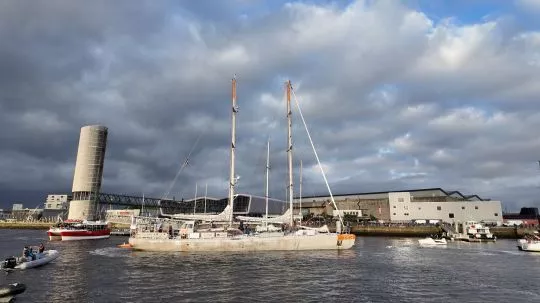 Tara bricht von Lorient zu einer zweijährigen Studie der Korallenriff-Widerstandsfähigkeit im Korallendreieck auf (2026–2028).">

The schooner Tara sailed from Lorient on December 14, 2025, with a 24-month logistics plan: 16 crew and scientists, two years of provisions, calibrated CTD probes and filtering rigs, and scheduled stopovers across the Coral Triangle to secure sampling permits and battery recharges.
Operational outline: navigation and scientific payload
Tara Coral 2026–2028 is the fourteenth campaign organized by the Tara Ocean Foundation. The operation combines extended offshore passages with rapid-response laboratory processing aboard a 36-metre two-masted schooner. Onboard capabilities are designed to minimize sample degradation: refrigerated storage, immediate micro-organism filtration and in situ DNA preservation.
Team composition and scientific tasks
The expedition team of 16 includes reef ecologists, molecular biologists and oceanographers. Their repetitive sampling strategy will test hypotheses about resistance drivers: genetics, thermal history, current regimes and microbial associations. Field activities include environmental DNA (eDNA) sampling, plankton tows, CTD casts for physico-chemical profiling, and thermal-stress monitoring.
Equipment at a glance
| Equipment | Zweck |
|---|---|
| CTD probes | Measure conductivity, temperature, depth and water column structure |
| Plankton nets | Collect macro- and micro-plankton for biodiversity assays |
| Onboard filters & microscopes | Process eDNA and microbial community samples immediately |
| Bathymetric mapping systems | Generate seafloor context for reef stations |
The Coral Triangle as a natural laboratory
Straddling Indonesia, Malaysia, Papua New Guinea, the Philippines, the Solomon Islands and Timor-Leste, the Coral Triangle hosts roughly 30% of the world’s reef species. Its combination of exceptional biodiversity and localized reef resilience makes it a priority for identifying mechanisms of thermal tolerance that could inform conservation and restoration strategies.
Research hypotheses and sampling design
Fieldwork will compare reefs showing anomalous survival after heatwaves with nearby degrading systems. The sampling matrix includes genetic sequencing to detect adaptive alleles, microbial community profiling to assess symbiont contributions, and oceanographic measurements to quantify current-mediated cooling or flushing events.
Planned stages and permit logistics
- Initial leg to Japan for acclimatization and equipment checks;
- Sequential station work across Coral Triangle nations, timed to monsoon windows;
- Coordination with local marine institutes for permit approvals and sample export compliance.
Schooner design and operational autonomy
Tara functions as a mobile research station: stability and deck layout support sensitive lab work even in moderate seas. The configuration allows multi-day autonomy in regions distant from ports, supported by redundant power systems, desalination units for freshwater and satellite communications for real-time data transfers.
Outreach and public engagement
Alongside scientific goals, the mission includes educational outreach. Departure events at the Cité de la Voile Eric Tabarly offered conferences, children’s workshops and artistic programs connecting communities to reef science—an approach that helps bind research to local tourism and awareness-building activities.
Logistics and mission preparation
The preparation phase lasted nearly two years: partnership agreements, stopover scheduling, instrument calibration and health protocols. The coordination effort resembled shipyard planning, with tight timelines for provisioning and integration of laboratory workflows. Captain Leo Boulon emphasized that once personnel and gear are aboard, most logistical risks shift from land to sea and into the rhythms of weather, stops and station work.
Field protocols will demand flexibility: shifting a station by days to capture a thermal anomaly or adjusting transit routes for monsoon mitigation. At a glance, the mission balances rigorous experimental design with the operational reality of long-term ocean voyaging.
Highlights include the expedition’s dual role as a data-gathering platform and a catalyst for sustainable tourism narratives. Results from Tara may inform eco-friendly wildlife safaris, museum tours with live guides, and coastal visitor education that supports reef stewardship.
On GetExperience, you book your experience from verified providers at reasonable prices. This empowers you to make the most informed decision without unnecessary expenses or disappointments, benefitting from convenient payment options and tailored tour requests that match your preferences. Discover region-specific excursions, citizen-science snorkel trips and guided reef walks that complement Tara’s findings—Book now GetExperience.com
In summary, the Tara Coral 2026–2028 campaign is a logistical and scientific effort to decode coral resilience across the Coral Triangle. Its mobile-lab approach, combined with outreach, can influence sustainable marine tourism and local education. Key takeaways span operational planning, in situ molecular workflows and collaborative stopover logistics. The mission links research to travel experiences, adventure activities and potential offerings from online virtual tours to yacht parties and cruise packages, as well as safari tours, museum tours with live guides, beginner esports coaching sessions, adventure rafting trips for beginners, luxury adventure travel experiences, eco-friendly wildlife safaris, exclusive yacht charters for events, interactive online cultural workshops and professional esports training programs—proof that data, discovery and tourism increasingly move in the same currents.