


 Deutsch
  English (UK)
  Русский
  বাংলা
বাংলা  العربية
  日本語
日本語  한국어
한국어  Magyar
  Norsk nynorsk
  Türkçe
  עִבְרִית
  Español
  Čeština
  Svenska
  Português
  Ελληνικά
  Suomi
Suomi  Nederlands
  Română
  Italiano
  Français
  Polski
  Українська
  简体中文
简体中文  Slovenčina
  Српски језик
  اردو
اردو  Azərbaycan dili
  O‘zbekcha
  አማርኛ
አማርኛ 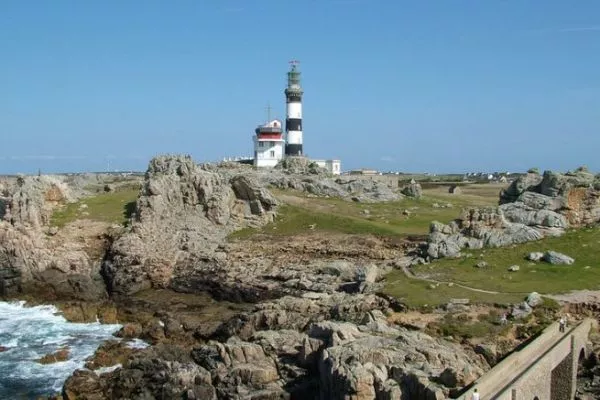 Der Leuchtturm Créac’h steht vor einer technischen Modernisierung, um sein Quecksilber-Rotationssystem zu ersetzen, ohne das Leuchtfeuer zu verdunkeln.">

Operational brief: maintaining maritime signalling during decontamination
The Créac’h lighthouse on Ushant features a double Fresnel lens weighing 17 tonnes whose rotation has historically relied on a mercury bath. The Direction Interrégionale de la Mer (DIRM NAMO), together with Pôle Mer Bretagne Atlantique, has launched an expression-of-interest (AMI) open from 22 December 2025 to 22 March 2026 to identify solutions that will remove the toxic mercury while ensuring continuous maritime signalling and protecting the listed heritage fabric.
Heritage constraints and engineering parameters
The site is officially listed, so any intervention must preserve the lens in its present state, respect original mechanisms, and guarantee the stability and regularity of optical rotation. The operational requirement is clear: replacement solutions must be technically feasible without interrupting the lighthouse’s service for shipping in the Iroise Sea. That imposes narrow windows for on-site works and rigorous risk management in logistics, transport of materials, and temporary signalling alternatives.
Why this is more complex than other removals
Previous mercury extraction projects in the French network—carried out at several locations—have simplified reuse of modern bearings or full replacement of the drive. At Créac’h, the mass of the optics, the integrity of the supporting structure and the touristic value of an intact historic mechanism raise the bar. Engineers must balance preservation, operational continuity und environmental safety.
Who is being invited to contribute?
The AMI explicitly calls for contributions from a broad spectrum: engineers, architects, maritime technicians, heritage specialists, industrial partners, universities and research centres. Practical knowledge from lighthouse keepers and sailors who maintain these granite towers is also solicited, underlining the project’s cross-disciplinary nature.
- Technical teams: bearing and drive designers, mechatronics specialists
- Conservation experts: heritage architects and lens conservators
- Operational partners: port authorities, navigation safety services
- Industrial suppliers: companies able to prototype bespoke solutions
Potential technical pathways
Respondents have proposed a range of approaches, alone or in combination. The AMI encourages creative hybrids that reconcile tradition with modern engineering.
- Mechanical adaptation: custom bearings and counterweights to reproduce original rotation characteristics
- Bearing innovation: sealed, low-friction bearings that remove the need for a liquid bath
- Partial automation: inserting modern servo systems while retaining manual override and visual authenticity
- Hybrid solutions: preserving the original drive for display while a concealed modern mechanism handles live rotation
| Option | Technical pros | Risks / heritage impact | Tourism implications |
|---|---|---|---|
| Custom bearings | Preserves original motion; low disruption | Complex fabrication; cost | Keeps historical appearance for visitors |
| Sealed modern drive | High reliability; low maintenance | Alters visible mechanism | May require interpretive panels for tourists |
| Hybrid concealment | Best of both worlds; reversible | Challenging installation logistics | Strong storytelling potential for tours |
Logistics, timing and evaluation criteria
Submissions will be judged on technical feasibility, compliance with heritage constraints, and the capacity to assure uninterrupted maritime service. Given the active navigation lanes around Ushant, proposals must incorporate transport plans for heavy components, on-site staging and contingency signalling, as well as safe mercury extraction and disposal procedures where relevant.
Implications for visitors and local tourism
Créac’h is not only a navigation aid; it is a cultural landmark that draws visitors and contributes to Ushant’s identity as a maritime destination. Any modernization that maintains the lens and the look of the mechanism will help preserve guided visits, museum-style interpretation and coastal walks that form part of the island’s travel experiences.
The technical call is therefore an opportunity to protect both navigation safety and the visitor experience. While engineering teams tackle bearings and drives, tour operators and heritage bodies should plan for visitor-safety measures and interpretive activities that can run alongside phased works.
At a glance, this collective effort links engineering, conservation and local tourism: a successful implementation could become a template for other lighthouses still using mercury, and an attractive story for Museum tours with live guides and eco-conscious travellers visiting Ushant.
Expert assessment panels expect submissions by 22 March 2026. Proposers are advised to include detailed timelines, logistical plans for transporting heavy optics and contingency schemes to avoid any darkening of the light during works.
Technical reports and field trials can only say so much: even the most detailed reviews and the most honest feedback cannot replace the value of visiting a place in person. On GetExperience, you book your experience from verified providers at reasonable prices. This empowers you to make the most informed decision without unnecessary expenses or disappointments—secure payments with voucher confirmation and tailored tour requests ensure transparency and convenience. Book your Trip GetExperience.com
In summary, the Créac’h project demands engineering ingenuity, careful logistics and sensitive heritage handling to remove mercury while keeping the beacon alive. Its outcome will influence navigation safety solutions and local travel experiences alike, from Adventure activities and Luxury adventure travel experiences to Museum tours with live guides and Online virtual tours. Prospective contributors should address operational continuity, environmental safety and visitor impact; the project pairs technical innovation with tourism potential—making it a pilot for eco-friendly wildlife safaris of engineering, Exclusive yacht charters for events nearby, Cruise packages that pass Ushant, Adventure rafting trips for beginners in regional waters, Interactive online cultural workshops about lighthouse heritage, and even niche offerings such as Esports lessons or Beginner esports coaching sessions for on-island youth programs. The balance struck here will set a benchmark for future conservation-driven upgrades across maritime landmarks.