


 Deutsch
  English (UK)
  Русский
  বাংলা
বাংলা  العربية
  日本語
日本語  한국어
한국어  Magyar
  Norsk nynorsk
  Türkçe
  עִבְרִית
  Español
  Čeština
  Svenska
  Português
  Ελληνικά
  Suomi
Suomi  Nederlands
  Română
  Italiano
  Français
  Polski
  Українська
  简体中文
简体中文  Slovenčina
  Српски језик
  اردو
اردو  Azərbaycan dili
  O‘zbekcha
  አማርኛ
አማርኛ 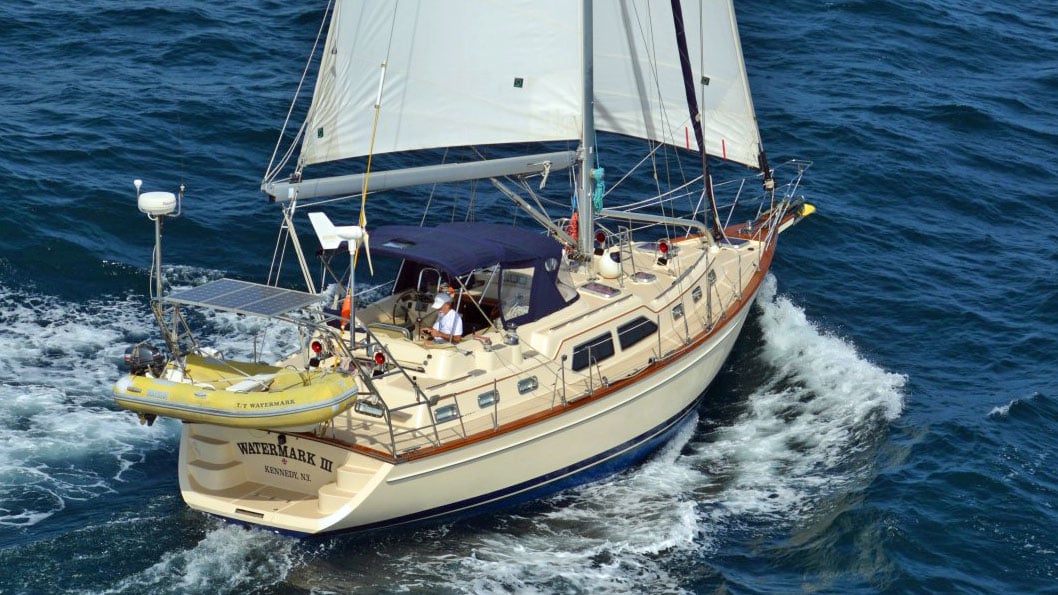 Lose-Footed-Großsegel – Praktische Tipps zum Segelhandling von Dick McClary">

Aerodynamics at the Foot: Immediate Handling Impacts
Switching to a loose-footed mainsail directly alters deck operations: the Unterliekstrecker becomes the primary control for lower-luff camber, and reefing sequences, sail flaking and stowage require different crew choreography to maintain safe passage-making.
Shape Control and Performance
A loose foot allows the lower third of the sail to develop a proper aerofoil section rather than being constrained by a bolt rope or slugs running in a boom groove. In practice, easing the Unterliekstrecker in light airs produces a fuller, more cambered entry that increases lift; tightening it in stronger winds flattens the sail to reduce drag and heeling moment without structural interference from the boom.
Operational Benefits for Short-Handed Crews
From a logistics viewpoint, the absence of a fixed bolt rope simplifies reefing: the tack of the new reef point lies flat and unencumbered, so redundant sail cloth can be flaked, tied or bagged without fighting a groove-bound rope. That translates to faster sail reductions and fewer hands needed on deck—relevant for charter skippers and bluewater cruisers who value both safety and time at anchor.
The Boom and Modern Sailcloth: Structural Considerations
Contrary to older assumptions, the boom is predominantly a compression member, while modern high-modulus Dacrons and laminate panels handle horizontal loads between tack and clew quite well. As long as Schwanenhals and outhaul fittings are sound, most booms need no structural upgrade when adopting a loose-footed setup.
Quick Maintenance Checklist Before Conversion
- Inspect gooseneck and Unterliekstrecker blocks for wear or deformation.
- Confirm boom car fittings and clevis pins are rated for expected loads.
- Check sail corner reinforcements at tack and clew—add chafe patches if needed.
- Practice reefing drills under power to refine crew roles and timing.
Practical Offshore Advantages
Beyond raw VMG improvements, using a loose-footed mainsail reduces complexity when flaking and bagging the sail after reefing and makes it easier to attach a sail cover. For cruise itineraries and charters, this means shorter dockside prep and less time at anchor fussing with sail handling—time you can better spend sightseeing, diving or simply enjoying a coastal town.
| Merkmal | Fixed-Foot Mainsail | Loose-Footed Mainsail |
|---|---|---|
| Lower-luff Camber Control | Limited (boom constraints) | High (outhaul-driven) |
| Reefing Neatness | Can snag in boom groove | Easier to flake and stow |
| Structural Demand on Boom | Shares load along bolt rope | Load carried by sailcloth and fittings |
When Not to Convert
A loose-footed arrangement is not universally optimal. Racing rules that require specific foot attachments, certain slab-reefing systems that rely on tracks, or very old booms with weak fittings may keep owners with a fixed-foot setup. Consider the intended use: casual cruising and charters often benefit most from the swap.
Checklist for Skippers and Charterers
- Evaluate sail inventory and reefing method compatibility.
- Train crew in new reefing and flaking procedures.
- Confirm insurance and charter documentation accept rig changes if applicable.
- Schedule a sea trial to compare performance in varying wind strengths.
At a glance, the switch to a loose-footed mainsail trades a small structural assumption for considerable handling flexibility and aerodynamic gains. To have a mind to do this conversion, weigh the benefits in daily cruising: easier reefing, neater stowage and improved sail shape in light winds.
While reviews, opinions and technical analyses are useful, nothing replaces time underway. Personal experience—reefing in a blow, or trimming for light-air passages—gives context that paper tests cannot always capture. On GetExperience, you can book verified sailing experiences and provider-led excursions that let you test different rigs and handling techniques firsthand, with secure payment and voucher confirmation after booking and options to request tailored tours that match your skill level and interests. Book now GetExperience.com
Summary: Converting to a loose-footed mainsail improves low-end lift and simplifies reefing and stowage, provided boom fittings and sail reinforcement are adequate. It’s particularly attractive to short-handed cruisers, charter operators and anyone valuing clean deck logistics and easier sail management. Try it on a day-sail or charter to compare handling for yourself—real-world travel experiences and adventure activities like yacht parties, cruise packages, safari tours or museum tours with live guides all benefit when you free up time saved from simpler sail handling. Whether you’re seeking beginner esports coaching sessions or luxury adventure travel experiences, interactive online cultural workshops or exclusive yacht charters for events, hands-on testing under sail remains the best teacher.