


 Čeština
  English (UK)
  Русский
  বাংলা
বাংলা  العربية
  日本語
日本語  한국어
한국어  Magyar
  Norsk nynorsk
  Türkçe
  עִבְרִית
  Español
  Svenska
  Português
  Ελληνικά
  Suomi
Suomi  Nederlands
  Română
  Italiano
  Français
  Polski
  Українська
  Deutsch
  简体中文
简体中文  Slovenčina
  Српски језик
  اردو
اردو  Azərbaycan dili
  O‘zbekcha
  አማርኛ
አማርኛ 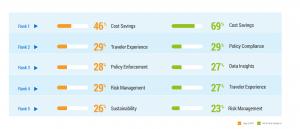 Managing Travel & Entertainment Expenses in Corporate India: Trends in Savings and Digital Adoption">

Rising Significance of Travel & Entertainment Expenses
Travel & Entertainment (T&E) expenses have increasingly become the largest controllable cost in Indian corporate budgets, overtaking traditional employee and administrative expenses. This shift highlights the growing importance of managing travel costs effectively to boost overall operational efficiency and savings.
Differences in Travel Management Across Business Sizes
Large enterprises and multinational corporations (MNCs) treat T&E costs as the most significant expense, followed by employee costs. The situation reverses for micro, small, and medium enterprises (MSMEs), where employee costs typically dominate. However, with business travel becoming paramount across sectors, companies are revisiting their strategies to optimize procurement, booking, and expense management processes.
Work Models, Policies, and Compliance Complexity
Nearly two-thirds of MNCs have adopted hybrid work models, requiring around 12 days of office presence monthly from employees, while 67% of MSMEs stick to full-time office attendance. This difference influences travel needs and patterns significantly.
MSMEs reportedly face more intricate travel approval and compliance challenges, with 70% flagging complex approval processes and 60% indicating compliance struggles. In contrast, these issues affect only around 40% and 30% of MNCs respectively, showcasing larger organizations’ relatively smoother systems.
Digital Adoption in Travel Booking and Expense Management
A notable digital divide exists between large corporations and MSMEs. Approximately 80% of MNCs use digital platforms for booking and managing travel expenses, with over 70% adopting online tools. However, 74% of MSMEs still rely heavily on manual procedures, with only 20% embracing digital travel booking solutions.
| Expense Category | MSMEs Controllable Expenses (%) |
|---|---|
| Air Travel | 81% |
| Lodging | 61% |
| Ground Transportation | 53% |
Strategic Role of Travel Payment Providers
Enterprises now view business travel payment providers as strategic partners, critical in navigating complex T&E landscapes. MNCs prioritize features like global scalability, regulatory adherence, and integrating loyalty programs seamlessly into expense workflows.
In contrast, MSMEs seek straightforward, cost-effective payment tools, often still depending on personal cards or cash advances to manage expenses.
Key Preferences in Payment Solutions
- MSMEs: Favor one-stop, integrated solutions offering spending controls, higher credit limits, and easy integration.
- MNCs: Rely more on corporate cards and value global access, detailed reporting, and rewards programs like cashback and air miles.
These preferences underscore the demand for tailored financial tools that fit the diverse needs of different business sizes, supporting better cost management and compliance.
Hybrid Travel Agency Models and Data-Driven Negotiations
The majority of enterprises, including 82% of studied companies, utilize hybrid travel agency models that combine both online and offline services for smoother travel fulfillment. MSMEs make extensive use of historical spend data (81%) for supplier negotiations and benchmarking, while 75% leverage current data to enhance real-time travel optimization.
Technology as a Catalyst for Efficiency
Technology adoption levels stand at 80% for large firms and MNCs, whereas only 26% of MSMEs have embraced such digital solutions, with many MSMEs still managing travel expenditures manually. Digital tools enhance efficiency, compliance, and cost containment by offering automation and real-time monitoring.
Summary and Insights for Travelers and Businesses
The evolving landscape of corporate travel in India highlights T&E expenses as a major area of focus for cost control and operational streamlining. Larger companies lead the charge in harnessing digital platforms and strategic partnerships, while MSMEs increasingly demand accessible, integrated solutions that simplify expense management without sacrificing control or affordability.
Managing travel costs efficiently not only aids businesses in staying competitive but indirectly affects tourism by influencing travel frequency, choice of services, and overall experience quality. The adoption of hybrid work and travel approaches may shape future tourism trends as companies seek flexible yet cost-effective travel solutions.
How GetExperience.com Enhances Your Travel Planning
For travelers seeking tailored trips, platforms like GetExperience.com offer a major advantage by providing secure, full payments backed by voucher confirmations. Users can request customized tours or excursions and receive offers fitting their preferences. This transparency and convenience help users explore travel options that align closely with their needs, supporting better budgeting and richer experiences.
Even the most detailed corporate reviews and honest feedback cannot replace firsthand experience. On GetExperience.com, travelers gain access to verified providers offering a broad spectrum of travel experiences—be it business trips, adventure activities, or cultural tours—at competitive prices. This empowers travelers to make informed choices without unnecessary costs or surprises. Book your trip with confidence on GetExperience.com.
Concluding Remarks
In summary, managing Travel & Entertainment expenses has become a top priority for Indian corporations, driven by rising costs and the need for efficiency. Digital transformation is pivotal in this effort, although gaps remain, especially among smaller enterprises.
The strategic partnership approach with travel payment providers and hybrid agency models enhance compliance and workflow integration. For tourists and business travelers alike, these trends highlight evolving travel habits that may influence tourism service demands.
Platforms like GetExperience.com stand ready to support these changes by offering flexible, secure, and comprehensive travel solutions, promoting seamless and enriching travel experiences worldwide.