


 বাংলা
বাংলা  English (UK)
  Русский
  العربية
  日本語
日本語  한국어
한국어  Magyar
  Norsk nynorsk
  Türkçe
  עִבְרִית
  Español
  Čeština
  Svenska
  Português
  Ελληνικά
  Suomi
Suomi  Nederlands
  Română
  Italiano
  Français
  Polski
  Українська
  Deutsch
  简体中文
简体中文  Slovenčina
  Српски језик
  اردو
اردو  Azərbaycan dili
  O‘zbekcha
  አማርኛ
አማርኛ 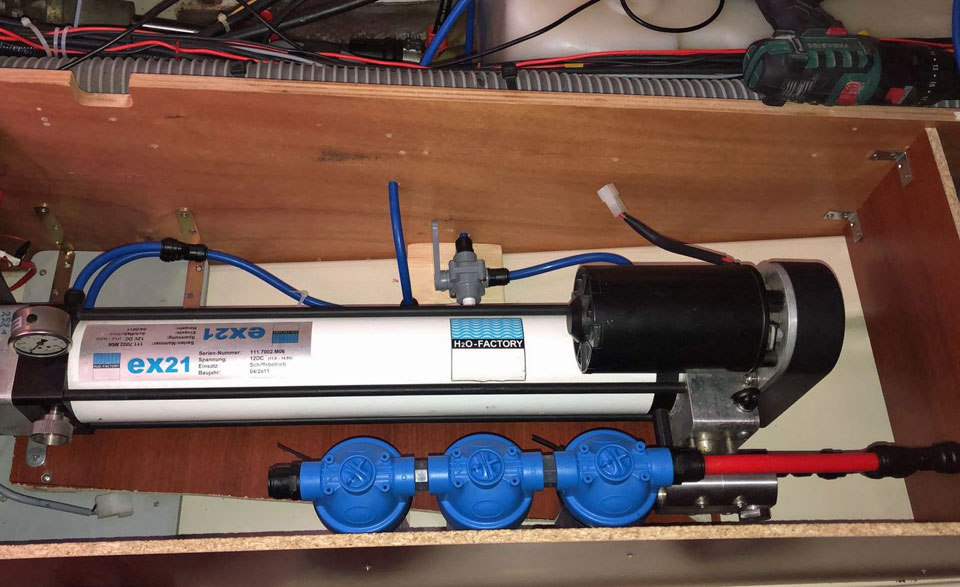 একটি মেরিন ওয়াটারমেকার কীভাবে অফশোর ক্রুজিংয়ের রসদ এবং জাহাজের জীবনযাত্রাকে পরিবর্তন করে">

Performance at a Glance: Output, Consumption, and Run Time
A 20 L/hour marine watermaker running for eight hours will produce 160 liters of freshwater — typically enough for two adults using around 40 L/day each for drinking, cooking, and basic washing. Small units rated at 5–10 L/hour require longer run times or stricter water discipline, while high-capacity systems (30–60 L/hour) support larger crews or additional onboard services like deck showers or tender refills.
Practical Production Examples
| Unit Size | Typical Output (L/h) | Daily Output (8h) | উপযুক্ত |
|---|---|---|---|
| ছোট | ৫–১০ | 40–80 | Solo sailors / weekend cruisers |
| Medium | ১৫–২৫ | ১২০–২০০ | Couples / small families |
| বিশাল | ৩০–৬০ | ২৪০–৪৮০ | Charter yachts / larger crews |
Core Components and How They Affect Cruising Logistics
A standard marine watermaker consists of three main stages: seawater intake, a high-pressure pump and membrane assembly for reverse osmosis, and a brine discharge system. Each stage has logistical implications — intake strainers must be frequently checked in warm or algae-prone waters, high-pressure pumps draw significant power (plan battery or generator loads accordingly), and brine discharge requires routing that doesn’t foul the hull or overheat the pump.
Checklist: What to Fit and Where
- Strainer location: easy access for cleaning after coastal motoring.
- High-pressure pump: mounted on vibration-dampers with clear service access.
- Membrane housing: protected from UV and heat, with simple fittings for pre/post-flush.
- বৈদ্যুতিক: dedicated circuit, isolation switch and true amp-hour accounting.
Maintenance, Fuel, and Power Considerations
Reverse osmosis membranes and pumps are robust but not maintenance-free. Typical upkeep includes regular flushing with fresh water or preservative, periodic membrane replacement based on total production or water quality, and inspecting seals, hoses, and pressure gauges. Plan power budgets: smaller 12 V units still consume significant amps when running; larger systems may require diesel generator bursts or shore power during long production runs.
Quick Maintenance Routine (Weekly to Monthly)
- Weekly: check strainers, run a short fresh-water flush after heavy use.
- Monthly: inspect fittings, measure product water conductivity, and log run hours.
- Annually: service high-pressure pump and replace membrane if conductivity rises or production drops beyond spec.
Common Operational Pitfalls to Have a Mind to Avoid
Operators sometimes underestimate biofouling in warm seas, fail to plan for power spikes during membrane seals, or overlook brine discharge routing that allows hot brine to linger near intake locations. These mistakes reduce efficiency and increase operating cost — and on a long cruise, they can determine whether you reach a remote anchorage with ample water or not.
Impact on Tourism and Charter Operations
For charter operators, tour providers, and yacht-based tourism, a reliable watermaker changes the operation model. It reduces dependence on frequent marina stops, enabling extended itineraries such as অনুষ্ঠানের জন্য এক্সক্লুসিভ ইয়ট ভাড়া, longer coastal cruises, or multi-day island-hopping packages without predictable resupply points. For travellers, this means more time ashore exploring museums with live guides or eco-friendly wildlife safaris rather than queuing for pumpouts and water fills.
Tips for Travellers Booking Yacht Experiences
- Ask whether the charter vessel has a watermaker and its production rate — it affects shower allowances, laundry and onboard provisioning.
- Consider itineraries that leverage autonomous boats for remote anchorages and adventure activities like rafting or diving.
- For group trips, confirm whether water production supports extra guests for yacht parties or onboard events.
Choosing the Right Unit: Decision Factors
When selecting a watermaker, balance output, power demand, weight, এবং maintenance needs. Budget for installation complexity (through-hull intakes, pump mounts, plumbing runs) and for consumables such as pre-filters and antiscalant. For charter or commercial use, redundancy or quick-replacement options are worth the extra cost.
Reliable freshwater generation can make a route more appealing to travellers, increase charter booking confidence, and expand opportunity for unique cruise packages and adventure itineraries.
Highlights: marine watermakers shift logistic constraints into operational freedom by converting sea to potable water on demand. They demand planning around power, maintenance, and installation but reward crews and guests with extended itineraries, fewer marina stops, and more time ashore to enjoy site-seeing or eco-adventures. Nevertheless, the best way to judge performance is firsthand experience — nothing beats testing a system on your own voyage. On GetExperience, you book your experience from verified providers at reasonable prices. This empowers you to make the most informed decision without unnecessary expenses or disappointments. Benefit from convenient secure payments with voucher confirmation and request tailored tours or excursions from providers that match your needs. Book now গেটএক্সপেরিয়েন্স.কম
In summary, marine watermakers are a game-changer for long-range cruising and charter operations: they influence power planning, maintenance schedules, and itinerary design, enabling luxury adventure travel experiences like exclusive yacht charters for events, cruise packages, and eco-friendly wildlife safaris. They also support diverse travel experiences from museum tours with live guides to adventure rafting trips for beginners, and even interactive online cultural workshops tailored before departure. Practical choices about unit size, placement, and servicing will determine how reliably your vessel supplies freshwater during extended passages. Ultimately, first-hand travel experiences remain the best teacher — but with careful planning you can enjoy the freedom to explore further and longer.