


 বাংলা
বাংলা  English (UK)
  Русский
  العربية
  日本語
日本語  한국어
한국어  Magyar
  Norsk nynorsk
  Türkçe
  עִבְרִית
  Español
  Čeština
  Svenska
  Português
  Ελληνικά
  Suomi
Suomi  Nederlands
  Română
  Italiano
  Français
  Polski
  Українська
  Deutsch
  简体中文
简体中文  Slovenčina
  Српски језик
  اردو
اردو  Azərbaycan dili
  O‘zbekcha
  አማርኛ
አማርኛ 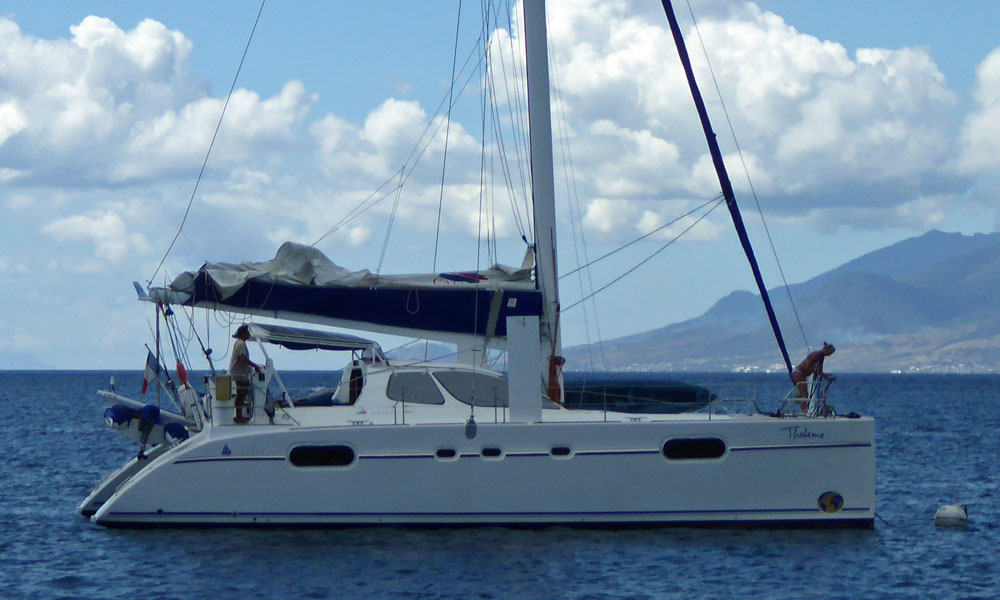 ক্যাটামারান এবং মনোহলের মধ্যে নির্বাচন: ক্রুজারদের জন্য কিছু ব্যবহারিক বিবেচনা">

Marina operators typically price a 40–45ft ক্যাটামারান at roughly 1.8–2.5× the berth fee of a similar-length monohull, and shore-handling requires travel hoists rated for wider beams; not every boatyard can lift a multihull, and channel clearance, bridge heights and passerelle arrangements affect berthing logistics.
Accommodation: space, layout and liveability
At a glance, the defining accommodation difference is the usable plan area. Twin hulls and a bridgedeck give a modern catamaran expansive below-deck cabins and a cockpit that often sits level with the saloon. This creates an open-plan layout that many charterers prefer for socialising and group stays.
That said, individual cabin shapes in each hull can be narrow; a cat’s hull berths are typically less likely to accommodate walkaround queen beds found on many contemporary monohulls. For families and charter guests, the extra salon and cockpit space can be decisive.
Key interior trade-offs
- কেটামেরান: More floor area, level living spaces, better cockpit-saloon flow.
- এক হালবিশিষ্ট জাহাজ: Deeper cabin sections allow larger walkaround berths and different storage layouts.
Performance: VMG, leeway and modern foils
Because of lighter displacement and smaller wetted area, a cruising catamaran will often post higher speeds on reaches and downwind legs. However, cats traditionally lose out close hauled: high windage and the lack of a deep keel increase leeway and reduce velocity made good (VMG) to windward.
Daggerboards, foils and mitigation
Models such as the Catana 47 with daggerboards demonstrate how design choices can improve upwind performance. New hydrofoil setups and optimized daggerboard systems also help narrow the performance gap, but daggerboards may introduce noise or require more maintenance.
Comfort & convenience on board
The absence of pronounced rolling and heeling is a primary reason many charter guests and cruisers pick multihulls: life in a rolly anchorage is generally more agreeable, items stay in place, and movement around the deck is easier. Conversely, monohulls offer the traditional heeling sensation, which some sailors prefer and which can act as a natural safety valve in gusts.
Guest experience note
For tourism operators, the choice affects passenger comfort and perceived safety—day charters, yacht parties and luxury adventure travel experiences often favour cats for stability and social spaces.
Safety & stability
Initial stability is higher on a catamaran, but its Angle of Vanishing Stability (AVS) can be reached at lower heel angles; a fully inverted catamaran tends to remain a raft-like hazard rather than self-righting. A ballasted monohull resists capsize longer and can self-right from many knockdowns.
Cost of ownership and marina logistics
| আইটেম | কেটামেরান | এক হালবিশিষ্ট জাহাজ |
|---|---|---|
| Purchase price | Typically higher for similar LOA | Lower entry cost |
| রক্ষণাবেক্ষণ | Two engines, duplicated systems = higher | Simpler systems, lower routine costs |
| বার্থিং | Higher fees, wider space required | Lower fees, more berth availability |
| Resale value | Currently strong demand | Stable but lower than cats |
Marina & lifting considerations
- Confirm travel hoist capacity and beam limits before hauling a catamaran ashore.
- Factor in double engines for servicing schedules and parts provisioning.
- Check berth width and utilities provisioning for charter operations.
Handling: manoeuvrability and docking
Twin engines give a catamaran excellent close-quarters control despite high windage; turning in her own length is frequently achievable. A monohull will often lean on a bow-thruster to match that agility. Under sail, monohulls tend to tack quicker; cats require a longer windward transit.
এক নজরে সুবিধা এবং অসুবিধা
- Catamaran pros: social spaces, stability at anchor, speed off the wind, popular for yacht parties and exclusive charters.
- Catamaran cons: higher berthing and maintenance costs, potential capsize concerns, limited haul-out locations.
- Monohull pros: upwind VMG in some designs, lower purchase and upkeep costs, self-righting characteristics.
- Monohull cons: less living space, more motion at anchor, heel may be uncomfortable for some passengers.
These practical differences are important for charter businesses, tour operators and cruisers planning itineraries: they determine which vessels suit family cruises, safari tours linked with coastal exploration, or luxury adventure travel experiences such as exclusive yacht charters for events.
At this point it’s worth noting the advantages of using a specialised booking platform when arranging a sailing holiday. On GetExperience, you book your experience from verified providers at reasonable prices. This empowers you to make the most informed decision without unnecessary expenses or disappointments by comparing yacht parties, cruise packages and day charters, and receiving tailored offers for the vessel type that suits your needs best. Book now গেটএক্সপেরিয়েন্স.কম
In summary: catamarans deliver roomy social areas, steady anchoring and superior off‑wind speed, while monohulls provide classic sailing feedback, simpler maintenance and certain safety advantages in extreme knockdowns. When choosing, weigh berth and lifting logistics, maintenance budgets and intended Tourism use—be it museum tours with live guides from a coastal base, adventure rafting trips for beginners tying into a cruise, or an exclusive yacht charter. Personal experience always trumps even the best reviews, so consider hands-on trials and verified provider listings for travel experiences, adventure activities, online virtual tours, yacht parties, cruise packages, safari tours and interactive online cultural workshops before committing.