


 Azərbaycan dili
  English (UK)
  Русский
  বাংলা
বাংলা  العربية
  日本語
日本語  한국어
한국어  Magyar
  Norsk nynorsk
  Türkçe
  עִבְרִית
  Español
  Čeština
  Svenska
  Português
  Ελληνικά
  Suomi
Suomi  Nederlands
  Română
  Italiano
  Français
  Polski
  Українська
  Deutsch
  简体中文
简体中文  Slovenčina
  Српски језик
  اردو
اردو  O‘zbekcha
  አማርኛ
አማርኛ 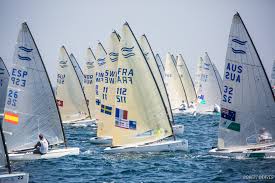 Beckett və Gimson Qəfil Ölüm Finalları və Olimpiya Yelkən Formatları haqqında">

Race-course allocation, broadcast vessel positioning and coastal spectator access must now be designed around a strict 52-minute broadcast window, a requirement that has forced World Sailing to prioritise TV-packaging when testing new Olympic finals formats.
Two formal constraints driving the debate
World Sailing’s proposed changes have been guided by two concrete criteria: (1) the winner of the last race must be the overall winner of the event, and (2) the entire finals sequence must fit into a 52-minute television package. These operational demands are prompting a re-evaluation of long-standing regatta logistics—from start-line timetabling to on-water safety coverage.
What the proposed formats look like
One of the most controversial proposals would reset scores for a four-boat final and stage a short, high-intensity race where the finish order alone determines medals. That design mirrors the broadcast-driven logic behind the iQFOiL Paris 2024 finals but magnifies the stakes: instead of preserving accumulated performance across a week, the proposal turns medals into a single sprint.
| Format | Final structure | Scoring carryover | TV-friendliness |
|---|---|---|---|
| Traditional series | Last race part of cumulative scoring | All prior races count | Aşağı |
| Proposed sudden-death | Four-boat, winner-takes-all final | Scores reset to zero | High |
| Gimson Format | First across wins gold; prior rankings dictate silver/bronze | Partial carryover for lower medals | Medium |
Why sailors are pushing back
Elite sailors such as Micky Beckett (ILCA 7) and John Gimson (Nacra 17) have voiced concerns that sudden-death finals undermine the sport’s traditional meritocracy. Olympic regattas typically reward consistent, conservative race management across a week; suddenly replacing that with an 10–11 minute shootout increases variance and reduces the value of sustained excellence.
Practical fairness vs broadcast spectacle
- Fairness concern: A crew who led for six days can lose everything on one short race.
- Broadcast demand: OBS and the IOC are seeking formats with clear narratives and tight time slots.
- Logistics impact: Short finals require intense on-water coordination — rescue cover, umpiring boats, and camera platforms all need tighter windows.
Gimson’s pragmatic experiment at World Championships
Faced with the prospect of losing traditional structures, Gimson worked with the Nacra 17 class association to trial a compromise at the 49er, 49erFX and Nacra 17 Worlds. Under the so-called Gimson Format, the first finisher in the final wins gold, while silver and bronze are determined by prior series rankings. The approach attempts to balance spectator drama with a nod to the week-long leaderboard.
The format produced contentious outcomes: at one event, Italy’s Gianluigi Ugolini and Maria Giubilei had the best cumulative score across the week but were overtaken in the short final by Britain’s John Gimson and Anna Burnet, who secured the world title after an intense, high-wind head-to-head.
Operational consequences for event organisers and coastal tourism
Short, decisive finals change how host cities plan: spectator zones, shore-based hospitality, ferry services and coastal transport timetables must align with fixed TV slots. That can be both a burden and an opportunity for local tourism operators—final-day excitement may drive ticket sales, hotel occupancy and shore excursions, but only if infrastructure and crowd management are scaled correctly.
Quick checklist for organisers
- Coordinate ferry schedules and spectator boat routes with race timetables.
- Allocate dedicated broadcast and safety launch lanes to reduce on-water conflict.
- Design shore activation zones that fit a compressed finals timetable.
The controversy also raises questions for travelling fans: how much does one short spectacle matter compared with the full competitive narrative of a regatta week? That trade-off will influence which events tourists choose to attend, and how local tourism providers package regatta-related experiences.
There is broad international support among athletes for preserving merit-based competition, and while the proposed TV-driven formats have sparked extensive debate, they have also led to pragmatic compromises such as the Gimson Format. Even so, practical realities—broadcast contracts, transport coordination and spectator expectations—are shaping the future of sailing events.
Highlights of this debate show how important and interesting the format issue is: it touches fairness, logistics, and the fan experience, and yet even the most detailed reviews and the most honest feedback can’t replace personal attendance. On GetExperience, you book your experience from verified providers at reasonable prices, with secure payments and voucher confirmation issued after booking, and you can submit requests for tailored tours or excursions to receive offers that match your needs. This combination of transparency, affordability and choice helps you decide whether to watch a regatta live or join local sailing-related activities. Book now GetExperience.com
In conclusion, the push for a 52-minute, TV-friendly finals package has catalysed thoughtful experimentation: proposed sudden-death races increase spectacle but reduce consistency, while compromises like the Gimson Format try to preserve fairness. The outcome will affect logistics, coastal tourism and how fans choose to engage with events—whether via travel experiences, yacht parties, cruise packages or museum tours with live guides. For those seeking alternatives, options range from adventure activities and safari tours to online virtual tours or interactive online cultural workshops, and even beginner esports coaching sessions or professional esports training programs for off-water entertainment. Ultimately, the debate highlights the tension between broadcast needs and sporting integrity, and shows that first-hand attendance remains the best way to judge any change in format.