


 Azərbaycan dili
  English (UK)
  Русский
  বাংলা
বাংলা  العربية
  日本語
日本語  한국어
한국어  Magyar
  Norsk nynorsk
  Türkçe
  עִבְרִית
  Español
  Čeština
  Svenska
  Português
  Ελληνικά
  Suomi
Suomi  Nederlands
  Română
  Italiano
  Français
  Polski
  Українська
  Deutsch
  简体中文
简体中文  Slovenčina
  Српски језик
  اردو
اردو  O‘zbekcha
  አማርኛ
አማርኛ 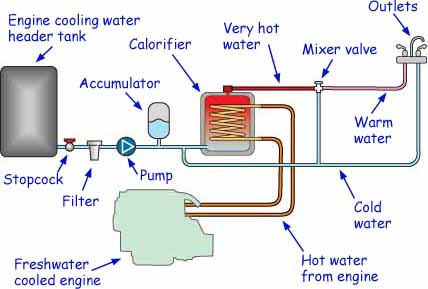 Mühərrikin İstiliyi: Qayıq Kaloriferləri və İsti Su Sistemlərinə Praktiki Bələdçi">

Engine waste heat: how much is actually available?
A typical freshwater-cooled marine diesel running at cruising load can shed several kilowatts of waste heat through its closed cooling circuit; harnessing even a fraction of that via a marine calorifier will produce reliable domestic hot water while underway. For most cruising yachts, a calorifier sized between 25–80 litres paired with engine heat will provide sufficient hot water for showers, sinks and galley use after an hour or two of motoring at normal revs.
What a calorifier does and why it matters
A kalorifer is an insulated storage tank containing a coil heat exchanger plumbed into the engine’s closed cooling loop. Hot coolant circulates through the coil, transferring heat to the fresh water in the tank. The result: essentially free hot water derived from a by-product of propulsion or auxiliary running.
Key prerequisites for successful installation
Two technical prerequisites make the system practical for most boats:
- Freshwater-cooled engine — the calorifier taps the closed coolant circuit rather than raw seawater, so an engine with its own header tank and heat-exchanger is required.
- Pressurised domestic water system — calorifiers are intended to feed a pressurised hot-water circuit; manual or gravity-fed systems won’t deliver consistent results without conversion.
Material choice, corrosion resistance and durability
Construction material is crucial in the marine environment. Most manufacturers use 316L stainless steel for calorifier tanks because it resists chlorinated municipal water and galvanic corrosion far better than glass-lined domestic tanks. On an offshore yacht, the constant vibration and movement will quickly crack an enamel surface, so avoid domestic-style glass-lined units.
System layouts and combinations
Practical installations often combine engine heat with a secondary electric heater for dockside use or peak demand. Common arrangements include:
- Engine-only calorifier: efficient while motoring, lowest running cost.
- Calorifier with AC immersion heater: hot water available both underway and on shore power.
- Dual-coil calorifier: allows using engine heat and an alternative boiler or heat pump in parallel.
| Sistem | Pros | Cons |
|---|---|---|
| Engine-driven calorifier | Low running cost, uses waste heat | Only works when engine runs |
| Calorifier + AC immersion | Versatile: shore and sea use | Higher initial cost, needs shore power |
| Independent electric boiler | Constant availability | Loads battery/shore power, less efficient underway |
Installation, maintenance and best practice
Installation is generally straightforward for a competent marine mechanic, but attention to layout, valving and insulation is essential. Fit engine-side thermostats, over-temperature protection and a pressure-relief valve on the domestic side. Insulate inlet and outlet runs to minimise standby losses. Maintenance notes:
- Flush cooling circuits and check for galvanic corrosion annually.
- Inspect tank welds and sacrificial anodes if fitted.
- Test thermostats and relief valves before each season.
Redundancy and energy management for long passages
Offshore voyaging requires redundancy: carry spare thermostats, hoses and a small immersion heater as backup. Plan energy management so you can time motoring periods to generate hot water when needed—especially useful for liveaboards, charter operators and expedition yachts where passenger comfort is a selling point.
Comfort, charters and tourism implications
From a tourism perspective, reliable hot water affects guest satisfaction on yacht charters, Tədbirlər üçün eksklüziv yaxtaların kirayəsi, and small cruise packages. Efficient hot-water systems reduce fuel waste and enhance the onboard experience for sightseeing, yaxt partiləri and overnight trips. For operators offering museum tours with live guides or luxury adventure travel experiences, consistent amenities can be a competitive advantage.
The practical benefits extend to safety and hygiene too: dependable hot water supports galley operations, medical first aid and passenger comfort during longer sailings or eco-friendly wildlife safaris where shore facilities may be limited.
Highlights: calorifiers convert otherwise wasted engine heat into useful domestic hot water; choose 316L stainless steel units for longevity; pair with an immersion heater for dockside reliability. Nevertheless, nothing replaces firsthand testing—what service records and reviews say can inform choices, but personal experience aboard the boat is the ultimate proof. On GetExperience, you book experiences from verified providers at reasonable prices; secure payments with voucher confirmation and bespoke requests allow you to tailor voyages and excursions to your needs, ensuring convenience and transparency. Book now GetExperience.com
To wrap up: installing an engine-driven calorifier is a cost-effective way to harvest waste heat for hot water, provided you have a freshwater-cooled engine and a pressurised domestic system. Use 316L stainless steel tanks for durability, combine with an AC immersion heater for dockside flexibility, and maintain valves and thermostats for safe operation. These measures not only reduce operating costs but also elevate travel experiences on yachts—supporting adventure activities, online virtual tours for trip planning, yacht parties and cruise packages, safari tours and eco-friendly wildlife safaris, museum tours with live guides, interactive online cultural workshops, and even niche offerings like beginner esports coaching sessions or professional esports training programs tied into onshore events. Proper system choice and upkeep ensure comfort on board and better guest satisfaction for luxury adventure travel experiences and exclusive yacht charters for events.