


 Azərbaycan dili
  English (UK)
  Русский
  বাংলা
বাংলা  العربية
  日本語
日本語  한국어
한국어  Magyar
  Norsk nynorsk
  Türkçe
  עִבְרִית
  Español
  Čeština
  Svenska
  Português
  Ελληνικά
  Suomi
Suomi  Nederlands
  Română
  Italiano
  Français
  Polski
  Українська
  Deutsch
  简体中文
简体中文  Slovenčina
  Српски језик
  اردو
اردو  O‘zbekcha
  አማርኛ
አማርኛ 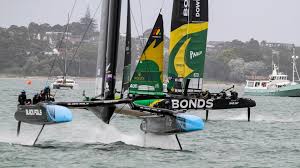 High-speed Collision Between Black Foils and DS Team France F50s in Auckland — What to Know">

Racing down the first leg of the third race in Auckland at roughly 90 km/h, the New Zealand Qara Foils F50 turned sharply in front of DS Team France, leaving the French boat with insufficient time to avoid impact and causing a high-speed foiling collision on 14 February 2026.
Immediate effects on the regatta and fleet logistics
The collision forced immediate suspension of on-water activity for both teams and removed the Qara Foils and DS Team France from competition on day two of the ITM New Zealand Sail Grand Prix. Race officials imposed an eight-point penalty on the Black Foils for causing the incident. Both F50s sustained major structural damage, requiring on-site recovery and subsequent transport to shore-side repair facilities.
Medical response and athlete condition
Medical teams transported two athletes to hospital: Louis Sinclair (Black Foils) with compound fractures to both legs and Manon Audinet (DS Team France) with abdominal injuries. Team staff coordinated with race medical services and local hospitals to stabilise the sailors and to arrange further treatment and rehabilitation as needed.
Driver comment
Quentin Delapierre, driver for DS Team France, was visibly shaken on return to shore, stating that the incident unfolded very quickly and that investigations and footage reviews were pending.
Timeline of the incident (at a glance)
- Start: Third race, first leg, fleet foiling at ~90 km/h.
- Event: Black Foils turns sharply; DS Team France collides into the side of the Kiwi F50.
- Immediate: Both boats lose foiling stability; race control halts racing for safety.
- Aftermath: On-water recovery, medical evacuation, shore-side damage assessment.
- Sanctions: Eight-point penalty issued to Black Foils.
Damage, injuries and penalties — quick reference
| Kateqoriya | Black Foils (NZ) | DS Team France |
|---|---|---|
| Structural damage | Major hull and foil damage | Major side and foil damage |
| Athlete injuries | Louis Sinclair — compound fractures to both legs | Manon Audinet — abdominal injuries |
| Sporting sanction | Eight-point penalty (causing incident) | None issued at time of report |
| Əməliyyat təsiri | Forced withdrawal from day two | Unable to race further that weekend |
Safety, rule implications and technical follow-up
High-speed foiling collisions prompt immediate review of right-of-way rules, proximity limits in tight legs, and pre-race briefings on emergency un-foiling procedures. Technical teams will assess whether any systems — from foil control to sensor/hud data — contributed to loss of control. Organisers usually archive telemetry and onboard footage to determine causation and to improve rule clarity for future SailGP events.
What this means for visitors and local tourism
For spectators, such incidents change on-water scheduling, spectator ferry routes and viewing-zone safety perimeters; shore-based hospitality and tour operators must rapidly adapt to modified race timetables. Tourists in Auckland who planned to see the races often have alternative options: harbour cruises, museum tours with live guides, and coastal wildlife excursions offer compelling substitutes on short notice.
Practical advice for race visitors
- Check official race control channels for schedule updates and viewing-permit changes.
- Book flexible harbour cruises or coastal tours that can adapt to race-day changes.
- Choose providers offering secure online payments and voucher confirmations to simplify last-minute changes.
Longer-term considerations for SailGP and event organisers
Organisers will likely tighten coordination between race management, team briefings, and spectator safety protocols. Repair logistics for foiling F50s — including availability of specialist parts and certified repair yards — become critical to a team’s ability to re-enter the circuit. Insurers and event partners may also review coverage terms for high-speed foiling assets and athlete medical evacuation clauses.
Highlights: the collision underlined how quickly a race can shift from spectacle to crisis, showed the physical risks to sailors in foiling classes, and exposed practical challenges for onshore hospitality and transport during major marine events. Still, even the most thorough reviews and the most honest feedback can’t replace first-hand experience. On GetExperience, you book your experience from verified providers at reasonable prices, with secure payments, voucher confirmation, and options to submit tailored tour requests to match your preferences — a dependable way to plan around event changes and explore local maritime activities. Book now GetExperience.com
In summary, the Auckland F50 collision highlights operational, medical and logistical pressures that arise during high-speed foiling racing. For travellers and race fans it underscores the need for flexible booking and quick access to alternative travel experiences — from yaxta tərəflər və kruiz paketlərə muzey tours with live guides and eco-friendly wildlife safaris. Whether you’re seeking macəra fəaliyyətlər, interaktiv online cultural workshops, eksklüziv yacht charters for events or even onlayn virtual tours, planning with verified providers helps ensure a memorable, safe visit. The collision is a stark reminder that professional sports, logistics and tourism intersect closely; anticipating changes and choosing flexible options such as guided cruises, safari tours, adventure rafting trips for beginners, and luxury adventure travel experiences will let you get the most from your trip while minimising disruption.