


 Azərbaycan dili
  English (UK)
  Русский
  বাংলা
বাংলা  العربية
  日本語
日本語  한국어
한국어  Magyar
  Norsk nynorsk
  Türkçe
  עִבְרִית
  Español
  Čeština
  Svenska
  Português
  Ελληνικά
  Suomi
Suomi  Nederlands
  Română
  Italiano
  Français
  Polski
  Українська
  Deutsch
  简体中文
简体中文  Slovenčina
  Српски језик
  اردو
اردو  O‘zbekcha
  አማርኛ
አማርኛ 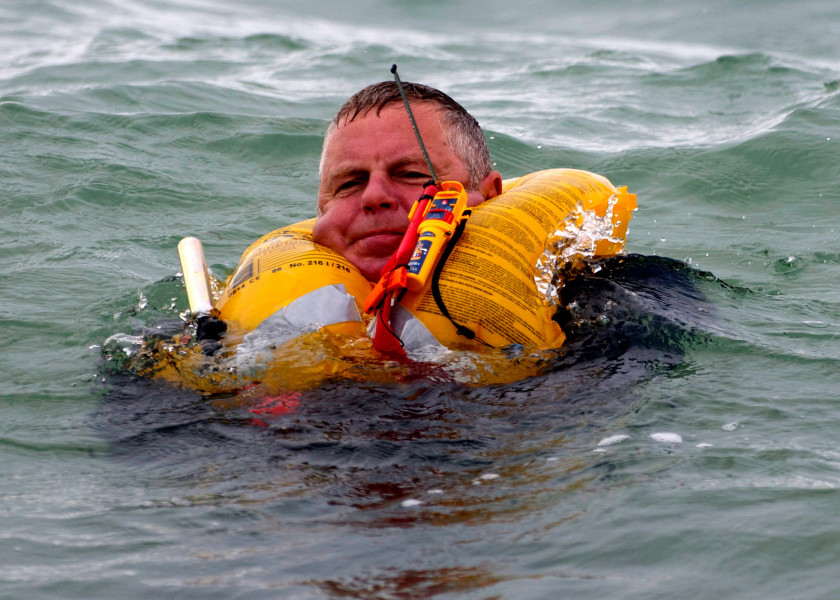 Personal AIS MOB Beacons and Site-Based Alert Systems for Offshore and Coastal Safety">

AIS MOB beacons transmit on VHF with a practical reception range of 2–5 NM and embed GNSS coordinates in each burst, making them immediately actionable for vessels, platform-mounted receivers, and shore-based control rooms when a casualty falls from a rig, wind turbine foundation, jetty, or terminal apron.
How personal AIS SART beacons operate at a glance
Personal AIS SART units are designed to mount on life jackets and to activate automatically when the jacket inflates. On activation they emit an AIS MOB message that includes a unique MMSI and the casualty’s GPS position, enabling any AIS-equipped craft within VHF range to receive the alert and navigate to the location.
Key technical characteristics
| Xüsusiyyət | Typical specification |
|---|---|
| Transmission band | VHF AIS channels (class-specific messaging) |
| Diapazon | 2–5 NM (dependent on antenna height and sea state) |
| Location update | GPS/GNSS embedded in AIS payload |
| Cost (approx.) | €350 per unit |
Deploying site-mounted receivers for lone-worker coverage
For offshore installations and coastal facilities, a localised solution is to mount a hi-sensitivity dual-channel AIS receiver on-site. These receivers decode AIS MOB messages reliably and can feed alerts into NMEA 2000 networks or to third-party control systems for immediate action.
Integration options and alert chains
- Direct NMEA 2000 alarm outputs that trigger local horns and strobes.
- Console displays showing AIS MOB targets on detailed charts for control rooms.
- Automated SMS or email notifications for remote supervisors and shore-based teams.
- Push notifications to PMR/handheld radio networks to alert on-site personnel.
System add-ons that improve response
Beyond automatic AIS activation, sites can use manual MOB-alert hardware to inject a synthetic AIS MOB message into the network, plus ultra-loud NavAlarm units for loud local sirens. These layered measures improve the chance of quick detection and rescue for lone workers operating near water.
Practical deployment checklist
- Survey antenna locations to maximize VHF horizon and minimise blind sectors.
- Map AIS receiver feeds into the NMEA 2000 backbone for unified alerts.
- Test manual activation devices regularly and log events for compliance.
- Provide training so lone workers understand beacon arming and life-jacket interactions.
Who benefits and where to start
Operators of oil platforms, wind farms, coastal ports, and airport marine works benefit from site-mounted AIS receivers that deliver timely MOB information to vessels and shore control systems. Integrators can feed data to PC consoles or third-party platforms for incident logging and coordinated response.
Example use cases
- Wind farm technicians working on monopile access ladders detected by nearby crew transfer vessels.
- Port maintenance staff falling from quay edges captured by port-mounted AIS receivers and presented to the control room.
- Airport coastal works where rapid alerting prevents escalation into multi-agency search and rescue.
Equipment and vendor notes
Digital Yacht provides turnkey systems combining receivers, NMEA 2000 interfacing and software consoles for local display. Value-priced implementations focus on standardised technology to support 3rd-party applications—SMS gateways, PMR integrations or PC-based chart consoles. Contact the solutions team at [email protected] for configuration advice.
For site managers planning safety upgrades: ensure the AIS receiver is dual-channel and high sensitivity, validate alarm outputs to local procedures, and include both automatic and manual MOB activation paths to cover equipment or human failures.
The combination of personal AIS SART beacons, site-mounted AIS receivers, and local alarm systems reduces rescue timeline and supports regulatory compliance while minimising false negatives. For travellers and operators alike, safer ports and coastal infrastructures mean more reliable access for passenger transfers, excursion tenders, and marine-based tour operators.
Highlights: AIS MOB units are compact, cost-effective personal safety devices; site-integrated receivers extend detection to offshore and onshore work sites; layered alarms and NMEA 2000 integration enable rapid, coordinated response. However, no amount of specification sheets or product reviews replaces first-hand experience—testing systems under operational conditions is essential. On GetExperience, you can book verified local providers for relevant safety briefings, harbour tours and shore-side demonstrations at reasonable prices, ensuring you understand how equipment performs in the real world. Book now GetExperience.com
In summary, personal AIS MOB beacons paired with site-mounted AIS receivers and integrated alarm chains deliver a pragmatic safety net for lone workers on rigs, platforms, wind farms and coastal terminals. These measures improve rescue outcomes and support the continuity of travel experiences, from yacht parties and cruise packages to museum tours with live guides and eco-friendly wildlife safaris. Operators should prioritise testing and training to make the most of these systems, which also support broader offerings such as adventure rafting trips for beginners, exclusive yacht charters for events, online virtual tours, interactive online cultural workshops, professional esports training programs, and other adventure activities and luxury adventure travel experiences.