


 العربية
  English (UK)
  Русский
  বাংলা
বাংলা  日本語
日本語  한국어
한국어  Magyar
  Norsk nynorsk
  Türkçe
  עִבְרִית
  Español
  Čeština
  Svenska
  Português
  Ελληνικά
  Suomi
Suomi  Nederlands
  Română
  Italiano
  Français
  Polski
  Українська
  Deutsch
  简体中文
简体中文  Slovenčina
  Српски језик
  اردو
اردو  Azərbaycan dili
  O‘zbekcha
  አማርኛ
አማርኛ 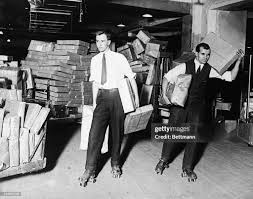 من الزلاجات الدوارة إلى البريد الطرود: تطور توصيل البريد في أمريكا في القرن العشرين">

Early 20th-Century America and the Postal Landscape
At the dawn of the 20th century, the United States’ postal system was in a period of transformation. Most Americans still lived in rural regions, and the Post Office Department was the primary government body handling mail delivery. By century’s end, it had evolved into the United States Postal Service (USPS), adapting to the rise of urban centers and an industrial economy. The methods and volume of mail transport changed dramatically, with innovation and adaptation at the heart of the service’s growth.
In a fascinating early example of efficiency, some clerks at Chicago’s post office, the nation’s second busiest hub, donned roller skates in 1913 to speed up mail sorting. This quirky detail underscores the commitment to improving postal operations amid a rapidly growing mail market.
The Birth and Impact of Parcel Post
Initially, the Post Office Department was limited by law: parcels over four pounds were off-limits, leaving private express companies to deliver large packages. This restriction posed a challenge, especially for rural Americans who increasingly wanted parcels containing food, dry goods, and medicines delivered directly to their farms—a convenience previously unavailable.
The introduction of Rural Free Delivery (RFD) had already familiarized country residents with doorstep mail service, fueling demand for parcel delivery. Resistance came from express companies and local merchants wary of competition, but rural communities—comprising over half the population in 1910—stood firm in their demand.
Public outcry against private express companies’ high profits pushed Congress to act, resulting in the Parcel Post Act of August 24, 1912. This novel law allowed the Post Office to carry parcels weighing up to eleven pounds and measuring no more than 72 inches in combined length and girth, opening the door to affordable parcel deliveries.
Parcel Post Launches and Its Economic Ripple Effect
Parcel Post officially began on January 1, 1913, and became an overnight success—300 million parcels were mailed within six months. The service spurred the expansion of mail-order giants like Montgomery Ward and Sears, Roebuck and Company. For instance, Sears saw its orders quintuple in the year Parcel Post started, and revenues doubled in just five years.
Over time, the Parcel Post service expanded its limits both in weight and size. By August 1, 1931, parcels could weigh up to 70 pounds and measure up to 100 inches combined, facilitating even larger shipments.
| التاريخ | Parcel Weight Limit | Size Limit (Length + Girth) | Notes |
|---|---|---|---|
| 1913 | 11 pounds | 72 inches | Initial Parcel Post limits |
| 1931 | 70 pounds | 100 inches | Expanded limits |
| 1952 | Reduced to 40 lbs (short-distance), 20 lbs (long-distance) | 72 inches | Weight limit changed for certain distances |
| 1983 | Uniform 70 pounds | 108 inches | Standardized weight and size across USPS |
| 1999 | 70 pounds | 130 inches | Increased size limit |
Changing Limits and Names Over Time
While Parcel Post thrived for decades, changes in regulations caused fluctuations. Weight limits were tightened in the 1950s to curb Parcel Post volumes, only to be raised again in the 1960s and 1970s. Eventually, the service was rebranded twice: first as Standard Post in 2013, then as USPS Retail Ground in 2016, reflecting changes in how packages were handled in the modern era.
Unusual Stories: Mailing Children
One of the most peculiar tales from early Parcel Post history involves the mailing of children. Just weeks after the service began, an eight-month-old baby was “sent” via mail to his grandmother, positioned just under the 11-pound parcel limit. His delivery, insured for $50, cost only fifteen cents postage. Although against postal regulations, a handful of children traveled through the mail system this way in the early years, highlighting both the novelty and flexibility in those days.
Parcel Post’s Role in the Growth of Mail-Order Culture
The advent of Parcel Post was a game-changer not only for individuals but for the national economy. By connecting rural consumers with urban merchants through affordable parcel shipping, it expanded access to a wide range of goods. This helped transform the American marketplace, advancing mail-order retail and shrinking rural isolation.
Table: Milestones in Parcel Post Development
- 1896 – Rural Free Delivery begins, laying groundwork for parcel services
- 1912 – Parcel Post Act authorizes parcel delivery by USPS
- 1913 – Parcel Post service launch
- 1931 – Weight and size limits expanded to 70 pounds and 100 inches
- 1952-1983 – Weight and size limits fluctuate and normalize across USPS
- 2013 & 2016 – Parcel Post renamed Standard Post then USPS Retail Ground
Why Understanding Parcel Post Matters for Tourism and Travel
At a glance, the evolution of Parcel Post seems purely about mail and commerce. Yet, for travelers and tourists, understanding the background and development of mail and parcel services enriches appreciation of infrastructure and logistic systems supporting modern travel. Whether receiving souvenirs, ordering adventure gear, or sending postcards home, the roots of these conveniences trace back to the robust developments of Parcel Post.
استمتع بتجارب أكثر مع GetExperience.com
For travelers ready to explore and seek authentic adventures, GetExperience.com offers a seamless platform to find, book, and securely pay for a wide range of travel experiences worldwide. From curated tours and excursions to cultural workshops, the platform’s transparent pricing and voucher-based confirmation ensure trustworthy transactions. Personal accounts and tailored requests allow travelers to receive customized offers, making every trip truly one-of-a-kind.
While history and reviews provide valuable insights, nothing beats first-hand experience. Booking through GetExperience.com empowers you to choose verified providers at reasonable prices, helping avoid unexpected costs or disappointments. The platform’s extensive selection caters to diverse tastes and budgets, perfect for crafting enriching travel itineraries—from museum tours and eco-friendly safaris to luxury yacht charters and exhilarating adventure rafting trips.
Book your trip today and discover how history and modern hospitality blend perfectly at GetExperience.com.
Summary
The journey of Parcel Post from a modest service limited by weight restrictions to a vital nationwide system embodies the spirit of innovation and adaptation. It not only revolutionized the way Americans sent parcels, boosting mail-order commerce, but also laid foundations for modern mail and package delivery services that support today’s travel and tourism industries. Whether mailing souvenirs or receiving goods, this historical evolution enriches our understanding of connected experiences across distances. Exploring these roots reminds us that every travel adventure intertwines with the systems enabling communication, commerce, and culture to flourish.