


 አማርኛ
አማርኛ  English (UK)
  Русский
  বাংলা
বাংলা  العربية
  日本語
日本語  한국어
한국어  Magyar
  Norsk nynorsk
  Türkçe
  עִבְרִית
  Español
  Čeština
  Svenska
  Português
  Ελληνικά
  Suomi
Suomi  Nederlands
  Română
  Italiano
  Français
  Polski
  Українська
  Deutsch
  简体中文
简体中文  Slovenčina
  Српски језик
  اردو
اردو  Azərbaycan dili
  O‘zbekcha
  ለመጀመርያ ጊዜ ለረጅም ርቀት በረራ ለመዘጋጀት፥ ምቾት እና ጤንነት ለመጠበቅ የሚረዳ መመሪያ">

The prospect of your first long-haul flight—a journey often defined as any continuous flight lasting six hours or more—can be both exhilarating and daunting. While the destination itself is the ultimate reward, the journey can present unique physical and mental challenges, ranging from crippling jet lag and dehydration to discomfort and restlessness. Unlike short-hop travel, conquering a 12-to-18-hour flight requires a strategic, holistic approach to preparation, turning what might otherwise be an ordeal into a tranquil period of transition. Mastering this preparation is the key to arriving at your destination feeling refreshed, ready to explore, and minimizes the debilitating effects of trans-global travel.
This comprehensive guide is designed for the first-time long-haul flyer, detailing the essential pre-flight steps, in-flight strategies for maximizing comfort, and post-arrival tips to quickly synchronize with the new time zone. From selecting the optimal seat to engineering your personal sleep environment, we will transform your approach to extended air travel. By focusing on hydration, movement, and sleep hygiene, you can ensure that your inaugural long-haul flight is a smooth, enjoyable segment of your global adventure, rather than a hurdle to overcome.
ቅድመ-በረራ ዝግጅት፡ ለስኬት መድረክን ማዘጋጀት
The battle for comfort on a long-haul flight is won long before you ever step onto the plane. A series of strategic decisions made in the days and hours leading up to departure can drastically improve your overall experience.
Booking and Seat Selection: The Crucial First Step
Choosing the right seat is arguably the single most important decision for long-haul comfort. While a window seat offers a view and a wall to lean on for sleeping, an aisle seat provides the freedom to stand up and move without disturbing your neighbors—a critical factor for circulation and avoiding deep vein thrombosis (DVT). Many experienced flyers prefer the aisle for the unlimited access it provides.
For couples or traveling partners, consider booking a window and an aisle seat in a three-seat row. If the flight is not full, the middle seat often remains vacant, giving you an entire row. Use sites like SeatGuru to consult detailed seat maps, identifying any seats with misaligned windows, reduced recline, or proximity to lavatories, which can be noisy and disruptive. The closer you can get to the front of the cabin, the faster you will deplane and the smoother your transition through customs will be.
Packing the Essential Carry-On Survival Kit
Your carry-on bag must be a carefully curated survival kit designed for a 12-hour-plus journey. Crucial items include:
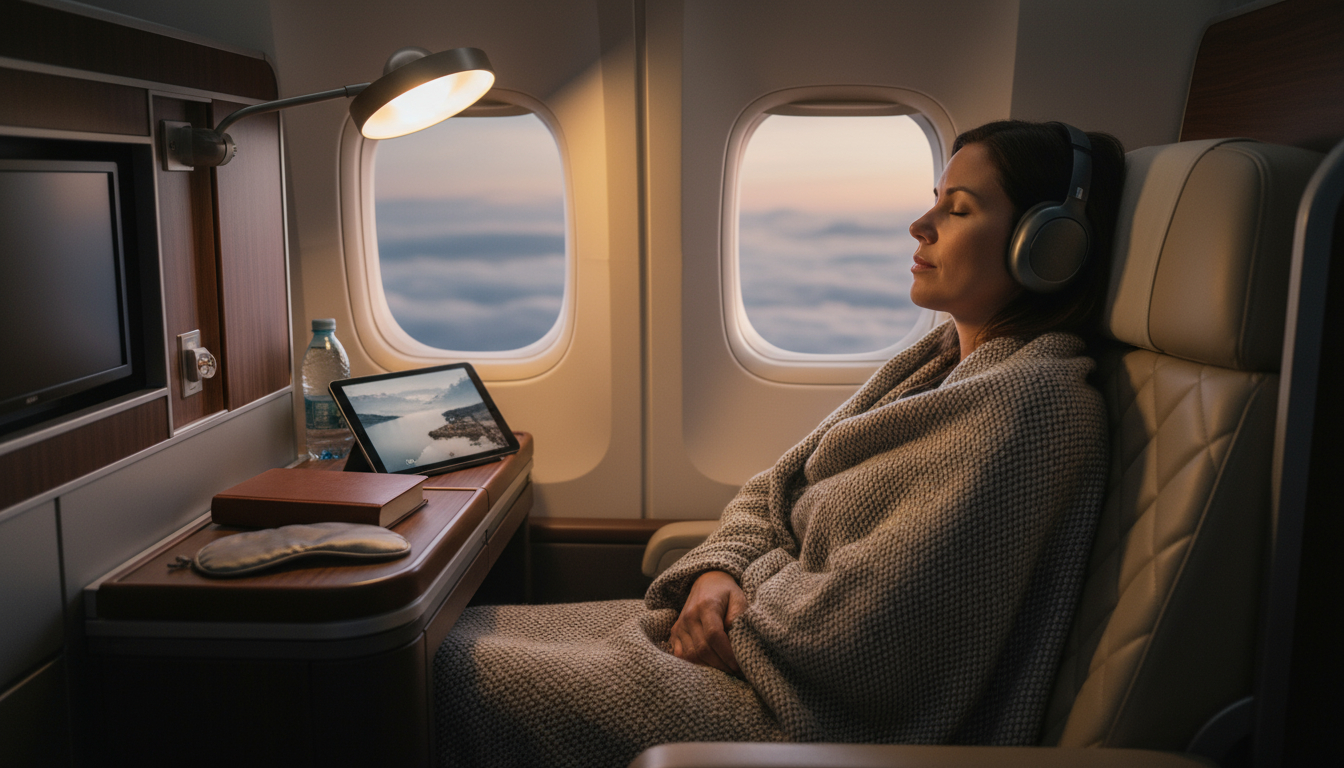
- Noise-Canceling Headphones: These are non-negotiable for blocking out engine drone and ambient cabin noise, dramatically improving rest quality.
- Comfort Essentials: A high-quality neck pillow (the kind that prevents your head from dropping forward), an eye mask (preferably molded to allow for blinking), and warm, thick socks.
- Hydration/Skincare: A large, refillable water bottle (fill it after security), and travel-sized moisturizing products, as cabin air is extremely dry. Nasal spray and lip balm are vital for combating dehydration.
- መዝናኛ: Download movies, podcasts, and audiobooks onto your devices. Do not rely solely on the in-flight entertainment system, which can be unreliable.
- ምግብ ማቅረቢያ: Bring healthy, non-smelly snacks like nuts, protein bars, and dried fruit to avoid relying on heavily processed airline food.
In-Flight Strategies: Conquering the Cabin
Once you are onboard, the focus shifts to creating a personal micro-environment that encourages rest and protects your health. This involves actively managing your intake, movement, and sleep schedule.
The Hydration and Diet Protocol
Dehydration is the silent enemy of the long-haul flight. Cabin humidity levels often hover below 20%, which is significantly drier than the Sahara Desert. This necessitates consistent, deliberate fluid intake. Aim to drink at least eight ounces of water for every hour you are awake. Avoid caffeine and alcohol—they act as diuretics, accelerating dehydration and disrupting your natural sleep cycle. While a glass of wine may seem relaxing, the effects are amplified at altitude and will ultimately compromise your ability to rest and recover. Opt for herbal teas or sparkling water instead. As for food, skip the heaviest, saltiest meals the airline offers and stick to light, digestible options.
Movement and Circulation: The Anti-DVT Rule
Staying sedentary for extended periods is the single biggest health risk during a long-haul flight. The risk of deep vein thrombosis (DVT)—blood clots forming in the legs—increases significantly. Counter this by following the 30-minute rule:
- Every 30 Minutes (Seated): Perform seated leg and ankle exercises. Rotate your ankles, flex your feet up and down (heel to toe), and press your knees together.
- Every 2-3 Hours (Movement): Get up, walk to the lavatory, or simply stand in the aisle for a few minutes. Gentle stretching of your calves and arms can do wonders for circulation and stiffness. Compression socks are also highly recommended to aid blood flow.
Managing the Time Warp: The Jet Lag Strategy
Jet lag is the inevitable consequence of a long-haul flight that traverses multiple time zones. However, you can significantly mitigate its severity by starting the adjustment process proactively.
Adjusting Your Internal Clock Mid-Flight
For flights crossing five or more time zones, begin adjusting your watch, phone, and internal clock to the destination time zone immediately after takeoff. If it is nighttime at your destination, commit to sleeping, even if it feels like daytime to you. Use your sleep mask and earplugs. If it is daytime at your destination, try to stay awake and expose yourself to artificial light. The goal is to synchronize your activities with the destination time zone as much as possible while still in the air. Only eat meals at times that correspond to meal times at your arrival point.
Light Exposure and Post-Arrival Management
Upon arrival, your immediate focus should be on manipulating your exposure to light, as light is the most powerful cue for the circadian rhythm.
- If you arrive during the day: Get outside immediately and seek natural sunlight. This tells your brain to stop producing melatonin (the sleep hormone), helping you feel awake. Fight the urge to nap for longer than 20 minutes.
- If you arrive in the evening: Minimize bright light exposure, wear sunglasses, and prepare for bed at a reasonable local time. Even if you don’t feel sleepy, getting into a bed and starting your new routine is essential. The first 48 hours are critical for adapting, so strictly adhere to local mealtimes and sleep schedules.
By implementing these comprehensive pre-flight, in-flight, and post-arrival strategies, your first long-haul flight will be a seamless experience, allowing you to maximize the enjoyment of your destination without the crippling fatigue that often plagues unprepared travelers. Preparation is not just about logistics; it is about respecting your body and ensuring a healthy start to your adventure.