


 አማርኛ
አማርኛ  English (UK)
  Русский
  বাংলা
বাংলা  العربية
  日本語
日本語  한국어
한국어  Magyar
  Norsk nynorsk
  Türkçe
  עִבְרִית
  Español
  Čeština
  Svenska
  Português
  Ελληνικά
  Suomi
Suomi  Nederlands
  Română
  Italiano
  Français
  Polski
  Українська
  Deutsch
  简体中文
简体中文  Slovenčina
  Српски језик
  اردو
اردو  Azərbaycan dili
  O‘zbekcha
  ጉዕዞ ጸሊም ሰማይ ንተገዳስቲ ክዋክብትን ስነ-ፈለክን">

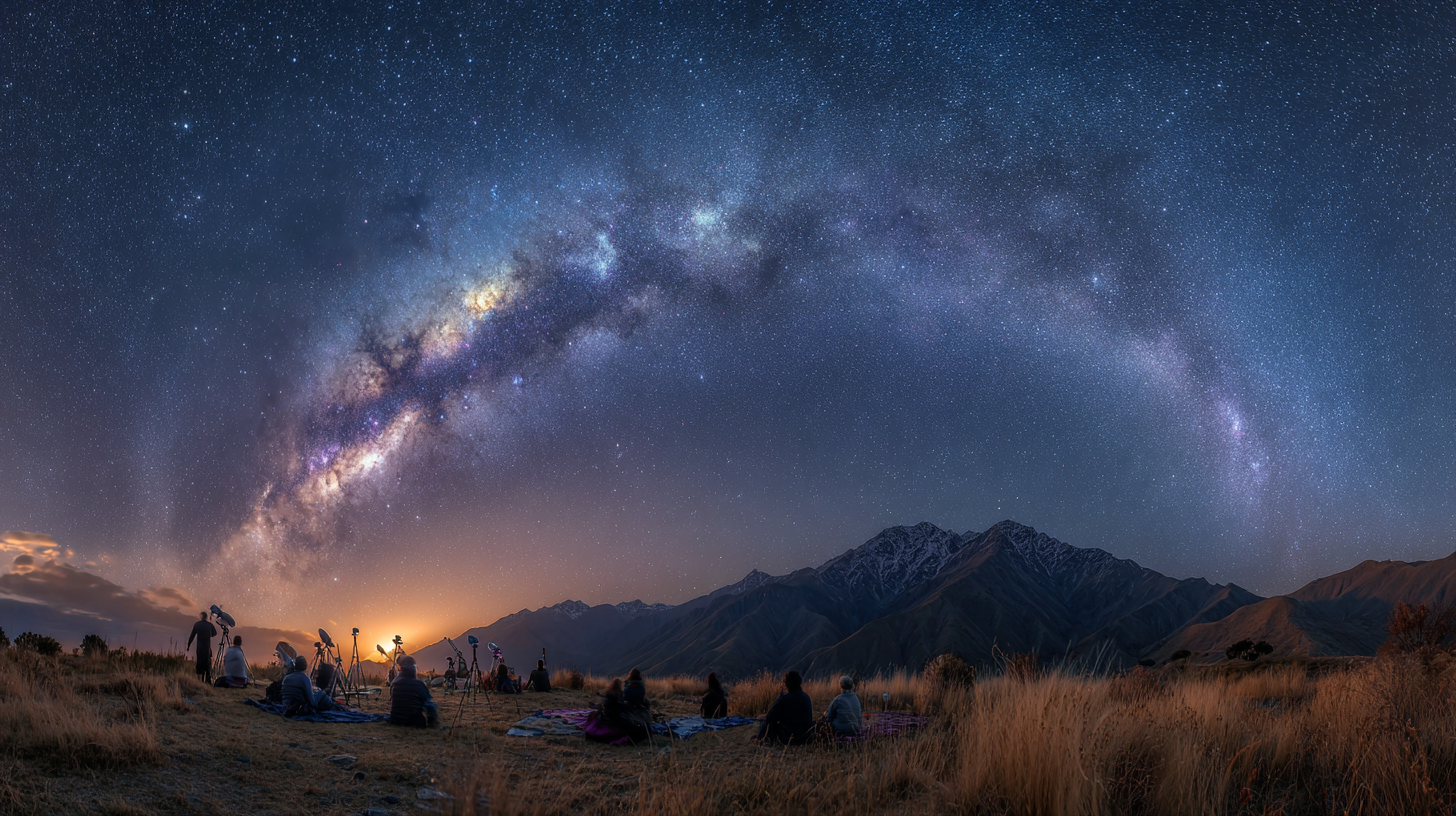
Dark sky tourism for stargazing has emerged as one of 2025’s most compelling travel trends, drawing astronomy enthusiasts to certified locations where light pollution vanishes and the universe reveals itself in breathtaking detail. The International Dark-Sky Association now recognizes over 200 Dark Sky Places worldwide, with visitor numbers growing 400% since 2015 according to their latest reports. These protected areas offer experiences impossible in urban environments, from seeing the Milky Way with naked eyes to witnessing rare celestial events.
The appeal extends beyond professional astronomers to wellness travelers seeking digital detox, photographers chasing perfect night shots, and couples desiring romantic experiences under star-filled skies. Industry data shows dark sky tourism generating over $1.2 billion annually, with destinations actively investing in infrastructure while protecting their greatest asset – pristine night skies.
The Science and Beauty of Dark Skies
Understanding Light Pollution Impact
Dark sky tourism for stargazing directly addresses the global crisis of light pollution that affects 80% of the world’s population. According to the 2023 New World Atlas of Artificial Sky Brightness, only remote locations in parts of Africa, Australia, and remote islands maintain truly dark conditions where the Milky Way casts visible shadows. Urban dwellers have lost connection with natural night skies that inspired centuries of scientific discovery and cultural traditions.
Light pollution not only obscures celestial views but affects human health and wildlife. Research published in Science Advances links excessive artificial light to disrupted sleep patterns, increased cancer risk, and migratory bird confusion. Dark sky preserves combat these effects through strict lighting ordinances while providing locations where visitors experience natural circadian rhythms synchronized with actual sunset and star rise.
The visual difference proves startling. In urban areas, observers might see 200-500 stars on clear nights. International Dark Sky Parks regularly offer views of 4,000-7,000 stars, with the Milky Way appearing as a bright band across the sky. First-time visitors frequently describe overwhelming emotional responses when seeing the universe as humanity experienced it for millennia.
Certified Dark Sky Destinations Explained
The International Dark-Sky Association certifies locations meeting rigorous criteria for natural darkness and educational programming. Categories include International Dark Sky Parks (protected public lands), Reserves (larger core areas with protected buffers), Sanctuaries (remote sites with exceptional quality), Communities (towns with exemplary lighting policies), and Urban Night Sky Places (cities making significant improvements).
Certification requires extensive sky quality measurements using Sky Quality Meters, implementation of responsible lighting guidelines, and community commitment to darkness preservation. Certified locations must provide public night sky programming and maintain monitoring programs. The process typically takes 3-5 years, explaining why only 200+ locations worldwide have achieved recognition despite growing applications.
These destinations vary dramatically in accessibility and amenities. Some like New Zealand’s Aoraki Mackenzie offer luxury lodges with private observatories, while others provide primitive camping under pristine skies. All share commitment to preserving darkness through education and policy, creating models for responsible development that other communities increasingly follow.
Health and Wellness Benefits
Dark sky tourism for stargazing offers documented wellness advantages beyond visual spectacle. Exposure to natural darkness regulates melatonin production, improving sleep quality that many urban visitors haven’t experienced in years. Studies from the University of Colorado show that week-long camping trips under dark skies can reset circadian rhythms by up to two hours, combating social jet lag from artificial lighting.
The experience promotes mindfulness and perspective shift. Viewing thousands of stars and recognizing Earth’s small place in the universe often triggers profound emotional responses. Wellness retreats increasingly incorporate dark sky experiences, combining stargazing with meditation, yoga under starlight, and digital detox programs. Participants report reduced anxiety and increased feelings of connection.
Physical benefits include improved night vision that develops after 30-45 minutes in complete darkness. This adaptation allows detailed observation of celestial objects invisible to light-polluted eyes. Many visitors discover they can see satellite passes, meteor showers, and even faint galaxies without telescopes once properly dark-adapted.
Top Dark Sky Destinations Worldwide
New Zealand: Southern Hemisphere Excellence
New Zealand hosts two of the world’s finest dark sky locations – Aoraki Mackenzie International Dark Sky Reserve and Great Barrier Island. The Aoraki reserve, encompassing 4,367 square kilometers around Mount Cook, holds Gold-tier status indicating exceptional darkness. Visitors regularly see the Southern Celestial Pole, Magellanic Clouds, and southern aurora without light contamination.
Professional observatories like Mount John University Observatory offer public viewing sessions with research-grade telescopes. Luxury experiences include private stargazing tours with astrophysicist guides, hot pools under starlit skies, and glass-roofed accommodation for all-night viewing. The reserve’s size ensures multiple viewing locations remain uncrowded even during peak seasons.
Great Barrier Island, accessible by ferry from Auckland, provides darker skies closer to population centers. The entire island operates under strict lighting codes, with most accommodation switching off external lights after 10 PM. Local Maori guides incorporate traditional star navigation knowledge, adding cultural depth to astronomical experiences.
United States: Diverse Dark Sky Options
The United States leads with over 100 certified Dark Sky Places, offering experiences from desert to mountain environments. Natural Bridges National Monument in Utah earned the world’s first International Dark Sky Park designation in 2007 and maintains pristine conditions where visitors see the Milky Way reflected in still water pools beneath natural bridges.
Death Valley National Park provides exceptionally low humidity and elevation combinations creating some of North America’s darkest skies. The park’s size allows dispersal of visitors, with rangers offering telescope programs revealing details of Jupiter’s moons and Saturn’s rings visible to naked eyes under optimal conditions.
Big Bend National Park in Texas combines Gold-tier darkness with international border location, creating unique stargazing parties where Mexican and American astronomers collaborate. The park’s remote location means many visitors experience true darkness for the first time, often describing life-changing perspective shifts.
European Dark Sky Gems
Europe’s dark sky tourism for stargazing grows despite dense population challenges. The Brecon Beacons National Park in Wales earned International Dark Sky Reserve status through community-wide lighting retrofits. The park offers stargazing events combining Welsh mythology with modern astronomy, plus luxury glamping pods with skylights for comfortable viewing.
Germany’s Westhavelland Nature Park, surprisingly close to Berlin, demonstrates urban-proximate dark skies are possible with proper management. The reserve’s flat landscape creates perfect horizons for watching meteor showers and satellite passes. Professional astrophotographers lead workshops taking advantage of northern location benefits like potential aurora sightings.
Scotland’s Galloway Forest Park, Europe’s first Dark Sky Park, spans 75,000 hectares of minimal population. The Scottish Dark Sky Observatory provides research-grade facilities before its unfortunate closure, with community efforts now rebuilding public astronomy access. The park’s location allows viewing both northern and southern celestial objects.
Planning Your Dark Sky Adventure
Best Times and Celestial Events
Timing dramatically affects dark sky tourism for stargazing experiences. New moon periods offer darkest conditions, with many destinations publishing moon phase calendars specifically for visitors. Summer months provide warmer temperatures but shorter nights in northern latitudes, while winter offers longer viewing windows despite cold.
Major celestial events drive bookings. The Perseid meteor shower in August peaks with 60-100 meteors per hour under dark skies, while April’s Lyrids and December’s Geminids offer reliable displays. Eclipses create once-in-lifetime opportunities – destinations along totality paths for the 2026 and 2027 eclipses already show 300% booking increases.
Seasonal variations affect visibility of different objects. Winter skies feature brilliant Orion and surrounding constellations, while summer brings the Milky Way’s dense core overhead in northern hemisphere locations. Southern hemisphere destinations reverse this pattern, with winter offering best Milky Way views.
Essential Equipment and Preparation
Professional-grade experiences require minimal equipment beyond warm clothing and red flashlights that preserve night vision. Many destinations provide telescopes, but personal binoculars (7×50 or 10×50) dramatically enhance naked-eye views. Smartphones with star identification apps work well initially, though serious observers prefer dedicated devices to minimize light pollution.
Layered clothing proves essential as temperatures drop significantly after dark, even in desert locations. Clear skies mean rapid heat loss – Death Valley can drop 40°F within hours of sunset. Comfortable reclining chairs or blankets improve long viewing sessions. Some destinations rent astronomy-specific bean bags that support necks while lying back.
Photography requires specialized preparation. Astrophotographers need cameras capable of long exposures, sturdy tripods, and intervalometers. Wide-angle lenses (14-24mm) capture landscape astrophotography combining foreground elements with Milky Way backdrops. Many locations now offer dark sky photography workshops teaching tracking mounts and post-processing techniques.
Choosing Accommodation and Tours
Accommodation choices significantly impact dark sky tourism for stargazing quality. Bubble hotels and glass-roofed pods allow viewing from bed, while traditional lodges with private observatories offer telescope access. Some properties employ “star hosts” who provide guided viewing and astronomical interpretation throughout the night.
Professional tours range from small-group experiences with professional astronomers to private sessions costing thousands per night. Quality operators provide high-end telescopes (16-inch Dobsonian or larger), laser pointers for constellation identification, and heated viewing areas. Research guide credentials – many hold astronomy degrees and publish research.
Independent travelers benefit from destination apps showing real-time light pollution maps and cloud cover predictions. ClearDarkSky and Dark Site Finder help locate optimal viewing spots within larger reserves. Some locations require permits for night access, particularly in national parks with gate closures.
The Future of Dark Sky Tourism
Preservation Challenges and Solutions
Dark sky tourism faces growing threats from satellite constellations like Starlink that create light trails across long-exposure photographs and interfere with professional astronomy. The International Astronomical Union reports over 5,000 operational satellites in 2025, with projections reaching 100,000 by 2030. Destinations work with SpaceX and other providers on mitigation strategies including darker satellite designs.
Ground-based threats include expanding renewable energy installations and urban sprawl. Successful dark sky communities implement smart lighting solutions using shielded fixtures and warm-color LEDs that minimize blue light impact. These technologies reduce energy consumption while preserving night skies, creating win-win scenarios for development and conservation.
Climate change affects viewing conditions through increased cloud cover and wildfire smoke. Some traditional dark sky locations experience more marginal nights, pushing development of new reserves in stable climate zones. International cooperation grows, with countries sharing preservation strategies and certification standards.
ቴክኖሎጂያዊ ምዕባለታት
Emerging technologies enhance dark sky tourism for stargazing without compromising darkness. Low-impact observatories use remote-controlled telescopes accessible via apps, allowing viewing from light-proof buildings. Virtual reality experiences supplement actual viewing during poor weather, though never replacing the emotional impact of real skies.
Smartphone apps increasingly incorporate augmented reality overlays identifying celestial objects in real-time. These tools help beginners while experienced observers appreciate features like satellite pass predictions and deep-sky object databases. Some destinations develop their own apps integrating local astronomical phenomena with indigenous sky knowledge.
Professional astronomy benefits from dark sky preservation. Major observatories locate near protected areas, with some offering public programs that fund research. The relationship proves symbiotic – tourism revenue supports preservation efforts that protect scientific resources.
የከዋክብት ምልከታ ጨለማ የሰማይ ቱሪዝም ውብ መብራቶችን ከማየት ያለፈ ነው - ሰብአዊነትን ከኮስሚካዊ አውዳችን እና ከተፈጥሮ ዜማዎች ጋር ያገናኛል። የብርሃን ብክለት በአለም አቀፍ ደረጃ እየጨመረ በሄደ ቁጥር እነዚህ የተጠበቁ ቦታዎች እየጨመሩ ይሄዳሉ። ሚልኪ ዌይን ለመጀመሪያ ጊዜ ሙሉ በሙሉ መመስከርም ይሁን ከቤት ውስጥ የማይታዩ ኔቡላዎችን ፎቶግራፍ ማንሳት፣ የጨለማው ሰማይ ተሞክሮዎች በዩኒቨርስ ውስጥ ያለንን ትንሽ ቦታ እና የምድርን ተፈጥሯዊ ጨለማ የመጠበቅ ሃላፊነትን ያስታውሰናል።.