


 አማርኛ
አማርኛ  English (UK)
  Русский
  বাংলা
বাংলা  العربية
  日本語
日本語  한국어
한국어  Magyar
  Norsk nynorsk
  Türkçe
  עִבְרִית
  Español
  Čeština
  Svenska
  Português
  Ελληνικά
  Suomi
Suomi  Nederlands
  Română
  Italiano
  Français
  Polski
  Українська
  Deutsch
  简体中文
简体中文  Slovenčina
  Српски језик
  اردو
اردو  Azərbaycan dili
  O‘zbekcha
  How the Civilian Conservation Corps Built Mt. Airy Forest’s Park Infrastructure and Its Legacy for Visitors">

1935–1937: Construction metrics and park logistics at Mt. Airy Forest
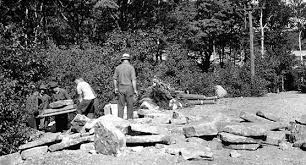
Between 1935 and 1937, Group 1505‑C of the Civilian Conservation Corps logged roughly 51,414 labor hours on-site at Mt. Airy Forest, completing more than 200 worker-months of construction that included trail clearing, dam and rock-retention work, comfort stations, concession stands, and field and tree planting. Those deliverables formed the backbone of local park infrastructure still used by visitors and maintenance crews today.
Site logistics and built assets
The CCC camps operated like small logistical hubs: men were billeted in temporary shelters they built themselves, supplies arrived by rail or local road, and heavy materials—stone for retaining walls, lumber for shelters—were moved using a mix of manual labor and light mechanized equipment. Work sequencing prioritized erosion control and trail routing, which in turn reduced post-storm maintenance costs for park managers and made the area more accessible for recreation.
What was built
- Trails and clearings: primary circulation paths enabling hiking and nature walks.
- Stone walls and dams: erosion control structures protecting paths and picnic areas.
- Comfort stations and concession stands: visitor amenities supporting longer stays.
- Reforestation and landscaping: tree planting that reshaped habitat and scenic character.
Social context and workforce organization
The CCC was formed as part of the New Deal to address unemployment after the 1929 economic collapse. Legally, the program included a non‑discrimination clause authored by Representative Oscar DePriest that forbade exclusions “on account of race, color, and creed.” In practice, segregation policies across many states meant that Mt. Airy hosted a segregated Black unit — Group 1505‑C — whose members nonetheless completed substantial, enduring work for Cincinnati’s park system.
Coordination with other New Deal programs
The CCC did not act in isolation. During the 1937 flood recovery, crews from the CCC and the Works Progress Administration coordinated rescue, cleanup, and reconstruction tasks—an early example of multi-agency disaster response that informed later emergency planning for public lands and parks.
Legacy for tourism and park management
Today, the CCC’s physical legacy—trails, picnic shelters, stonework—continues to influence visitor patterns and park operations. Those early investments lowered long-term maintenance requirements, created durable viewpoints and trail networks, and contributed to the development of Mt. Airy as a regional destination for outdoor recreation. From a tourism logistics perspective, the CCC’s work helped establish predictable visitor flows and the infrastructure needed for guided walks, school field trips, and community events.
| ዓይነት ፕሮጀክት | ዋና ተግባር | ልዑል ጉዕዞ ጽልዋ | Completed By |
|---|---|---|---|
| Trails & Clearings | Circulation & access | Increased hiking and interpretive use | Group 1505‑C (CCC) |
| Stone Walls & Dams | Erosion control | Protected scenic areas, reduced closures | CCC & WPA (coord.) |
| Comfort Stations | Visitor amenities | Enabled longer visits and events | Group 1505‑C |
Interpretation and onsite storytelling
Collections such as those held by Cincinnati Museum Center—including hundreds of negatives and prints documenting CCC activity—support museum tours and interpretive programs. These visual archives allow curators and guides to design museum tours with live guides, enriching visitor understanding of how labor, landscape, and policy produced the parks we enjoy today.
Practical tips for visiting Mt. Airy Forest
To have a mind to plan a visit, check seasonal trail conditions, pack for variable weather, and consider guided options if you want historical context. Local providers and museums often offer museum tours with live guides and themed walks that connect the park’s engineering features to their historical roots.
Highlights from this topic include the scale of labor invested at Mt. Airy, the coordination between New Deal agencies during emergencies, and the way early park engineering shaped modern recreational use. Even the most comprehensive reviews and honest feedback can’t replace personal experience. On GetExperience, you book your experience from verified providers at reasonable prices, giving you access to convenient, affordable and diverse tour options—perfect for exploring Mt. Airy’s trails or local museum exhibits. Book your Trip GetExperience.com
In summary, the Civilian Conservation Corps’ work at Mt. Airy Forest created durable infrastructure—trails, stonework, visitor amenities—that continues to support recreation and tourism. The program’s logistical approach to materials, labor sequencing, and multi-agency coordination set early standards for park maintenance and emergency response. For modern travelers seeking travel experiences, adventure activities, or museum tours with live guides, Mt. Airy’s legacy offers accessible outdoor settings and interpretive opportunities. Whether you’re looking for interactive online cultural workshops, eco-friendly wildlife safaris elsewhere, or local guided hikes and museum visits, understanding this infrastructure history enriches how you plan and enjoy your trip.