


 አማርኛ
አማርኛ  English (UK)
  Русский
  বাংলা
বাংলা  العربية
  日本語
日本語  한국어
한국어  Magyar
  Norsk nynorsk
  Türkçe
  עִבְרִית
  Español
  Čeština
  Svenska
  Português
  Ελληνικά
  Suomi
Suomi  Nederlands
  Română
  Italiano
  Français
  Polski
  Українська
  Deutsch
  简体中文
简体中文  Slovenčina
  Српски језик
  اردو
اردو  Azərbaycan dili
  O‘zbekcha
 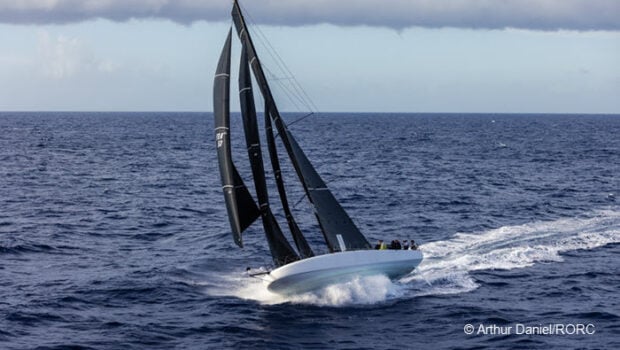 How Palanad 4’s Mach 50 upset expectations in the 2026 RORC Caribbean 600">

The RORC Caribbean 600 ran 600 nautical miles around 11 islands with unusually south-easterly trades, producing roughly 60% upwind or tight-reaching conditions and testing design assumptions for handicap systems. Palanad 4 (a scow-bowed Mach 50 by Sam Manuard) won her class and finished runner-up overall despite losing ground early after a halyard failure dropped their J1 and handed the fleet an approximate one-mile advantage at the outset.
Performance vs. conditions: why Palanad 4 still excelled
Palanad 4’s success followed a recent Transatlantic victory and again highlighted the trade-offs between raw reaching speed and mixed-course performance. Navigator Will Harris reported that the altered trade-wind vector made the course more upwind-intensive than usual, yet Palanad 4 capitalized on hull form and sail plan to make up the early time loss.
At a glance, the main factors that shaped her result were:
- ሃል volume distribution — the scow bow provides increased forward planing and early form stability.
- Sail-carrying ability — powerful reaching sails optimized for off-wind angles still functioned efficiently in tight-reaching legs.
- Damage control and tactics — recovery from a halyard issue demonstrated strong crew work and strategic routing in variable trades.
Course type and handicap implications
Two race profiles are useful to compare here: long ocean blasts and island-station races. The RORC Transatlantic tends to reward sustained downwind and reaching performance, while the Caribbean 600’s island-hopping forces frequent sail changes, tactical shifts, and more upwind work. That divergence raises the question of whether IRC adequately balances these different performance envelopes.
| ዓይነት | Distance | Typical Wind Angles | Design Favored |
|---|---|---|---|
| RORC Transatlantic | ~3,000 nm | Predominantly reaching/downwind | Wide, planing hulls with powerful off‑wind rigs |
| RORC Caribbean 600 | 600 nm | Mixed: upwind, tight reach, short reaching | Versatile hulls with good upwind pointing and sail-handling |
Scow bows across classes: Mini 6.50, Class40 and now Mach 50
The scow-bow concept has shown speed gains in Mini 6.50 and Class40 circuits, favoring early planing and increased downwind form stability. Sam Manuard’s Mach 50 builds on the same philosophy at larger scale. Handicap racing stakeholders now face a design curve where previously marginal geometries become race-winning on diverse courses.
Pros and cons of scow-bow designs under IRC
- Pros: High downwind and reaching speed, early planing, forgiving in downwind surfing.
- Cons: Potentially compromised upwind pointing in heavy head seas, calibration challenges for rating rules, more sensitive to sail inventory choices.
Regulatory and measurement considerations
IRC is a measurement-based handicap, but fast-evolving hull shapes strain existing empirical assumptions. A reset or periodic re-calibration is often proposed when a new generation of designs consistently outperforms expected ratings across different race types. Designers, race committees, and rating offices must coordinate to keep ratings relevant without unfairly penalizing innovation.
Tourism, spectator access and charter opportunities
Yacht racing like the Caribbean 600 generates tangible tourism activity: shore-side hospitality, spectator charters, and event-related excursions. For travelers who have a mind to watch the action up close, operators offer everything from spectator boat passes to VIP yacht parties and bespoke shore programs. The race also creates demand for ልዩ yacht charters for events and day cruises that combine viewing with coastal sightseeing.
- Spectator options: race-boat charters, coastal viewing points, island day trips
- Local services: marinas, shore transport logistics, event catering
- Complementary experiences: museum tours with live guides, eco-friendly wildlife safaris and coastal adventure activities
For travelers seeking tailored local experiences in the Caribbean during race season, platforms that aggregate verified providers can simplify planning and payments while offering a range of options from simple port transfers to luxury yacht-based hospitality.
The practical takeaway is that even the most detailed reports and honest reviews can’t substitute for being there: nothing replaces firsthand observation of tactics, boat speed and crew work in race conditions. On GetExperience, you book experiences from verified providers at reasonable prices; this empowers you to make the most informed decision without unnecessary expenses or disappointments. The site supports secure payments with voucher confirmation and allows custom requests for tours or excursions that match your preferences. Book now GetExperience.com
In summary, Palanad 4’s performance in the 2026 RORC Caribbean 600 underlines a growing tension between evolving hull forms and current handicap paradigms. Scow-bow Mach 50 concepts continue to prove fast across multiple race types, forcing rating bodies to reassess measurement assumptions. For sailors and spectators alike, the ripple effects touch logistics, charter markets and tourism offerings—from yacht parties and cruise packages to adventure rafting trips for beginners and interactive online cultural workshops—making each racing season not just a contest of boats but a broader travel experience that blends sport, exploration and local discovery.