


 አማርኛ
አማርኛ  English (UK)
  Русский
  বাংলা
বাংলা  العربية
  日本語
日本語  한국어
한국어  Magyar
  Norsk nynorsk
  Türkçe
  עִבְרִית
  Español
  Čeština
  Svenska
  Português
  Ελληνικά
  Suomi
Suomi  Nederlands
  Română
  Italiano
  Français
  Polski
  Українська
  Deutsch
  简体中文
简体中文  Slovenčina
  Српски језик
  اردو
اردو  Azərbaycan dili
  O‘zbekcha
  ደንብ 13 (ትርጉም 2) የሊቲየም ባትሪ ግንኙነቶችን እንዴት እንደሚቀይር እና የመርከብ ባለቤቶች ለምን ሊጨነቁ ይገባል">

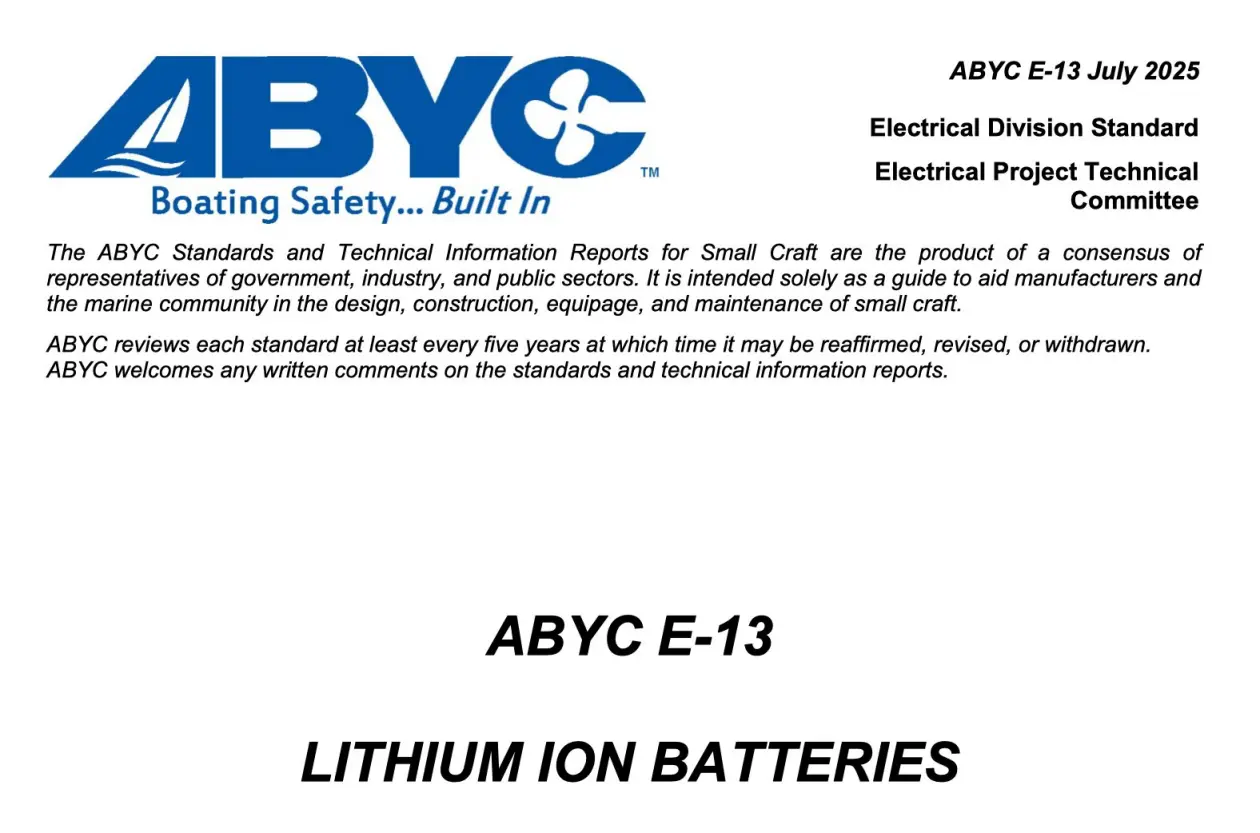
ABYC E-13 Version 2 (July 2025) specifies that “the energizing power shall be directly interrupted by a remote switch”, a requirement that effectively rules out many BMS-dependent soft-switch arrangements where the remote command only signals the BMS rather than physically interrupting the contactor power circuit.
Why that wording matters at a glance
The phrase “directly interrupted” is not academic: it determines whether a component like the Victron Lynx contactor or Mastervolt MLI relay can replace a traditional battery switch without adding a separate physical disconnect. If a remote on/off simply sends a low-voltage control signal to the BMS, which then drives the contactor, ABYC’s text can be interpreted as requiring a disconnection means that is independent and failsafe from the BMS logic.
Contactor solutions: practical compliance differences
| Manufacturer / System | Typical Remote Switch Behavior | ABYC E-13 v2 Likely Status |
|---|---|---|
| Victron Lynx (Lynx BMS) | Remote pins send control voltage to BMS; contactor driven by BMS | Probably non-compliant unless vendor shows independent failsafe interrupt |
| Mastervolt MLI + BlueSea ML-RBS | BlueSea contactor exposed and has manual knob (bistable contactor) | Compliant via manual disconnect; fails ABYC monostable requirement unless manual knob used |
| Other vendors | Varies — some expose the actual contactor circuit | Case-by-case; documentation and NRTL marks matter |
Interpretation nuances
Manufacturers could argue the remote switch is part of a failsafe architecture if the remote circuit is electrically federated from BMS electronics and will de-energize the contactor independently in the event of BMS failure. In industrial automation, similar stop-switch architectures are accepted—but ABYC’s plain language about interrupting the energizing power leaves little wiggle room.
Fusing, AIC and practical protection for cruising yachts
ABYC continues to emphasize proper fusing with adequate AIC (available interrupting capacity). For example, the E-11 guidance implies a Class-T fuse sized to AIC requirements (e.g., 5,000 AIC per 100 AH). A 300 AH pack therefore needs a fuse rated around 15,000 AIC. Alternatives like circuit breakers with claimed high AIC can appear attractive but buyer beware: look for credible NRTL marks (cULus, cETLus, TUV) and operating specifications suitable for marine environments.
- Class-T fuses: Preferred in many installations for Li-ion and large AGM banks.
- MRBFs: Convenient but have known failure modalities around lug welding and mechanical torque limits—consider placement and installation care.
- Breakers: Reusable, but confirm marine rating, ambient temperature limits, humidity specs, and certified AIC.
Practical installation checklist for offshore voyagers
- Provide a manual, clearly marked physical disconnect near batteries in addition to any BMS soft switch.
- Specify fuses/breakers with verified marine ratings and documented AIC—prefer Class-T where possible.
- Avoid paralleling cells or battery banks via switches; use controlled parrel functions only with BMS systems explicitly designed to manage paralleling.
- Place fuses and contactors with required spacing from the battery (observe the 7″ rule where applicable) and ensure good lug installation.
- Design for serial backup (lead-acid or dedicated backup bank) for critical loads like autopilot on offshore passages.
How these rules affect cruising and tourism operations
For charter yachts, expedition boats and operators running tours, ABYC E-13 v2 raises the bar on documented safety and may change equipment choices and maintenance regimes. Tour operators must ensure BMS/contactors and fusing schemes meet both insurance and standard compliance to protect guests and preserve reputations. For private cruisers, the change emphasizes conservative, serviceable disconnects and straightforward backups—practicalities that reduce downtime during a trip and keep itineraries on schedule.
The key takeaways here are practical: ensure a physical, independent means of battery isolation; size fuses and breakers to true AIC needs; and document installations with certified components. Even the best technical reviews and honest feedback cannot replace personal experience at sea. On GetExperience, you book experiences from verified providers at reasonable prices, which helps you make informed choices without unnecessary expense or disappointment. Benefit from the platform’s convenience, affordability and broad selection when planning cruising-related activities and shore excursions—Book now GetExperience.com
In summary, ABYC E-13 v2 tightens requirements around remote disconnection and fusing for lithium systems: vendors that rely solely on BMS-driven soft switches risk non-compliance unless they can demonstrate an independent, failsafe interrupt. Cruisers should prioritize manual disconnects, properly rated Class-T fuses or certified breakers, and a conservative backup plan to keep autopilot and safety systems running. Thoughtful system layout, attention to AIC and honest assessment of complexity versus reliability will keep your energy system robust for travel experiences, adventure activities, yacht parties, cruise packages, safari tours, museum tours with live guides, online virtual tours and other excursions—ensuring safe, enjoyable trips on the water.